BIM (Building Information Modeling): The Future of Integrated Engineering
Author: ENG. Ali Karim Your browser does not support the video tag. Introduction: Welcome to the new era of design and construction—where Building In
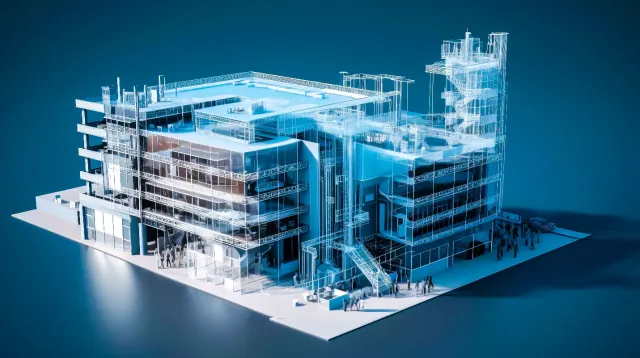
Author: ENG. Ali Karim
Introduction: Welcome to the new era of design and construction—where Building Information Modeling (BIM) is reshaping the way engineers and architects approach their projects. From a concept that began as a way to create 3D models of buildings, BIM has evolved into a full-fledged digital ecosystem, encompassing every aspect of a project’s lifecycle. Today, BIM is a standard practice not only in civil engineering but also in mechanical, electrical, and other engineering fields, enabling unparalleled collaboration, efficiency, and precision.
Through this blog, I’ll take you on a deep dive into BIM: what it is, why it’s essential, and how it’s used across different engineering disciplines. Whether you’re just getting started or are already familiar with BIM, you’ll discover something new about how this technology is shaping the industry.
1. Understanding BIM: More Than Just a 3D Model
Let’s start by clarifying a common misconception—BIM is far more than a 3D modeling tool.
It’s an information management system that brings together different project teams under a
shared digital model. In essence, it’s a smart 3D model that can include information about every
component of a building: materials, measurements, costs, and timelines.
Each element within a BIM model holds data. For example, a wall in a BIM model might include
information about its material, thickness, insulation properties, and cost. These details make it
possible to perform advanced analyses, simulate different scenarios, and forecast project
outcomes with high accuracy.
2. How BIM Impacts Civil, Mechanical, and Electrical Engineering
Civil Engineering: Structural Precision and Planning In civil engineering, BIM has revolutionized how teams plan, design, and build infrastructure. Civil engineers can model entire infrastructures like bridges, tunnels, and dams in a 3D environment. Using BIM, teams can simulate real-world conditions—like weather, traffic, and loads—on their designs, which helps in optimizing the structure before it’s built.
Mechanical Engineering: Efficient Systems Layout and Coordination For mechanical engineers, especially those designing HVAC (Heating, Ventilation, and Air Conditioning) systems, BIM is a game-changer. It provides a clear layout of how these systems interact with the building’s structural and architectural elements. Mechanical engineers can see, for instance, how an HVAC system will be installed within tight spaces, reducing clashes and enabling energy efficiency calculations.
Electrical Engineering: Enhanced Safety and Coordination Electrical engineers use BIM to plan and coordinate complex electrical layouts, from power distribution to communications networks. BIM ensures that electrical wiring and systems don’t clash with other components. It also allows electrical engineers to simulate power loads and design for future scalability and energy savings.

3. Popular BIM Software: Tools of the Trade
The right software can make or break a BIM project. Here’s a breakdown of some of the most popular BIM tools across various engineering fields:
- Autodesk Revit – The go-to for architects and engineers alike, Revit covers architectural, structural, and MEP (mechanical, electrical, plumbing) design, allowing each team to work in a unified model.
- Tekla Structures – Ideal for structural engineering, Tekla is highly detailed, especially for projects involving steel and concrete. Its robust modeling capabilities make it suitable for complex structural projects.
- Navisworks – Commonly used for project review, Navisworks excels in clash detection, 4D simulations, and allows seamless integration with Revit for project planning and conflict resolution.
- Bentley Systems (OpenBuildings Designer, MicroStation, and ProjectWise) – Bentley’s suite is tailored for large infrastructure projects, from transportation to public utilities, enabling collaboration at a global scale.
- Archicad – While popular among architects, Archicad supports civil and MEP engineers with its collaborative tools, especially in creating detailed 3D and 4D models.
- Synchro – Known for its 4D planning and scheduling capabilities, Synchro integrates time-related data with the 3D BIM model, making it excellent for managing complex timelines.
- Allplan – Allplan provides BIM solutions specifically for civil and structural engineering, with a focus on rebar detailing and earthwork models.
- Vectorworks – While primarily used for architectural designs, Vectorworks also supports BIM workflows for landscape architecture and MEP, especially in smaller projects.
- Trimble Connect – Trimble Connect is a cloud-based BIM platform used for coordination across teams, with strong tools for civil engineers working on infrastructure and transportation projects.
- SolidWorks – Though not exclusively for BIM, SolidWorks integrates with BIM workflows for mechanical parts, making it a valuable asset in product design for large construction projects.
4. The Collaboration Revolution: BIM’s Role in Bringing Teams Together
The beauty of BIM lies in its ability to allow various engineering teams to work in sync. Traditional methods often led to fragmented workflows, with each team operating independently. BIM, however, provides a “single source of truth.” Everyone works within the same model, enabling simultaneous updates, rapid changes, and real-time collaboration.
Cloud-based BIM platforms, like Autodesk’s BIM 360, allow teams across the world to access the model, add their contributions, and instantly see updates from other disciplines. This integration leads to better coordination, fewer misunderstandings, and quicker decision-making.
5. Detecting and Resolving Clashes with BIM
One of BIM’s key strengths is in clash detection—preventing design conflicts before they occur in the real world. Imagine finding out on-site that a structural beam blocks the route for an HVAC duct. In BIM, such clashes are detected automatically within the digital model, helping teams re-route systems or reconfigure designs before construction begins. Navisworks is a widely used tool in BIM for this purpose.
This early detection reduces the likelihood of expensive and time-consuming rework, making BIM a must-have for large and complex projects.

6. Going Beyond 3D: The Dimensions of BIM
4D BIM: Scheduling and Time Management With 4D BIM, teams can add a time-related layer to the model, allowing project managers to create detailed construction schedules. 4D models show how a project progresses over time, helping teams identify potential delays, optimize resource allocation, and even visualize construction phasing.
5D BIM: Cost Estimation and Budgeting BIM can go one step further by including cost data, known as 5D BIM. Every element in the model can be assigned a cost, allowing project managers to see real-time financial impacts of design changes, optimize budgets, and provide accurate cost projections for clients.
6D BIM: Sustainability and Energy Analysis As sustainability becomes a priority, 6D BIM adds environmental data. Engineers can simulate a building’s energy performance, consider eco- friendly materials, and even predict a building’s environmental impact. This is crucial for projects aiming for LEED certification or other green building standards.

7. Implementing BIM Successfully: Essential Strategies
If you’re new to BIM, implementation can seem daunting. Here are strategies that can help:
- Phased Approach: Start with a small project to allow teams to become familiar with the workflow.
- Training and Skill Development: Investing in BIM training ensures team members understand the software and processes fully.
- Choose the Right Software: Assess project needs carefully and pick software that suits your specific workflows and goals.
- Establish Standards and Protocols: Document processes, naming conventions, and data requirements to keep BIM models consistent across projects.
8. Case Studies: Real-World Examples of BIM in Action
Crossrail Project, London
The Crossrail project used BIM to manage the complexity of its underground railway system, integrating models from civil, mechanical, and electrical teams to create a seamless rail network.
One World Trade Center, New York
BIM enabled the One World Trade Center project team to visualize and coordinate every aspect of the building’s design and construction. By using BIM for clash detection and scheduling, the team saved significant time and reduced rework.
9. The Future of BIM: AI, Automation, and Digital Twins
Looking ahead, BIM is expected to integrate with AI and machine learning, creating even smarter models. AI algorithms could predict potential issues, recommend design optimizations, and provide faster, data-driven insights. Digital twins—virtual replicas of physical assets—will take BIM beyond construction, allowing real-time monitoring of buildings post-construction for maintenance and performance tracking.
Conclusion: BIM as a Game-Changer in Modern Engineering
Building Information Modeling is far more than a passing trend—it’s a transformative force that’s reshaping the construction and engineering industries. From reducing errors and improving collaboration to enabling advanced analyses and sustainability planning, BIM provides a platform for teams to create, coordinate, and manage projects with a level of precision that was once unimaginable.
For civil, mechanical, and electrical engineers, embracing BIM isn’t just about adopting new software; it’s about adopting a new mindset. BIM encourages a culture of collaboration, continuous learning, and innovative problem-solving. As BIM technology continues to evolve with the integration of artificial intelligence, automation, and digital twins, it’s likely to become an even more indispensable part of the construction landscape.
The real question isn’t whether BIM will continue to shape the future of engineering—it’s how quickly engineers and firms can adapt to unlock its full potential. In a world where every project demands higher efficiency, precision, and sustainability, BIM offers the roadmap to get there.

References
- Eastman, C., Teicholz, P., Sacks, R., & Liston, K. (2018). BIM Handbook: A Guide to Building Information Modeling for Owners, Designers, Engineers, Contractors, and Facility Managers (3rd Edition). Wiley.
- Autodesk. “What is BIM? Building Information Modeling Explained.” Autodesk Blog. Visit Autodesk’s BIM overview
- Bentley Systems. “The Benefits of Building Information Modeling.” Bentley BIM Resources. Explore Bentley's BIM tools
- Trimble. “A Beginner’s Guide to BIM.” Trimble Buildings.
- Graphisoft. “The Power of Archicad in BIM Workflows.” Graphisoft Resources.
- National Institute of Building Sciences. “Frequently Asked Questions About BIM.” NIBS BIM Resources. Access NIBS BIM FAQs
- Crossrail Project Case Study. Detailed overview of BIM utilization in Crossrail.
- One World Trade Center BIM Application. Autodesk Success Stories.
- Dodge Data & Analytics. The Business Value of BIM for Design and Construction.Check out Dodge's BIM insights
- Arup. “Digital Twins and the Future of BIM.” Arup Insights. Explore BIM's future with Arup