Why Engineers Are Quietly Mastering Spatial Computing in 2025
Spatial computing revolutionizes the way engineers bring their designs from concept to reality. Virtual and augmented reality technologies give engineers new ways to visualize and refine their work in three-dimensional space. This breakthrough lets us interact with digital content in physical environments and makes complex engineering processes easy to understand.

Spatial computing revolutionizes the way engineers bring their designs from concept to reality. Virtual and augmented reality technologies give engineers new ways to visualize and refine their work in three-dimensional space. This breakthrough lets us interact with digital content in physical environments and makes complex engineering processes easy to understand.
The engineering experience (erfahrung) shows a clear move from traditional 2D screens toward immersive 3D environments. Engineers simply strap on mixed reality headsets to see their designs as if they existed in the ground world. These virtual design reviews prove especially valuable in architecture, engineering, and construction. Industry experts believe design and engineering fields stand ready to tap into the full potential of spatial computing. The engineering salary (gehalt) continues to rise as professionals become skilled at these tools and increase their market value.
This piece reveals how spatial computing becomes crucial for engineers in 2025. We'll get into the tools behind this transformation and show why this technology changes how engineering work happens.
How Spatial Computing Became a Core Engineering Tool
Engineering tools have transformed remarkably in the last decade. Engineers who once depended on 2D drawings now direct immersive 3D environments, which has fundamentally changed their approach to complex design challenges.
From 2D Screens to 3D Environments
Traditional 2D drafting had clear limitations with flat representations. 2D CAD brought efficiency by reducing six-hour drawing board tasks to four hours. The shift to 3D modeling cut that time drastically to just 15 minutes for certain design tasks. Notwithstanding that, engineers faced a major challenge: they still viewed three-dimensional data through two-dimensional screens.
Spatial computing eliminates this disconnect by letting users see 3D CAD data at full scale and in context. Engineers can now interact with their designs in three-dimensional space instead of manipulating models on flat displays. This bridges the gap between digital product development and physical reality.
The Role of AR, VR, and MR in Engineering Workflows
AR, VR, and MR have exceeded their gaming origins to become transformative engineering tools. Each technology plays a unique role in the engineering workflow:
-
VR creates fully immersive environments where engineers can perform virtual walkthroughs and scrutinize designs before physical prototyping begins
-
AR projects digital information onto physical components to help assembly line workers and maintenance technicians
-
MR naturally blends digital and physical elements, which allows manipulation of virtual models while maintaining awareness of real surroundings
These technologies enable scattered teams to cooperate in shared virtual spaces and manipulate 3D models live. They also connect fragmented processes within digital manufacturing workflows, turning previously disjointed software tools into a smooth experience.
Why 2025 Is a Tipping Point for Adoption
Several factors join to make 2025 a watershed year for spatial computing in engineering:
Hardware improvements have produced lighter, more ergonomic headsets that offer high fidelity and comfort for daily wear. The integration of artificial intelligence with spatial computing has tapped into more sophisticated capabilities for live tracking and object recognition.
The spatial computing market shows dramatic growth potential—from approximately €104.96 billion in 2023 to €1.62 trillion by 2033. These numbers reflect both technological maturation and growing recognition of engineering benefits these tools provide.
CAD software and spatial computing platforms blend naturally now. Engineers stand at the threshold of a new paradigm where physical and digital worlds unite into a single design environment.
Design and Collaboration in Virtual Spaces

Image Source: develop3d
Engineers now cooperate in shared virtual spaces from different locations. They work as if they were in the same room, which has changed how they approach design. This new way of working lets professionals break free from regular computer monitors. They can experience designs firsthand and use their full mental capabilities instead of just looking at them.
Life-Size Visualization of CAD Models
Looking at CAD models in life size gives engineers a better feel for scale and proportion. Engineers don't have to figure out 2D versions of 3D objects anymore. They can walk around virtual models and look at them from any angle. Engineers at Northrop Grumman found this helpful during rocket development. An engineer tested battery replacement in VR with a 25-pound dumbbell. This test showed that the access panel made battery installation almost impossible. The team redesigned the hanger system right away to make it much easier to access.
Mixed Reality for Real-Time Design Iteration
Mixed reality connects digital content with physical environments. This makes engineering more natural and hands-on. Engineers can:
-
Show virtual models in real-life settings to see how they fit
-
Spot and fix design problems early
-
Try different setups without building actual prototypes
Construction teams find this extra useful. They can place 4D design models over buildings as they go up. This helps them catch design flaws that would cost thousands to fix later. The team can fix these issues virtually and save time and money.
Remote Design Reviews with Avatars and Voice Chat
Virtual design reviews have broken down location barriers. Engineering teams use avatar systems to connect from anywhere. They can view and work on 3D models together. The sound in these spaces comes from where people stand, which feels more natural than regular video calls. Deckers, who makes Ugg boots, uses this to work with manufacturing teams in Asia without flying overseas.
Avatar systems let people move their bodies, use hand gestures, and show facial expressions. This has made virtual teamwork better through improved social connection and task performance. Teams need fewer in-person meetings as they get used to these tools, but they still communicate well about designs.
Factory Planning, Training, and Maintenance
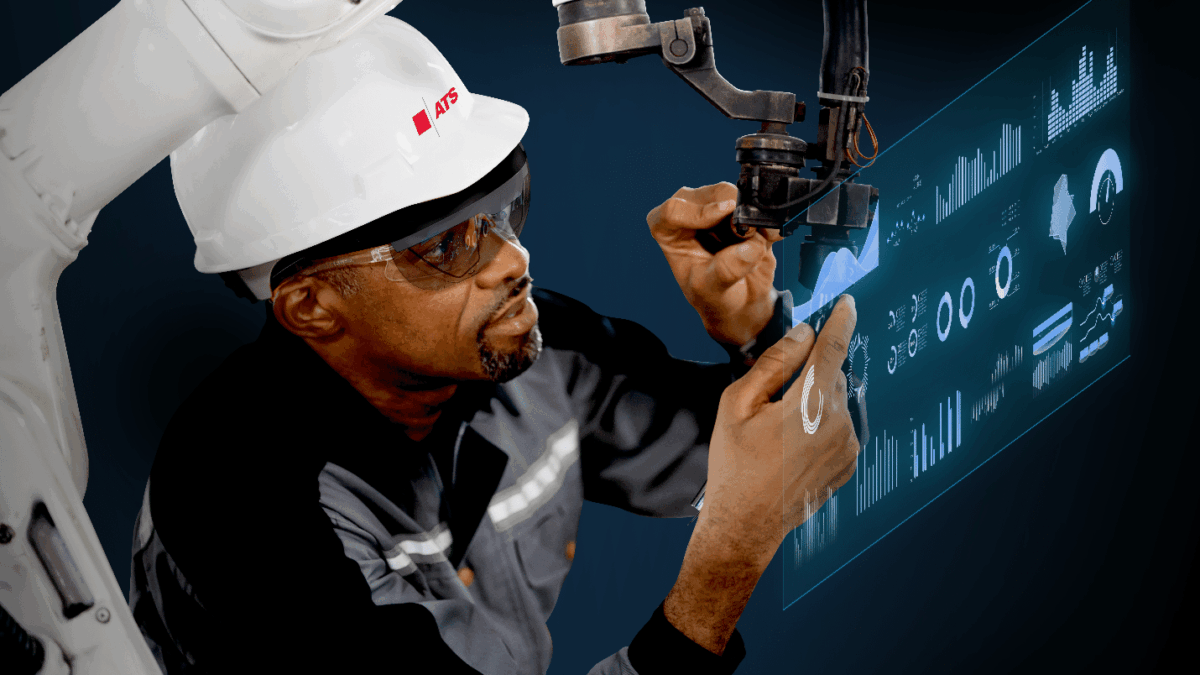
Image Source: Advanced Technology Services
Spatial computing technologies are transforming factory operations and creating major changes in the get in engineering field. These immersive tools give unprecedented visibility into complex manufacturing environments compared to traditional planning methods.
VR Simulations for Factory Layout Optimization
Engineers can design and test factory layouts through virtual reality before physical implementation. This helps avoid mistakes that can get pricey and optimizes workflow efficiency. The technology creates detailed 3D models of production spaces where designers quickly modify configurations and see the effects right away. Manufacturers use VR to spot potential bottlenecks, streamline operations, and test different scenarios without disrupting actual production. The technology makes shared work among team members from different departments possible as they review and discuss layouts in live shared virtual spaces.
AR-Guided Maintenance with Real-Time Annotations
AR technology gives maintenance technicians access to critical information right in their field of view. The systems overlay instructions and diagrams onto physical equipment to speed up repair processes and remove guesswork. A manufacturing company's AR-guided procedures showed impressive results - maintenance tasks finished 30% faster, errors dropped by 40%, and safety incidents decreased by 50%. AR delivers updated information exactly where and when technicians need it, unlike paper manuals that often end up lost or damaged.
Emergency Response Training in Virtual Environments
Virtual environments create safe spaces to practice emergency response protocols without ground risks. Research shows that VR-trained personnel often outperform those trained only in field environments. These immersive simulations let engineers practice handling dangerous situations multiple times and test their skills in realistic scenarios. Get in engineering erfahrung now includes practicing first aid, troubleshooting elevated machinery, and managing confined space operations through spatial computing—all without physical danger.
Tools and Platforms Engineers Are Quietly Adopting

Image Source: MacRumors
Several platforms now compete to dominate the workspace technology as spatial computing tools in engineering expand faster than ever.
Apple Vision Pro vs Microsoft HoloLens in Engineering
Apple Vision Pro and Microsoft HoloLens 2 take different paths to engineering spatial tools. Vision Pro excels in visual quality, while HoloLens 2 focuses on industrial use with its practical flip-up visor and comfort features that work well during long sessions. HoloLens proves particularly valuable to engineers in factory environments because its industrial certification allows clean room and controlled environment operations. Both systems can visualize CAD, though HoloLens has stronger connections to engineering work through BIM Holoview that helps with construction modeling.
Unity and Unreal Engine for Custom AR/VR Experiences
Unity and Unreal Engine lead the way as development platforms that create custom engineering experiences. Unreal Engine shines with photorealistic rendering that works great for architectural walkthroughs and detailed simulations. Unity, on the other hand, runs mobile AR applications more efficiently and proves easier to learn. Each platform offers unique engineering experiences - Unity uses C# scripting, while Unreal combines C++ with visual Blueprints that don't need coding skills.
Integration with CAD Software like SolidWorks and Revit
Cloud-based CAD platforms are changing traditional engineering processes. Onshape Vision works seamlessly with Apple Vision Pro and turns flat screen models into full-size virtual products that update as changes happen. Teams can create fully editable digital prototypes with Shapr3D, and one manufacturer saved €286,000 yearly by cutting down physical prototype needs.
Cost and Learning Curve Considerations
HoloLens 2 costs range from €3,340 for basic models to €4,723 for industrial versions. Development costs vary significantly - HoloLens apps typically cost between €23,855 and €143,131, while Vision Pro apps range from €38,168 to €66,795. Unity comes with a free option and charges based on revenue for bigger projects. Unreal Engine stays free until projects earn over €1 million, then takes a 5% cut.
Conclusion
Spatial computing has revolutionized the engineering world as we enter 2025. Engineers now experience their designs instead of viewing them on 2D screens. This change from flat representations to immersive 3D environments shows a fundamental shift in tackling complex engineering challenges.
Hardware advances, AI integration, and continuous software platforms have created a tipping point for adoption. Engineers who become skilled at using spatial tools get most important advantages in design visualization and problem-solving. Their engineering gehalt reflects this value because professionals with spatial computing expertise earn higher salaries.
VR and AR technologies have evolved way beyond their gaming roots and become vital parts of modern engineering workflows. Teams across continents work together as if they stand in the same room. They can examine life-sized models and make live adjustments. This ability breaks down geographical barriers while keeping natural communication that makes design reviews work.
These technologies bring equal benefits to factory operations. VR simulations optimize layouts, AR guides maintenance procedures, and virtual environments train workers for safer, more efficient manufacturing. Real-life applications span many engineering fields, from construction and architecture to aerospace and automotive design.
Apple Vision Pro, Microsoft HoloLens, Unity, Unreal Engine, and various CAD integrations make up today's engineering toolset. The original investment might look substantial, but returns come through fewer errors, faster iterations, and reduced physical prototypes.
Engineering's future exists where physical and digital worlds meet. Spatial computing doesn't just improve existing processes—it changes how we envision, design, and build. Today's engineers who embrace these technologies lead this transformation, ready to solve complex challenges with unique clarity and efficiency.
Key Takeaways
Engineers are rapidly adopting spatial computing technologies to revolutionize design workflows, moving from 2D screens to immersive 3D environments that enable unprecedented visualization and collaboration capabilities.
• Spatial computing eliminates 2D limitations: Engineers now visualize CAD models at life-size scale, reducing design tasks from hours to minutes while catching errors before costly physical prototyping.
• Virtual collaboration breaks geographical barriers: Teams use avatar-based systems with spatialized audio to conduct real-time design reviews, eliminating travel costs while maintaining effective communication.
• AR/VR transforms factory operations: VR simulations optimize layouts before implementation, while AR-guided maintenance reduces task completion times by 30% and errors by 40%.
• Platform integration drives adoption: Tools like Apple Vision Pro, HoloLens 2, and Unity/Unreal Engine now seamlessly integrate with CAD software like SolidWorks and Revit for streamlined workflows.
• 2025 marks the tipping point: Hardware improvements, AI integration, and a projected market growth to €1.62 trillion by 2033 make spatial computing essential for competitive engineering practices.
The convergence of mature hardware, sophisticated software platforms, and proven ROI through reduced prototyping costs and faster iterations positions spatial computing as a core competency for modern engineers seeking career advancement and operational efficiency.
FAQs
Q1. What is spatial computing and how is it changing engineering? Spatial computing is a technology that allows engineers to interact with digital content in physical environments. It's transforming engineering by enabling 3D visualization of designs, immersive collaboration, and more intuitive problem-solving in virtual and augmented reality environments.
Q2. How are AR and VR being used in factory operations? AR and VR are revolutionizing factory operations through VR simulations for layout optimization, AR-guided maintenance procedures, and virtual training environments. These technologies improve efficiency, reduce errors, and enhance safety in manufacturing processes.
Q3. What are the key benefits of using spatial computing in engineering design? Spatial computing in engineering design allows for life-size visualization of CAD models, real-time design iterations in mixed reality, and remote collaboration through avatars. These capabilities lead to faster problem identification, reduced physical prototyping, and improved communication among team members.
Q4. Which tools are engineers adopting for spatial computing? Engineers are adopting tools like Apple Vision Pro, Microsoft HoloLens, Unity, and Unreal Engine for spatial computing. These platforms integrate with CAD software such as SolidWorks and Revit, enabling engineers to create custom AR/VR experiences and visualize designs in 3D space.
Q5. How is spatial computing impacting engineering collaboration? Spatial computing is breaking down geographical barriers in engineering collaboration. It allows teams to conduct virtual design reviews using avatars and voice chat, enabling engineers from different locations to work together as if they were in the same room, manipulating 3D models simultaneously and communicating more naturally than traditional video conferencing.