Industrial Automation: The Rise of Modular Production Cells and Quick Changeover Strategies in the EU Market
Explore the transformative impact of modular production cells and quick changeover strategies in industrial automation within the EU. Understand the drivers, risks, and forecasted market outlook for the next 12-24 months.
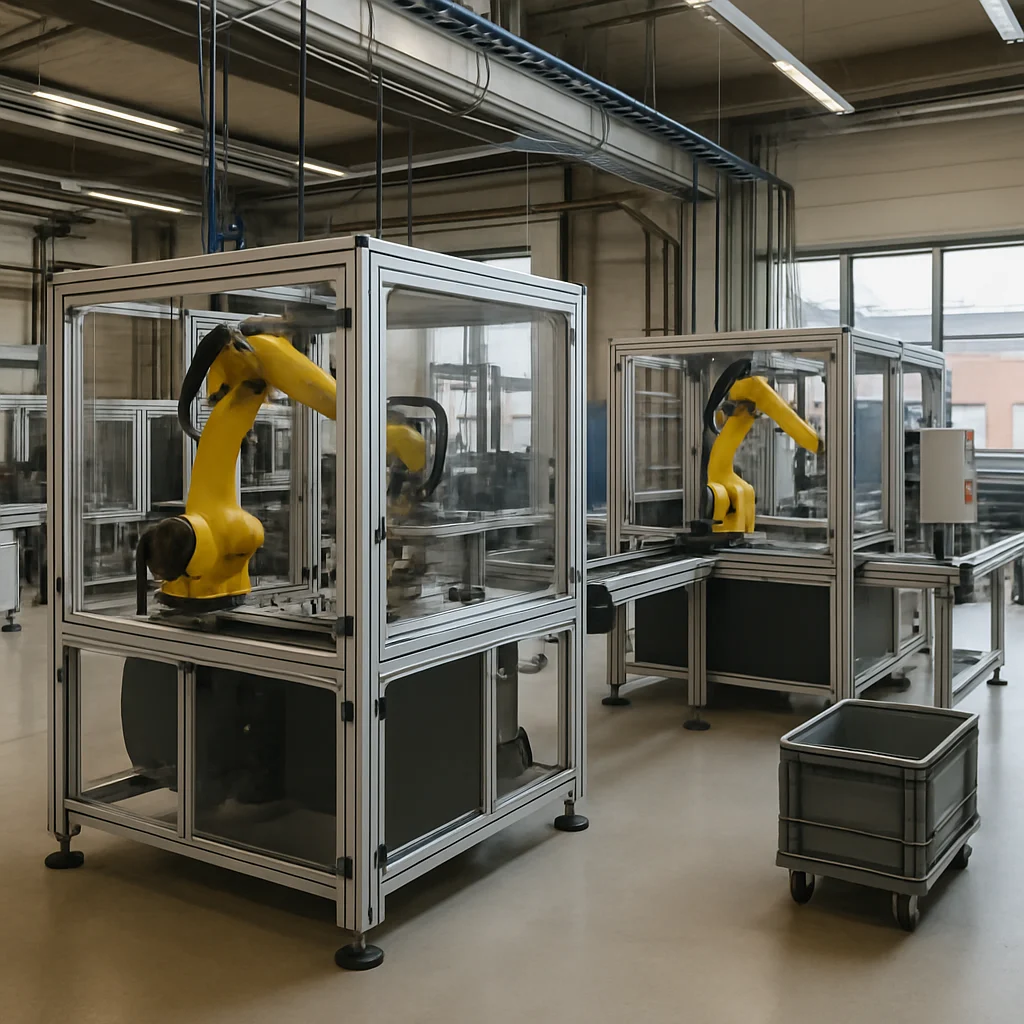
Industrial automation is evolving rapidly, led by the demand for efficiency, flexibility, and responsiveness in manufacturing processes. In the European Union (EU), the rise of modular production cells and quick changeover strategies has become synonymous with modernization in the industrial sector. This article explores the market outlook, key drivers, and potential risks associated with these advancements, providing insights for engineers, architects, builders, and real estate professionals.
Understanding Modular Production Cells
Modular production cells are self-contained units of manufacturing that allow for a more flexible, scalable production process. They can be easily reconfigured to accommodate different products or manufacturing processes, making them particularly suitable for industries that experience fluctuating demand or varied product lines.
Key Features of Modular Production Cells
- Flexibility: The ability to quickly adapt to changing production needs.
- Scalability: Units can be added or removed based on demand fluctuations.
- Efficiency: Minimization of downtime through quick reconfiguration.
- Cost-Effectiveness: Reduced overhead costs through optimized use of space and resources.
The Role of Quick Changeover Strategies
Quick changeover (QCO) strategies allow manufacturers to switch from one product to another with minimal downtime. This process is vital in today's just-in-time manufacturing environment, where demand can change rapidly and unpredictably.
Benefits of Quick Changeover
- Increased Productivity: Reducing changeover time directly increases overall output.
- Improved Lead Times: Faster responses to market demands enhance customer satisfaction.
- Inventory Reduction: Minimizes the need for large inventory holdings, freeing up capital.
Market Drivers of Modular Production and Quick Changeover
Several factors are driving the adoption of modular production cells and quick changeover strategies in the EU industrial sector:
- Technological Advancements: Innovations in robotics, machine learning, and IoT have enhanced the capabilities of modular systems.
- Industry 4.0 Initiatives: A push toward integrating digital technologies into manufacturing is fostering the growth of modular production systems.
- Economic Pressure: Companies are compelled to improve efficiency and reduce costs amid rising competition.
- Customization Demand: Increased consumer demand for personalized products requires flexible production systems.
Risks and Challenges
While the transition to modular production and quick changeover offers significant benefits, it also presents challenges that industry players must navigate:
- Initial Investment: High upfront costs for implementing new systems can be a barrier for some companies.
- Complexity of Integration: Ensuring that new systems work seamlessly with existing infrastructure is critical.
- Skill Gaps: The need for skilled labor to manage and optimize new technologies can create workforce challenges.
12-24 Month Market Outlook
Looking ahead, the market for modular production cells and quick changeover strategies in the EU is poised for significant growth. Analysts project the industrial automation industry to grow at a compound annual growth rate (CAGR) of approximately 8-10% over the next two years. Key aspects of this outlook include:
| Key Aspect | 2024 Projection | 2025 Projection |
|---|---|---|
| Market Size (€ Billion) | ~20 | ~22 |
| Adoption Rate (%) | 30% | 40% |
| Investment in R&D (€ Million) | ~1500 | ~1800 |
Conclusion
The adoption of modular production cells and quick changeover strategies is transforming the landscape of industrial automation in the EU. As manufacturers seek to enhance efficiency and responsiveness while navigating market pressures, these innovations present both opportunities and challenges. For professionals in engineering, architecture, construction, and real estate, understanding these trends will be pivotal in positioning their businesses for success in the evolving industrial environment.