Home Emergency Utility Shutoff: Water, Gas & Electricity
A practical household guide to locating, labeling, and safely managing water, gas, and electrical shutoffs before an emergency occurs.
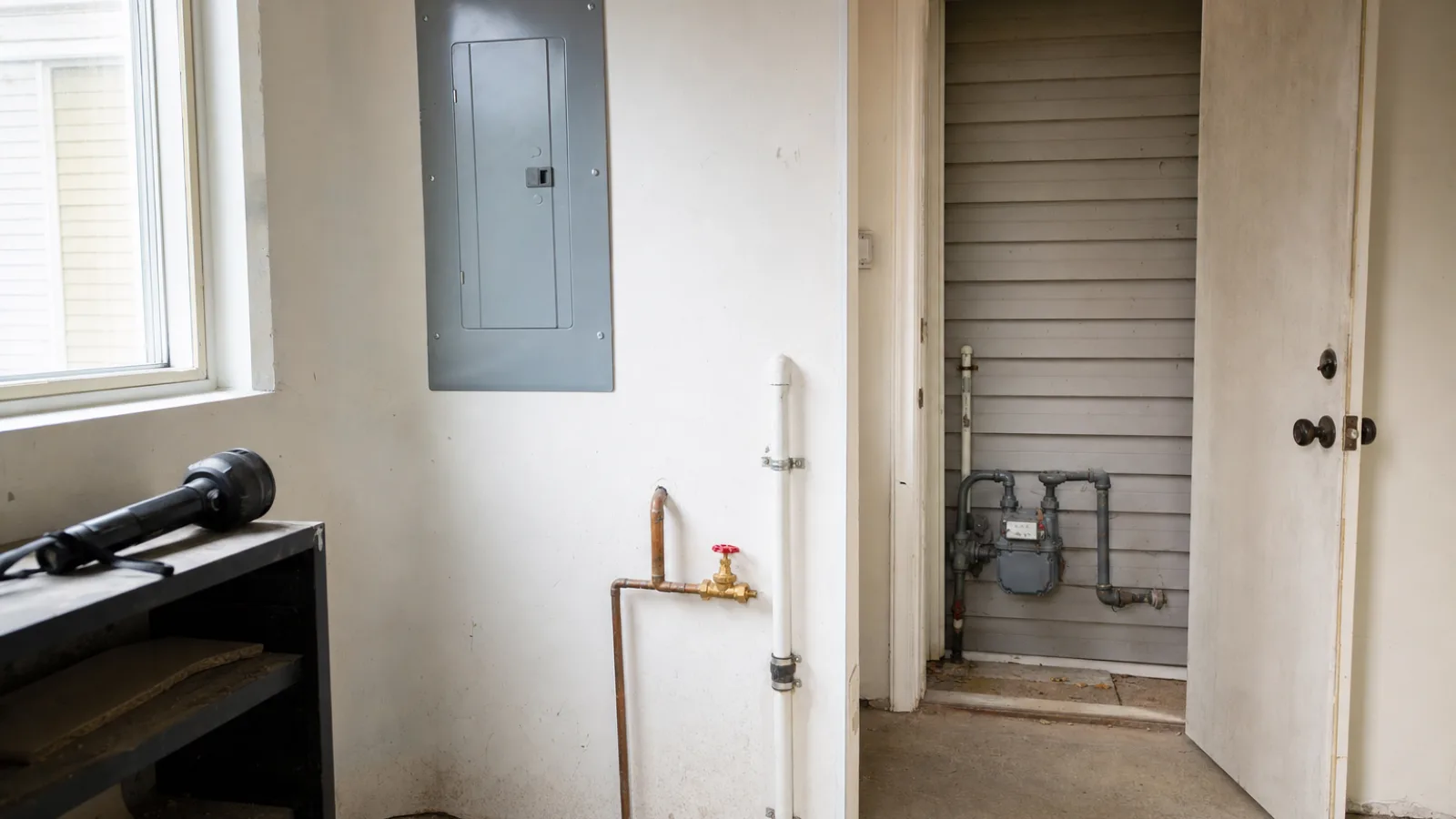
The first rule of any home emergency utility shutoff plan is simple: people come before property. If there is immediate danger, fire, suspected gas accumulation, sparking, structural damage, flooding around electrical equipment, or any other unsafe condition, evacuate and call emergency services from a safe location. Do not enter a dangerous area just to reach a valve or panel.
For less urgent situations, advance preparation can limit damage and improve communication. Resources such as Resideo’s home water leak protection resources can provide additional context on water-related risks, but every household still needs a property-specific plan. The practical approach is to locate, label, and safely review the controls for water, gas, and electricity.
Key Takeaways
- Find the whole-house water valve, gas service shutoff, and electrical main disconnect before an emergency.
- Label controls clearly and keep their access paths unobstructed, dry, and illuminated.
- Never approach a suspected gas leak, damaged electrical equipment, downed line, fire, or flooded panel.
- Renters should follow lease and utility requirements and notify the landlord or property manager.
- Assign household roles so adults manage utilities while children focus on evacuation and meeting-point procedures.
Why a Home Emergency Utility Shutoff Plan Matters
Water escaping from a failed pipe can damage finishes, contents, wiring, and building assemblies before help arrives. A gas leak can create a fire or explosion hazard. Electrical faults can produce shock, arcing, or fire, while storms and earthquakes may damage several utility systems at once.
Finding a control is harder under pressure. Darkness, smoke, standing water, debris, unfamiliar rental layouts, and interrupted power can make an ordinary basement, garage, or utility closet difficult to navigate. A household member who knows the general location may still be unable to identify the correct control quickly.
A useful plan has three parts: locate the controls, label them without ambiguity, and review the decision process without creating a new hazard. The plan should support emergency responders, utility operators, licensed professionals, landlords, and building managers—not replace them.
The Three Utility Shutoffs at a Glance
| Utility | Typical control | Situations requiring attention | Primary safety caution |
|---|---|---|---|
| Water | Whole-house main valve near the service entry, meter, or building supply | Burst pipes, rapidly growing leaks, plumbing damage, or freeze-related failures | Do not approach electrical equipment or enter unsafe areas to reach the valve. |
| Gas | Service shutoff at or near the gas meter; separate valves serve appliances | Gas odor, hissing, damaged piping, earthquake damage, or fire | Evacuate if gas may be accumulating. Do not operate switches, flames, phones, or vehicles near the suspected leak. |
| Electricity | Main disconnect or main breaker in the electrical service equipment | Electrical fire, severe storm damage, flooding, smoke, arcing, or damaged wiring | Never touch a panel while standing in water or when it is visibly damaged or burning. |
How to Locate and Label the Main Water Shutoff
Where to look
The main water shutoff is usually near the point where the water service enters the home. Common locations include a basement, utility room, garage, crawlspace, mechanical closet, or an exterior meter area. In some properties, the customer-side valve is near the water meter; in others, the building has an indoor valve and the utility controls the street-side equipment.
Locations vary by region, building age, construction type, and plumbing layout. Apartments, manufactured homes, houses on slabs, and properties with wells may use different arrangements. Ask the landlord, property manager, water provider, plumber, or building department when the location is uncertain.
What to label
Label the whole-house main valve as clearly as possible. Do not confuse it with the small valves serving a toilet, sink, washing machine, water heater, dishwasher, refrigerator, or irrigation system. Those individual valves can be useful for isolating a local problem, but they do not necessarily stop water to the entire building.
If the property has more than one dwelling, a shared supply, a fire-sprinkler system, or a separate irrigation line, identify which valve serves which area. Do not close a fire-protection control unless emergency responders or the responsible system professional directs you to do so.
How to prepare for access
Keep the valve area dry, visible, and free of stored items. Provide ordinary illumination and keep a flashlight nearby. Some exterior or meter arrangements require a valve key, but use only equipment appropriate for the property and permitted by the utility or owner. Know whether the valve closes clockwise or according to its marked direction, and never force a stuck valve. A seized or damaged valve should be handled by a qualified professional.
How to Identify the Gas Shutoff Safely
Meter and appliance valves
The gas service shutoff is generally located at or near the gas meter and controls supply to the building. Individual appliances such as furnaces, boilers, water heaters, ranges, and fireplaces may have separate shutoff valves. An appliance valve is not a substitute for the service shutoff.
Exact locations and operating methods vary among utilities and building types. Some gas meters are outdoors, while others are in a designated service room. Learn the arrangement during a normal, safe inspection and follow the gas utility’s instructions. Do not open sealed utility equipment or alter the meter, regulator, piping, or service connection.
When not to approach the valve
If you smell gas, hear hissing, see damaged gas piping, notice earthquake-related movement, or suspect gas is accumulating indoors, leave immediately if conditions allow. Do not use a flame to search for a leak. Do not operate light switches, appliances, thermostats, telephones, vehicles, or other potential ignition sources near the suspected leak. Contact emergency services or the gas utility from outside or another safe location, following local instructions.
Do not enter a gas-filled or otherwise dangerous area to reach the service valve. If the valve is safely accessible from outside and the utility or emergency personnel instruct you to operate it, follow their directions. Otherwise, evacuation takes priority.
Restoration after a gas shutoff
Closing a gas supply may require inspection, leak testing, and professional restoration before service can resume. Do not assume that appliances are safe simply because the odor has disappeared. Residents should not relight pilot lights, restart appliances, or reconnect equipment unless the utility or a qualified professional confirms that it is safe and the appliance instructions permit it.
Finding the Electrical Main Breaker or Disconnect
Common locations and labels
Electrical service equipment may be in a garage, basement, utility room, exterior wall, dedicated electrical closet, or another accessible service area. Apartments and older buildings may have a main disconnect in a shared electrical room or outside the unit. Manufactured homes and properties with additions may have more than one panel.
The main disconnect or main breaker controls the building’s primary electrical supply. Individual branch breakers control circuits such as lighting, receptacles, cooking equipment, or heating. A tripped branch breaker does not necessarily mean the entire home is de-energized, and some equipment may remain energized depending on the system configuration.
Situations requiring extreme caution
Do not handle a panel while standing in water or when there is visible smoke, arcing, burning odor, fire, severe corrosion, impact damage, or exposed conductors. Do not approach downed lines. During flooding, storms, or earthquakes, assume damaged electrical equipment may be energized and wait for emergency responders, the utility, or a qualified electrician.
If there is an electrical fire or smoke, evacuate and call emergency services. A panel is not a safe destination for an untrained person during an active fire or fault.
Generator and solar considerations
Solar photovoltaic systems, batteries, standby generators, and other distributed energy equipment can create additional sources of power. Approved transfer equipment and qualified installation are essential. Never connect a generator to a wall outlet or otherwise backfeed the home; this can energize wiring thought to be disconnected and endanger utility workers and occupants.
Match the Shutoff to the Emergency
- Burst pipe or rapidly growing indoor leak: Keep away from electrical equipment if water is nearby. Close the main water valve only if it is safely accessible and does not require entering a hazardous area. Arrange plumbing, building, or emergency assistance as appropriate.
- Suspected gas leak: Evacuate. Avoid flames, switches, phones, vehicles, and other ignition sources near the suspected leak. Contact emergency services or the gas utility from outside.
- Electrical fire or smoke: Evacuate and call emergency services. Do not approach a damaged panel or try to retrieve belongings.
- Flooding: Avoid energized equipment, submerged outlets, electrical panels, and downed lines. Follow instructions from emergency authorities and the utility.
- Earthquake or severe storm: Inspect only from a safe position. Treat damaged gas, electrical, and water systems as hazards, and report them to the appropriate emergency or utility contact.
The safest action is sometimes evacuation rather than a shutoff. A control is useful only when it can be reached without exposing anyone to greater danger.
Build a Household Utility Shutoff Plan
Create a simple utility map
Prepare a printed home emergency sheet or diagram showing the main water valve, gas meter and service shutoff, electrical panel or disconnect, utility meter locations, and emergency contact information. Include the property address, landlord or property manager, water provider, gas provider, electric provider, and a designated outdoor meeting point.
Photograph the shutoff locations during a safe daylight walkthrough. Images can help a household member recognize the correct equipment, especially in a dark or unfamiliar service area. Store a printed copy in an accessible location and keep a backup outside the home or in a secure digital location.
Assign responsibilities
Adults can be assigned to communicate with emergency services, utilities, building management, or a landlord. Other household members can take children and pets to the meeting point, bring the emergency information sheet if safe, and account for everyone. Do not assign children responsibility for operating gas or electrical shutoffs.
Make the controls easy to find
Use durable, unambiguous labels such as “WHOLE-HOUSE WATER,” “GAS SERVICE SHUTOFF,” and “ELECTRICAL MAIN.” Keep paths clear and provide a flashlight with spare batteries. Do not store tools, boxes, or chemicals where they block an exit or restrict access to service equipment.
Coordinate with renters and landlords
Renters should document the location and condition of accessible shutoffs, ask the landlord or property manager for instructions, and report missing labels, blocked access, leaks, damaged equipment, or unclear responsibilities. Do not alter, remove, operate, or repair equipment contrary to the lease, utility instructions, or building rules.
Landlords and property managers should communicate shutoff locations, access procedures, emergency contacts, and limitations on tenant operation. Shared buildings need a plan that distinguishes unit controls from common or building-wide equipment.
What to Keep Near Utility Shutoffs—and What Not to Do
Useful preparation items include a flashlight, spare batteries, durable labels, a printed contact sheet, and ordinary protective equipment for safe access, such as work gloves and sturdy footwear. These items are for preparation and routine inspection, not for entering smoke, gas, floodwater, or a structurally damaged area.
Never use tools to force valves, open sealed utility equipment, bypass breakers, remove electrical covers, or enter a hazardous area. Avoid these common mistakes:
- Waiting until an emergency to identify the controls.
- Blocking access with storage or household equipment.
- Confusing an appliance valve with the whole-house gas or water shutoff.
- Touching wet electrical equipment or a panel while standing in water.
- Using flames to locate a gas leak.
- Operating switches near a suspected gas leak.
- Assuming utilities are safe after visible storm, earthquake, fire, or flood damage.
Test and Review the Plan Without Creating Risk
Conduct a daylight walkthrough without unnecessarily manipulating gas equipment, electrical service equipment, sealed utility controls, or stiff valves. Confirm that labels are visible, access paths are clear, photographs are current, and emergency contact details are accurate.
Review household roles seasonally and after remodeling, moving, installing major equipment, changing occupancy, plumbing work, electrical work, utility upgrades, storms, or earthquakes. If the property configuration changes, update the map. A review should improve recognition and communication, not encourage repeated operation of gas or electrical equipment without a legitimate reason.
Frequently Asked Questions
Where is the main water shutoff in most homes?
It is commonly near the point where the service line enters the building, such as a basement, garage, utility room, crawlspace, mechanical closet, or meter area. The location varies, so confirm it with the property owner, utility, or a qualified professional.
Should I shut off the gas if I smell gas?
Leave immediately if gas may be accumulating. Do not operate switches, use flames, start vehicles, or use a phone near the suspected leak. Contact emergency services or the gas utility from a safe location. Only operate an accessible valve if emergency or utility instructions direct you to do so safely.
Can I turn off the electrical main during a flood?
Not if the panel or route to it is wet, damaged, smoking, arcing, or otherwise unsafe. Avoid energized equipment and downed lines, evacuate when necessary, and follow emergency or utility instructions.
What should renters do if they cannot find a utility shutoff?
Ask the landlord or property manager for the locations and operating rules. Report blocked access or missing information. Do not modify or operate equipment contrary to the lease, building rules, or utility instructions.
How often should a household review its utility shutoff plan?
Review it periodically and whenever the home, occupants, equipment, or utility arrangement changes. Recheck it after plumbing or electrical work and after major storms, earthquakes, or other events that may affect access.
Sources
- National Fire Protection Association, National Electrical Code, NFPA 70.
- National Fire Protection Association, National Fuel Gas Code, NFPA 54.
- Federal Emergency Management Agency, household guidance on earthquakes, floods, and emergency preparedness.
- U.S. Consumer Product Safety Commission, consumer safety guidance on gas hazards and carbon monoxide.
Conclusion
A strong home emergency utility shutoff plan is built around three actions: locate the controls, label them clearly, and communicate who does what. Water, gas, and electrical equipment differ, and no universal shutoff procedure is safe for every property.
Evacuation and emergency professionals always take priority over protecting the building. Create the household utility map, confirm access during a safe walkthrough, and keep the plan available before an emergency occurs.