Commercial Real Estate’s Equity Gap: Distress, Refinancing and Where Opportunities Appear
Commercial real estate owners may need hundreds of billions in new equity as loans mature, valuations remain below peak levels and refinancing costs stay elevated. The result is not simply a wave of distressed sales, but a slower contest over time, capital structure and asset quality.
The next phase of commercial real estate distress will not be defined only by vacant buildings or forced auctions. In many cases, the pressure will appear first in a refinancing package: a lender requiring fresh equity, a valuation that no longer supports the existing loan, or a maturity extension that buys time without solving the underlying capital problem.
Industry speakers and trade publications have estimated that commercial real estate owners could need approximately $470 billion to $500 billion in additional equity capital during 2026 and 2027. Those figures are estimates rather than a single official market measurement, but they point to the central issue: many properties still produce income, yet their capital structures were built around higher values, lower interest rates or both.
The practical question for owners is therefore not simply whether the market will recover. It is whether an asset can generate enough cash flow, collateral value and credible business-plan upside to attract capital before the loan matures.
Why commercial real estate distress is becoming a capital problem
Commercial property distress typically develops through several linked mechanisms. A loan originated when interest rates were low may mature with a substantially higher replacement rate. At the same time, lenders may apply more conservative underwriting assumptions, including lower leverage, higher debt-service coverage requirements and larger reserves for leasing costs or capital improvements.
Even if the building is occupied, those changes can create an equity gap. The gap is the difference between the amount required to refinance or repay the existing debt and the capital that the property can support at its current value and income level.
An illustrative example makes the mechanics clear. Suppose a property was valued at $100 million and carried $65 million of debt. If its value falls to $81 million, consistent with an illustrative 19% decline, a lender applying a 65% loan-to-value limit would support only about $52.7 million of debt. The owner would need to address roughly $12.3 million before considering transaction costs, leasing commissions, tenant improvements, deferred maintenance or interest-rate hedging.
This is not a forecast for any individual asset. Actual outcomes depend on net operating income, lease maturity, property type, location, lender policy, valuation method and the availability of subordinate capital. It does show why a property can remain operational while its financing becomes unsustainable.
CRE refinancing may recover before sales do
Refinancing activity can improve before transaction volumes fully recover. A lender may extend a loan, modify covenants, capitalize a portion of interest or provide new debt against a stabilized asset even when buyers and sellers cannot agree on price. That can reduce immediate default risk, but it does not necessarily eliminate the equity gap.
Several conditions determine whether a refinancing is workable:
- Debt-service coverage: The property’s recurring net operating income must support the new interest expense and required amortization.
- Loan-to-value: The lender’s advance may be constrained by a lower appraisal or a more conservative capitalization rate.
- Lease durability: Short lease terms, tenant concentration and upcoming rollover can reduce proceeds even when current occupancy appears strong.
- Capital needs: Roof replacement, facade repairs, elevators, mechanical systems and energy upgrades may compete directly with debt repayment for available cash.
- Sponsor support: Lenders will assess whether the owner can contribute equity, fund reserves and execute the operating plan.
Owners can wait only so long because loan maturities are contractual. An extension may be available, but it can require an exit fee, additional collateral, partial principal paydown, cash management or a new appraisal. Delay also has a cost: tenants may make decisions based on the building’s perceived stability, while deferred maintenance and vacant space can weaken the next valuation.
The bear case: a slow repricing becomes a wider workout cycle
The bear case for commercial real estate distress in 2026 is not necessarily a single dramatic collapse. It is a prolonged adjustment in which interest expense remains high, lenders continue to limit leverage and property income fails to grow quickly enough to offset the financing shock.
Office properties face the most visible version of this risk because hybrid work can affect space demand, tenant improvement costs and leasing velocity. But the same capital problem can appear in retail, hotels, industrial properties and multifamily assets when insurance, taxes, maintenance or construction costs rise faster than rents.
In a bearish scenario, more owners may choose between three unfavorable options: contribute substantial equity, sell below the price they expected, or hand control to a lender or special servicer. Mezzanine lenders and preferred-equity investors may gain negotiating power, while borrowers with weak documentation or unrealistic recovery assumptions may lose valuable time.
Distress can also become self-reinforcing. A building that cannot fund tenant improvements may lose a renewal. Lower occupancy reduces net operating income. The lower income supports a lower valuation, which reduces refinancing proceeds and increases the required equity contribution.
The bull case: income growth and selective refinancing restore liquidity
The bull case is more selective than a return to the conditions of the cheap-debt era. If interest rates stabilize or decline, lenders may become more confident in setting long-term proceeds. Properties with durable tenants, limited near-term rollover and credible capital plans could refinance without a large equity injection.
Income growth can also repair leverage over time. A building does not need to return to its previous peak valuation if net operating income increases enough to support the required debt. This is more plausible for assets with below-market rents, operational inefficiencies, or a realistic redevelopment or repositioning plan.
Transaction liquidity could improve at the same time. A functioning market does not require every buyer and seller to agree with the last cycle’s peak valuation; it requires enough participants to establish a new price. Once lenders, appraisers and buyers gain confidence in that price discovery, refinancing and sales can begin to reinforce each other.
Even in this case, recovery will likely differ sharply by asset. A well-located neighborhood retail center with essential tenants may attract capital while an obsolete office building in a weak submarket remains difficult to finance. Property-level fundamentals will matter more than broad market headlines.
Where opportunities appear in the CRE equity gap
The equity shortage creates opportunities for investors and service providers, but those opportunities carry execution risk. Capital may be directed toward several areas:
Rescue and recapitalization capital
Preferred equity, joint ventures and structured recapitalizations can bridge a maturity shortfall without an immediate sale. The cost is usually a higher return requirement, tighter controls or a path to ownership if the business plan fails. Owners should compare this cost with the economic value of retaining control and the risk of contributing additional common equity.
Basis-driven acquisitions
Buyers may find value where the replacement cost, land value or stabilized income justifies a lower purchase price. A discounted acquisition is not automatically a bargain. The buyer must underwrite the capital required after closing, including tenant improvements, leasing commissions, environmental work, building systems and compliance upgrades.
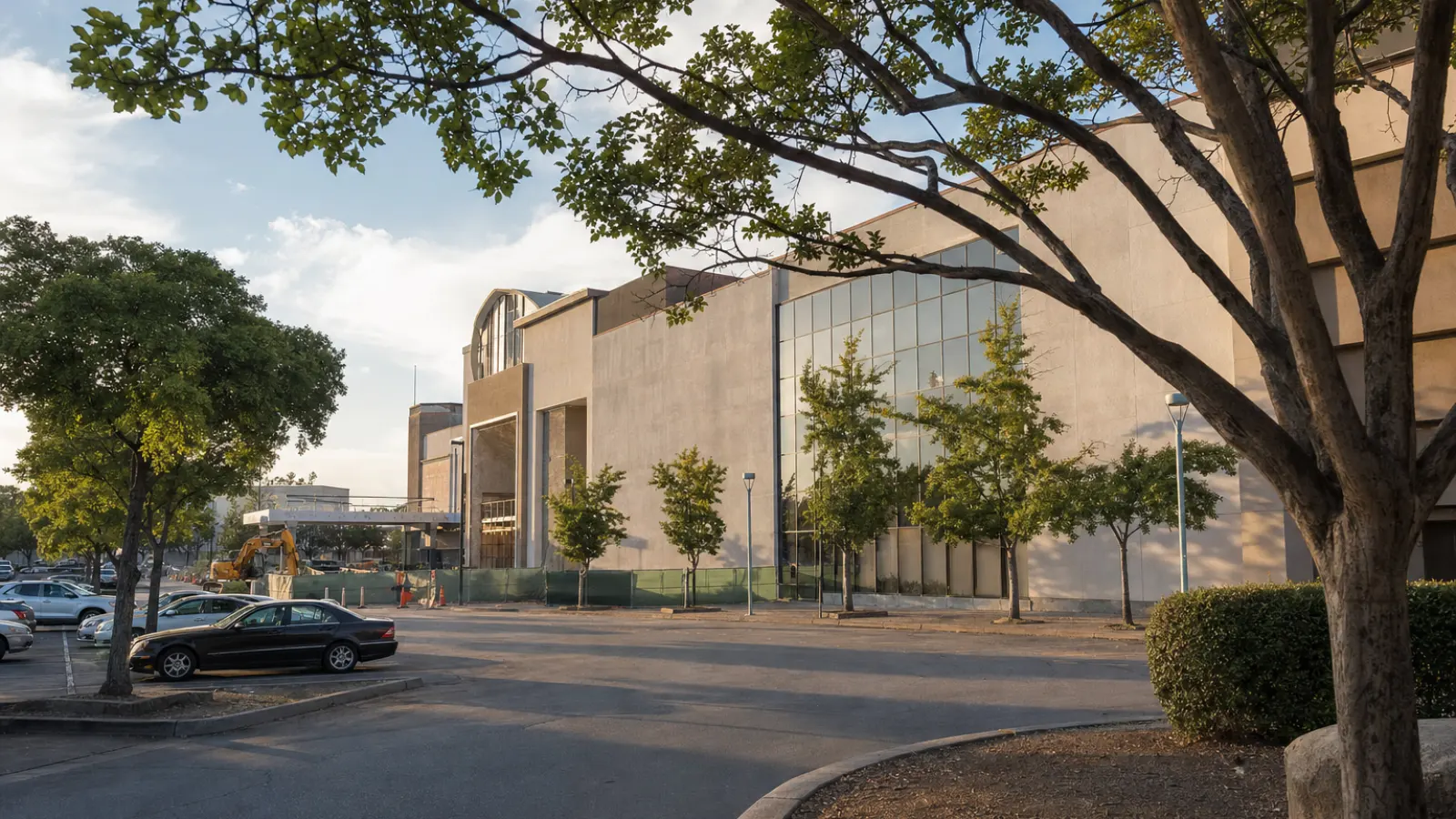
One example cited in market coverage is Macerich’s roughly $250 million purchase of Oakridge Mall in San Jose. The transaction illustrates how an experienced owner may pursue a major retail asset when the basis, location and repositioning potential fit its strategy. It should not be treated as evidence that every distressed mall is attractive; the relevant analysis includes tenant mix, trade-area demand, redevelopment constraints, debt terms and the capital required to maintain the property.
Energy and building-improvement capital
C-PACE financing can be relevant where eligible energy, water-efficiency, resilience or renewable-energy improvements create a financeable project. C-PACE assessments are generally repaid over a long term and may be structured separately from conventional mortgage debt, subject to state and local program rules and lender consent.
The financing is not free capital. Owners must examine the assessment obligation, lien structure, transfer provisions, savings assumptions and interaction with existing loan documents. A project that reduces operating costs or improves leasing appeal may strengthen a refinancing case, but a C-PACE assessment can also affect cash flow and underwriting if the projected benefits are overstated.
Valuation, brokerage and property technology
The equity gap increases the value of reliable property-level information. Lenders and investors need current rent rolls, lease abstracts, operating statements, capital plans, work-order records and energy data. Property-tech platforms can help organize that information, but software cannot replace physical inspections, lease review or independent underwriting.
Valuation and brokerage firms also have a larger role in separating temporary financing stress from permanent impairment. Comparable sales remain important, but income capitalization, discounted cash flow assumptions, replacement costs and scenario analysis must be reconciled rather than used selectively to support a desired price.
How owners should prepare before a maturity date
The most useful action is to begin before the lender’s formal process starts. Owners should build a maturity schedule showing not only principal balances, but also lease expirations, capital projects, insurance renewals, tax reassessments and interest-rate protection dates.
A practical refinancing file should include:
- Current rent roll and executed lease abstracts;
- Trailing operating statements reconciled to bank records;
- A realistic leasing and tenant-improvement budget;
- Recent property-condition and environmental information;
- Base, downside and recovery cash-flow cases;
- A clear explanation of required sponsor equity and its proposed source; and
- A list of potential collateral, guaranties and reserve requirements.
Owners should also distinguish between a liquidity problem and a business-plan problem. If the building is fundamentally competitive but temporarily overleveraged, a maturity extension or recapitalization may be rational. If the asset has obsolete systems, weak access, declining demand and substantial unfunded capital needs, additional debt may only postpone a necessary change in use or ownership.
That assessment requires disciplined commercial property due diligence, including physical condition, title, zoning, environmental exposure, leases, operating performance and local market demand. A lender’s willingness to extend a loan is not the same as proof that the asset is economically healthy.
Why rate headlines can appear contradictory
Mortgage-rate headlines often disagree because they measure different products, borrowers and timing. A weekly survey may report a conforming residential mortgage rate, while daily market sources quote a commercial lending indication, a Treasury-based swap rate or a lender’s offer for a specific borrower. Fees, leverage, amortization, recourse and interest-rate caps can materially change the all-in cost.
For CRE borrowers, the relevant question is not whether one headline rate is above or below another. It is how the proposed debt affects annual debt service, proceeds, reserves and the property’s ability to absorb vacancy or capital spending. A lower rate with lower proceeds may be less useful than a higher rate that solves the maturity problem without forcing a distressed sale.
Market participants should also avoid treating an expected central-bank move as a guaranteed refinancing solution. Credit spreads, lender balance-sheet capacity and property risk can keep commercial borrowing costs elevated even when a benchmark rate declines. The Federal Reserve’s Financial Stability Report provides useful context for evaluating how asset valuations, leverage and financial conditions can interact.
A market of negotiated outcomes
The most likely path is neither a uniform collapse nor a rapid return to peak pricing. Commercial real estate distress in 2026 will be distributed according to maturity schedules, asset quality, lender strategy and the availability of patient equity.
Owners with time, accurate information and a credible capital plan may refinance or recapitalize. Owners without those advantages may face a shrinking set of choices as maturity approaches. Buyers can find opportunities, but only by underwriting the building that exists today, the capital it needs tomorrow and the demand that will support it after the transaction.
This discussion is general information, not investment advice. Any refinancing, acquisition, C-PACE structure or equity investment requires independent legal, tax, valuation and financial review.