Bathroom Exhaust Fan Troubleshooting: How to Diagnose Moisture, Odors, and Poor Ventilation
Mirror condensation, lingering odors, peeling paint, and unusual fan noise can all indicate a bathroom ventilation problem. This guide explains safe checks for the fan, grille, ductwork, exterior termination, and room airflow before you call a professional.
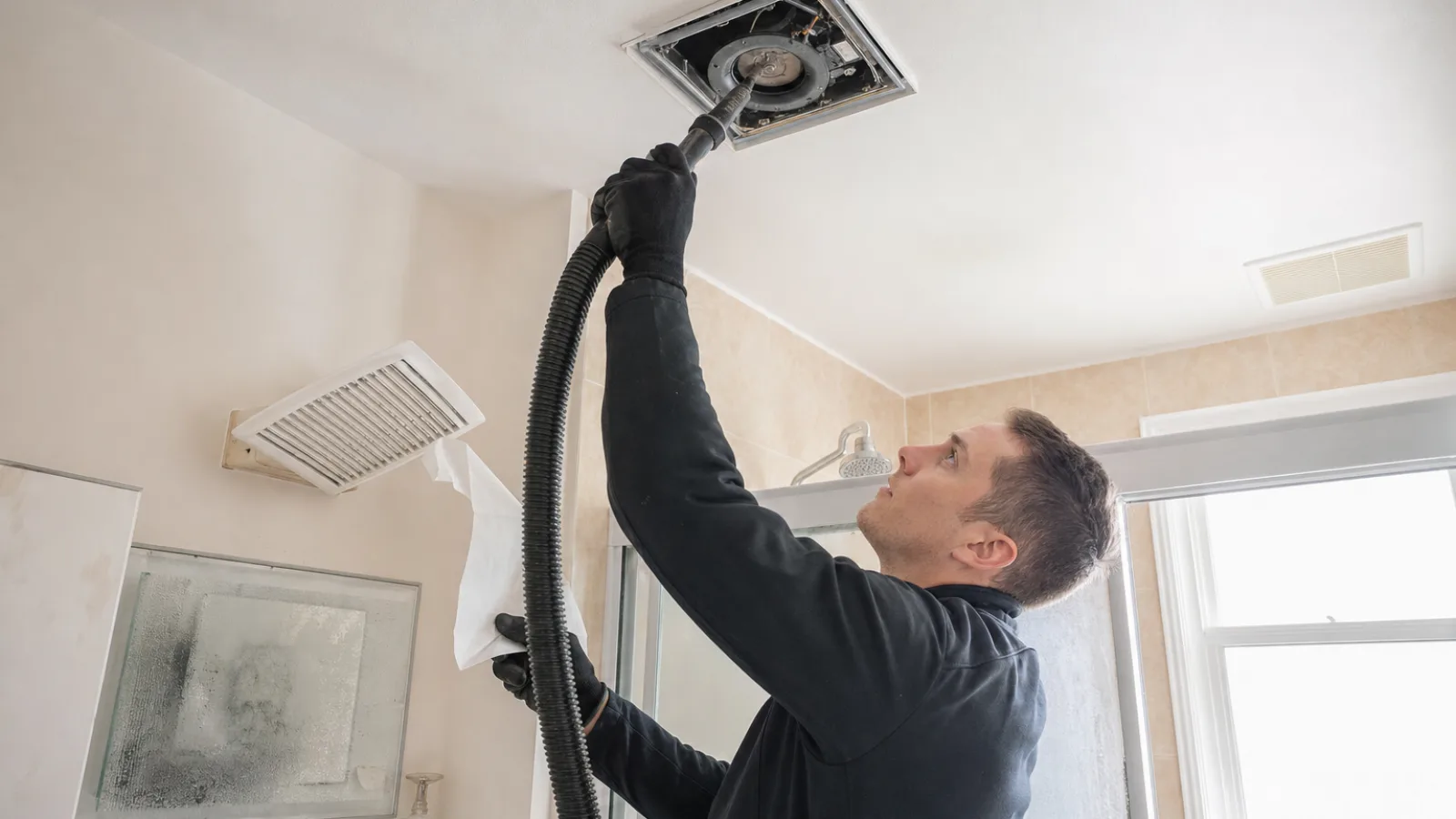
Mirror condensation that remains long after a shower, lingering odors, peeling paint, mildew, or a fan that suddenly sounds different are signs that bathroom ventilation may not be working as intended. The visible symptom may come from the fan motor, grille, duct, exterior termination, room airflow, or an electrical fault rather than from the fan alone.
For guidance on proper airflow, moisture removal and safe exhaust routing, consult the EPA guidance on bathroom ventilation, which explains why a working bathroom fan must move sufficient air and discharge it outdoors.
Start With a Quick Bathroom Exhaust Fan Performance Check
Begin with the simplest question: does the fan operate when its switch, timer, or humidity control calls for ventilation? Turn it on and listen for the motor. A steady operating sound suggests that power is reaching the unit, but it does not prove that air is moving effectively.
Hold a single sheet of toilet paper or tissue lightly against the grille. A working fan with reasonable suction should draw the sheet toward the grille. Do not insert fingers, tools, paper, or other objects through the openings. This simple check is only an indication; a fan can run while moving very little air if the grille is clogged, the duct is restricted, or the exterior damper is stuck.
Also check whether replacement air can enter the room. With the fan operating, open the bathroom door slightly and repeat the tissue test. If suction improves, a tightly closed door may be limiting airflow. A small door undercut or transfer grille can help, subject to local requirements and the design of the home.
Common Bathroom Exhaust Fan Problems and What They Mean
The fan does not turn on
A bathroom exhaust fan not working may have a simple control problem or a more serious electrical fault. Check whether the wall switch is loose or damaged, whether a timer has been set correctly, and whether a humidity-sensing control is delaying operation. At the electrical panel, look for a tripped breaker or ground-fault protection device, but do not repeatedly reset a breaker that trips again.
Other possibilities include loose wiring, a failed switch, a seized motor, or a disconnected power supply. Do not remove electrical covers or test live wiring unless you are qualified and equipped to do so. Call a licensed electrician if the breaker trips repeatedly, the switch or wiring is damaged, there is a burning smell, the fan makes electrical buzzing, or the unit remains dead after basic control checks.
The fan runs but has weak airflow
When a bathroom fan has weak airflow, start at the grille. Dust and lint can restrict intake, while a dirty or damaged blower wheel can reduce performance. The duct may also be disconnected, crushed, kinked, undersized, excessively long, or designed with too many bends. Flexible ducting that sags can collect moisture and create additional resistance.
At the exterior termination, a flap may be stuck by paint, dirt, lint, ice, or a nest. A screen that is too fine or clogged can also restrict discharge. The fan may be operating normally at the motor while the air pathway beyond it is blocked. A duct that terminates indoors, including in an attic or wall cavity, is a serious installation problem rather than a ventilation solution.
The bathroom stays humid after showering
Persistent steam usually indicates insufficient air removal, although the cause can vary. The fan may be too small for the room, operating only after a delay, or exhausting through an obstructed or poorly routed duct. A tightly closed door can prevent enough replacement air from entering, reducing the volume of air the fan can move.
Check whether the fan starts promptly and continues running after bathing. If the control has a timer or humidity sensor, confirm that its settings are appropriate and that the control is functioning. Do not assume that installing a larger fan will solve the problem: the existing duct size, route, exterior termination, and electrical supply must be compatible with the replacement.
Odors linger even when the fan runs
If the bathroom fan still smells, first distinguish a ventilation issue from an odor source. A fan can remove stale air only when it is moving enough air and discharging it outdoors. It cannot eliminate odors caused by a dry plumbing trap, sewer gas, a leaking drain connection, damp materials, mold growth, or inadequate cleaning.
A persistent sewer-like odor warrants attention from a plumber, particularly if it changes when fixtures are used or appears near a drain. If the odor is musty and accompanied by staining or dampness, investigate moisture intrusion and concealed building materials rather than relying on the fan.
The fan is noisy, rattling, or vibrating
A noisy bathroom exhaust fan may have a loose grille, dirty or unbalanced blower wheel, loose housing, worn motor bearings, or ductwork that vibrates against framing. A rattle that changes when the grille is gently held may point to a loose cover. Grinding or squealing that comes from the motor can indicate wear.
Turn off power before removing the grille for inspection. If noise persists after cleaning and securing accessible parts, replacement may be more practical than continued repair. Do not ignore a fan that smells hot, repeatedly stops, or shows signs of electrical overheating.
Condensation or water appears near the fan
Water near the grille can result from condensation inside a cold duct, missing insulation on a duct running through an unconditioned space, a roof or exterior leak, or warm moist air exhausting into an attic or wall cavity. In cold weather, humid air can condense before reaching the exterior if the duct is poorly routed or inadequately insulated.
Water near electrical components requires caution. Turn off the fan if it is safe to do so, avoid touching wet wiring or the housing, and arrange prompt inspection. A roof, ventilation, or building-envelope professional may need to determine whether the moisture is coming from the duct, termination, roof penetration, or surrounding structure.
Inspect the Parts You Can Safely Check
Clean the grille and accessible fan housing
- Turn off power at the switch and, where appropriate, the circuit breaker.
- Remove the grille carefully. Many grilles are held by spring clips that must be squeezed.
- Vacuum dust from the grille and accessible housing using a brush attachment.
- Wash the grille separately with mild soap and water, then dry it completely.
- Reinstall the grille and restore power only after all accessible parts are dry.
Do not spray cleaner into the fan, wet the motor, or disturb electrical connections. If the housing is difficult to reach or the unit is mounted above a stairwell or other unsafe location, use a qualified professional.
Check the exterior vent termination
From ground level or another secure location, look for a vent flap that does not open when the fan operates. Check for visible lint, nests, snow, paint, or debris. Some terminations have screens that can become blocked; any alteration should follow the product design and applicable requirements.
Do not climb onto a roof or use an unstable ladder for this inspection. Roof access, termination replacement, and work near roof penetrations should be handled by someone with suitable fall protection and experience.
Look for ductwork problems
Rigid metal ducting generally provides a smoother air path than a kinked or sagging flexible run, but either type must be correctly sized, joined, supported, and routed. Look for visible disconnections, crushed sections, sharp bends, sagging areas that can hold condensation, missing insulation in cold spaces, and a termination that ends indoors.
Never enter an attic or crawlspace if access is unsafe, the floor is uncertain, temperatures are extreme, or there may be electrical, structural, or contamination hazards. A qualified ventilation or HVAC professional can inspect concealed ductwork without turning a minor airflow issue into a safety incident.
Consider makeup air and room pressure
A fan removes air, so replacement air must enter the room. A tightly closed bathroom door can reduce the pressure difference that drives airflow. A modest door gap or transfer grille may improve operation, but the solution must be compatible with privacy, fire-safety, accessibility, and local construction requirements.
A Symptom-to-Cause Troubleshooting Table
| Symptom | Likely causes | Next step |
|---|---|---|
| No sound | Tripped breaker, failed switch, timer or humidity control issue, loose wiring, failed motor | Check controls and the panel without opening electrical covers; call an electrician for persistent faults. |
| Weak suction | Dirty grille, clogged blower, restricted or disconnected duct, stuck exterior damper, insufficient makeup air | Clean accessible parts and check the exterior termination safely; arrange duct inspection if airflow remains poor. |
| Persistent steam | Low fan capacity, obstructed duct, delayed operation, poor routing, tightly closed door | Confirm operating time and room airflow, then assess fan sizing and duct compatibility. |
| Lingering odor | Insufficient exhaust, drain or sewer-gas issue, damp materials, cleaning-related odor | Separate ventilation symptoms from the source; call a plumber for sewer-like odors or a building professional for dampness. |
| Rattling | Loose grille or housing, dirty blower, worn motor, vibrating duct | Turn off power, inspect accessible components, and replace or repair the unit if noise persists. |
| Water or staining | Cold-duct condensation, missing insulation, roof leak, indoor termination, moisture near electrical parts | Stop using the unit if electrical components are wet and arrange prompt ventilation, roofing, or electrical inspection. |
When Cleaning Is Enough—and When the Fan Needs Replacement
Cleaning may solve the problem when the fan operates steadily, the grille is visibly dusty, the exterior damper opens, and there are no signs of water, overheating, or damaged components. After cleaning, repeat the tissue test and observe whether moisture clears more effectively during normal use.
Replacement is more likely when the motor has failed, the unit repeatedly overheats, the housing or blower is damaged, or performance remains poor after the airflow path is corrected. An obsolete, persistently noisy fan may also be a poor candidate for repair. If the original unit is incorrectly sized, replacement should address the room, duct route, control method, and available electrical connection together.
Compare the proposed unit's airflow rating, sound rating, duct connection, control options, and access for future maintenance. Humidity-sensing controls and timers can improve operation when correctly configured, but they do not compensate for a blocked duct or poor termination. Do not select a larger fan without checking whether the duct can carry the required airflow and whether the installation conditions support it.
When to Call a Professional
- Licensed electrician: exposed or damaged wiring, repeated breaker trips, burning smells, electrical buzzing, water near electrical components, or a fan that remains inoperative after basic control checks.
- HVAC or ventilation professional: inaccessible, crushed, disconnected, undersized, or incorrectly routed ductwork; persistent weak airflow; or a bathroom without a compliant exterior exhaust route.
- Roofer or building-envelope professional: suspected roof leaks, damaged flashing, failed roof penetrations, or water entering around the exterior termination.
- Plumber: sewer-gas odors, drain-related smells, leaking traps, or odors that remain after ventilation is confirmed.
- Qualified remediation or building professional: suspected mold or concealed material damage caused by chronic moisture.
How to Prevent Future Bathroom Ventilation Problems
Run the fan during bathing and for an appropriate period afterward, following the control or manufacturer's guidance. A timer can prevent the fan from being switched off immediately, while a correctly adjusted humidity control can respond to changing moisture levels.
Keep the grille clean, inspect the exterior termination periodically, and address roof, plumbing, and duct leaks promptly. Do not exhaust moist air into an attic, crawlspace, wall cavity, or soffit unless the system is specifically designed and approved for that termination. The exhaust route should discharge to an appropriate exterior location.
Seasonal inspection is useful because nests, snow, paint, and debris can restrict the termination, while cold weather can expose duct insulation and condensation problems. Landlords and maintenance teams should document inspections, cleaning, complaints, repairs, and follow-up observations so recurring bathroom ventilation problems are not overlooked.
Frequently Asked Questions
How do I know if my bathroom exhaust fan is working properly?
Confirm that it starts when commanded, produces a steady sound, draws a tissue lightly toward the grille, and discharges air at the exterior termination. Moisture should clear progressively after bathing. Strong motor noise without exterior airflow suggests a duct or damper restriction.
Why does my bathroom fan run but not remove moisture?
The grille or blower may be dirty, the duct may be blocked or disconnected, the fan may be undersized, or the room may lack replacement air. Poor routing, cold-duct condensation, and a delayed control can also contribute.
Should a bathroom exhaust fan vent through the roof or wall?
Either can be suitable when properly designed, routed, terminated, and sealed for the building. The correct choice depends on the structure and duct path. Exhaust should discharge outdoors through an approved termination, not into an attic, crawlspace, wall cavity, or other concealed space.
Can I improve airflow by removing the bathroom fan grille?
Removing a dirty grille may temporarily reveal that the grille is restricting intake, but operating the fan without its proper cover is not a complete solution. Clean or replace the grille and investigate the duct, blower, and exterior termination if airflow remains weak.
How long should a bathroom exhaust fan run after a shower?
Use the timer, humidity control, or manufacturer guidance for the unit. The appropriate period depends on the room, fan performance, moisture load, and ventilation design. If the bathroom remains wet despite extended operation, investigate the system rather than simply running the fan longer.
Is a noisy bathroom fan dangerous?
Noise is not always dangerous, but rattling, grinding, overheating, burning smells, repeated stopping, or electrical buzzing should not be ignored. Turn off the unit if there is a safety concern and arrange inspection.
When should I replace rather than repair a bathroom exhaust fan?
Replacement is sensible when the motor has failed, the housing or blower is damaged, overheating recurs, the unit remains noisy after cleaning, or the fan is poorly matched to the duct and room. Confirm duct capacity and installation requirements before choosing a replacement.
Conclusion
Effective bathroom exhaust fan troubleshooting follows a logical sequence: verify that the fan operates, check actual suction, clean accessible components, inspect the exterior termination, consider room airflow, and then evaluate duct routing, sizing, repair, or replacement. A fan that runs is not necessarily a fan that ventilates.
Arrange professional evaluation when moisture is entering the structure, water is near electrical parts, ductwork is inaccessible or damaged, a roof penetration is suspect, or odors may be plumbing-related. Correcting the source—not merely replacing the grille or installing a stronger motor—is what restores reliable bathroom ventilation.