How Investors Are Using Fractional Real Estate Platforms to Access UAE Property Markets
High property prices once created a significant barrier to entering the lucrative UAE real estate market. This guide explains how fractional real estate investment platforms are changing the game, allowing modern investors to build diversified property portfolios with lower capital outlay.
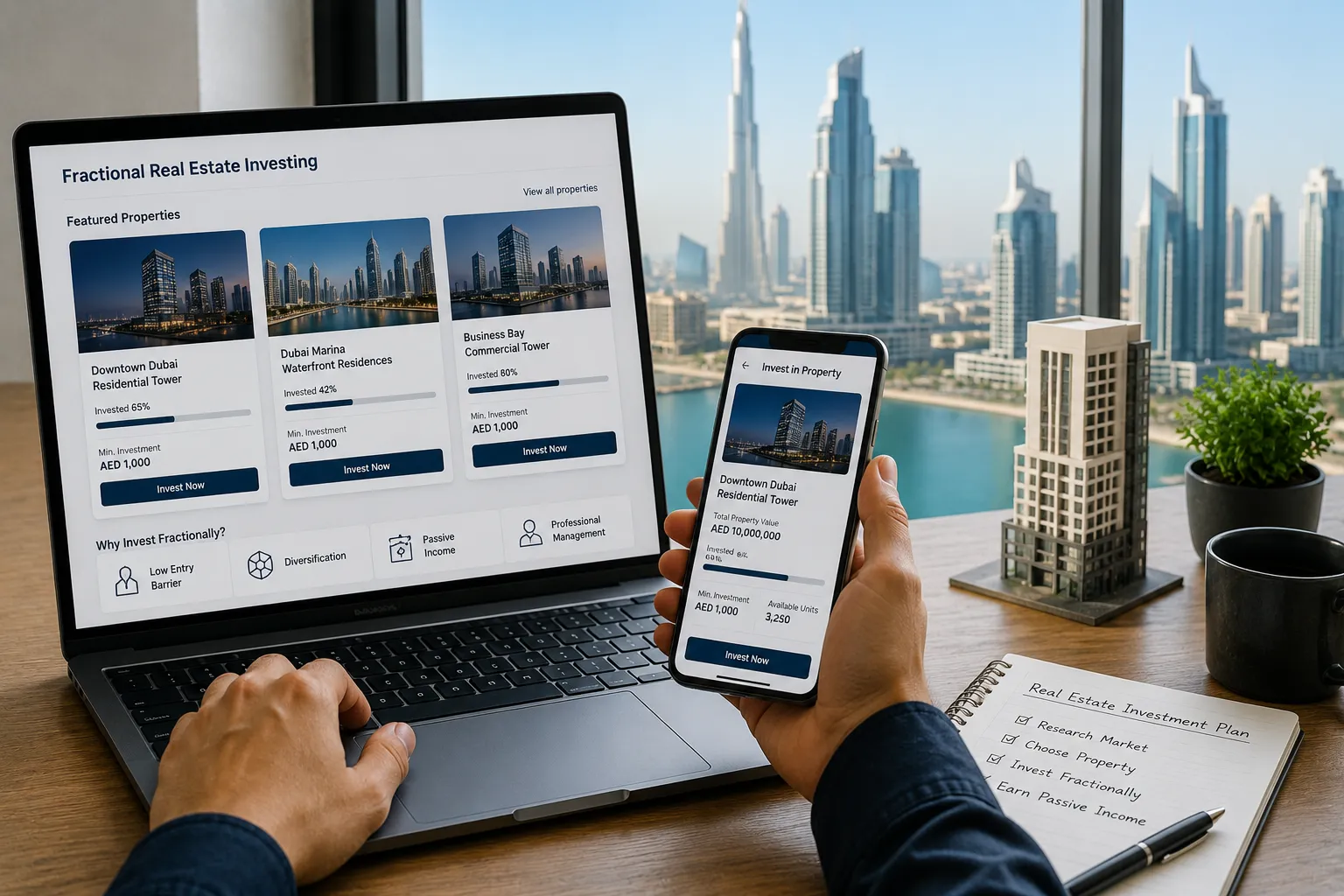
The ambition to own a prime piece of real estate often clashes with the reality of high capital requirements. For many investors, purchasing an entire property outright is a significant financial hurdle. This is particularly true in high-growth markets where entry costs can be prohibitive. However, a strategic shift is underway, driven by technology and a demand for more accessible investment vehicles.
Modern investors are increasingly turning to fractional ownership models to gain exposure to real estate assets without the burden of full acquisition. This approach aligns perfectly with contemporary investment philosophies that prioritize diversification, liquidity, and digital management. The rise of fractional real estate investment in the UAE is a prime example of this evolution, opening doors to a market once reserved for high-net-worth individuals and institutional players.
Why Investors Are Moving Toward Fractional Real Estate
The move toward fractional ownership is not just a trend; it's a calculated response to market dynamics and investor needs. The traditional model of property ownership is being challenged by a more flexible and efficient alternative.
High property prices in premium locations like Dubai create a significant barrier to entry. Fractional investing dismantles this barrier, allowing individuals to invest with significantly less capital. Instead of needing millions, an investor can acquire a share of a property for a fraction of the cost.
Diversification is another core driver. Rather than concentrating capital in a single property, investors can spread their funds across multiple properties, locations, and asset types. This strategy is fundamental to modern property portfolio growth, as it mitigates risk and enhances potential returns.
Finally, the digital transformation of finance has made investors comfortable with managing their portfolios online. Real estate investment platforms offer a seamless, transparent, and user-friendly experience, from initial investment to tracking returns, making property investing as accessible as stock trading.
Why UAE Real Estate Attracts Global Investors
The United Arab Emirates, particularly Dubai, has firmly established itself as a global hub for business, tourism, and luxury living. This status translates into a robust and attractive real estate market for several key reasons.
The economic growth of Dubai is a primary magnet. Continuous infrastructure development, pro-business government policies, and a strategic global location fuel consistent demand for both residential and commercial properties. This environment fosters capital appreciation over the long term.
Rental yields in the UAE are among the most competitive globally. Investors can achieve strong, consistent cash flow from rental income, often surpassing what is available in mature markets in Europe or North America. This makes UAE property investment highly appealing for income-focused strategies.
The nation's tax-friendly policies, including the absence of income tax on rental earnings for individuals, significantly boost net returns. This financial advantage, combined with a secure and transparent regulatory framework, provides a stable environment for international capital.
How Fractional Real Estate Investment Platforms Work
Understanding the mechanics of a real estate investment platform is crucial for any prospective investor. These platforms act as intermediaries, simplifying a complex process into a streamlined digital experience.
The core of the model is shared ownership. A platform identifies a high-potential property, acquires it, and then places it into a legal structure, typically a Special Purpose Vehicle (SPV). This SPV is then divided into shares or fractions, which are offered to investors on the platform.
When an investor purchases shares, they become a part-owner of the property. Any rental income generated is collected by the platform's management team, and after deducting management fees and operational costs, the net income is distributed to the investors in proportion to their ownership stake.
Portfolio management is handled entirely through a digital dashboard. Investors can view their holdings, track rental income, receive property updates, and monitor the estimated value of their shares. This accessibility empowers investors to make informed decisions about their property portfolio growth from anywhere in the world.
Investment Analysis and Risk Evaluation
Successful investing is rooted in diligent analysis, not speculation. When evaluating a fractional property opportunity, a disciplined approach is essential. This involves scrutinizing both the asset and the market.
Return on Investment (ROI) analysis should be your starting point. This includes calculating the potential net rental yield and forecasting capital appreciation. Platforms often provide these projections, but savvy investors will conduct their own research to validate the assumptions.
Location evaluation is paramount. Look beyond the glamour and assess the micro-location's fundamentals. Consider its proximity to transport links, business hubs, schools, and lifestyle amenities. A prime location underpins both rental demand and long-term value.
Assessing rental demand involves analyzing historical occupancy rates, comparable rental prices in the area, and future development plans that could impact the local market. A property with strong, resilient rental demand is less susceptible to short-term vacancies. Modern investors use a variety of tools for this, and a reputable fractional real estate investment platform in the UAE will often provide detailed property reports and market data to aid in this process.
Finally, consider market volatility and liquidity. While real estate is a long-term asset, understanding exit options is important. Some platforms offer a secondary market for selling shares, but liquidity can be limited compared to public markets. Investors must be prepared to hold their investment for the medium to long term to ride out market cycles.
The Importance of Registering a Company for Property Investment
For investors planning to build a substantial portfolio, thinking beyond a single fractional purchase is key. Establishing a legal entity, such as a company, to hold your real estate assets offers significant strategic advantages.
A dedicated company structure provides a layer of asset protection. It separates your personal liabilities from your investment assets, shielding your personal wealth from any potential legal or financial issues related to your properties.
From a taxation perspective, a corporate structure can offer efficiencies, especially for international investors dealing with different tax jurisdictions. It allows for more structured financial planning and can simplify compliance with global reporting standards.
Most importantly, a company structure provides scalability. As you expand your UAE property investment portfolio, managing multiple assets under a single legal entity streamlines administration, financial reporting, and potential financing opportunities, creating a professional and robust investment operation.
Real Examples and Investor Scenarios
To illustrate the principles of fractional investing, let's consider two hypothetical investor scenarios.
Scenario 1: The Strategic Diversifier
An investor with $50,000 in capital wants to enter the Dubai property investment market. Instead of saving for years to afford a down payment on one apartment, she allocates her capital across five different properties on a fractional platform. She chooses a mix of a high-yield studio in a business district, a family-oriented apartment in a suburban community, and a luxury unit in a prime tourist area. This diversification spreads her risk and provides multiple streams of rental income. Over three years, one area sees modest growth while another experiences a boom, but her overall portfolio delivers a stable, blended return.
Scenario 2: The Impulsive Speculator
Another investor, hearing about Dubai's hot market, quickly invests $30,000 into a single off-plan fractional property based on marketing hype alone. He skips the due diligence on the location's rental history and fails to analyze the developer's track record. The project faces delays, and upon completion, the local area has an oversupply of similar units, leading to lower-than-expected rental yields and stagnant appreciation. His concentrated, uninformed bet results in underperformance and a difficult exit.
The key lesson is clear: diversification, thorough analysis, and a long-term perspective are the cornerstones of successful property portfolio growth.
Risks and Challenges in Digital Property Investment
While fractional platforms offer unprecedented access, they are not without risks. A smart investor must be aware of the potential challenges.
Platform risk is a primary consideration. It is crucial to vet the real estate investment platform itself. Investigate its regulatory compliance, track record, management team's experience, and the transparency of its fee structure. A reliable platform is as important as a good property.
Market fluctuations are an inherent risk in any real estate investment. Property values can decline, and rental demand can soften due to economic downturns or oversupply. Fractional ownership does not insulate you from these market forces.
Legal and regulatory considerations are also important. The legal framework for fractional ownership is still evolving globally. Ensure the platform uses a clear and robust legal structure (like an SPV) that properly secures your ownership rights to the underlying asset.
Final Advice for Smart Real Estate Investors
Navigating the world of fractional real estate investment in the UAE requires a strategic mindset. Success is built on a foundation of diligence, patience, and informed decision-making.
First, prioritize due diligence above all else. Research every property, analyze every market report, and scrutinize every platform. Never invest based on emotion or fear of missing out.
Adopt a long-term investment horizon. Real estate is not a get-rich-quick scheme; it is an asset class that builds wealth steadily over time. Be prepared to hold your investments through market cycles to realize their full potential.
Choose your partners wisely. Align yourself with trusted, transparent, and well-regulated platforms that put investor interests first. Their expertise and governance are critical to your success.
Finally, understand the balance between risk and growth. A well-diversified portfolio, built through a reputable platform and guided by sound analysis, is the most effective way to harness the opportunities of the UAE property market while managing inherent risks.