Inside the Business Model of Branded Residences: Licensing, Pricing, and Investor Returns
Branded residences combine luxury real estate with hospitality, design, and lifestyle branding. This guide explains how licensing, service costs, rental operations, pricing premiums, and resale considerations shape the investment case.
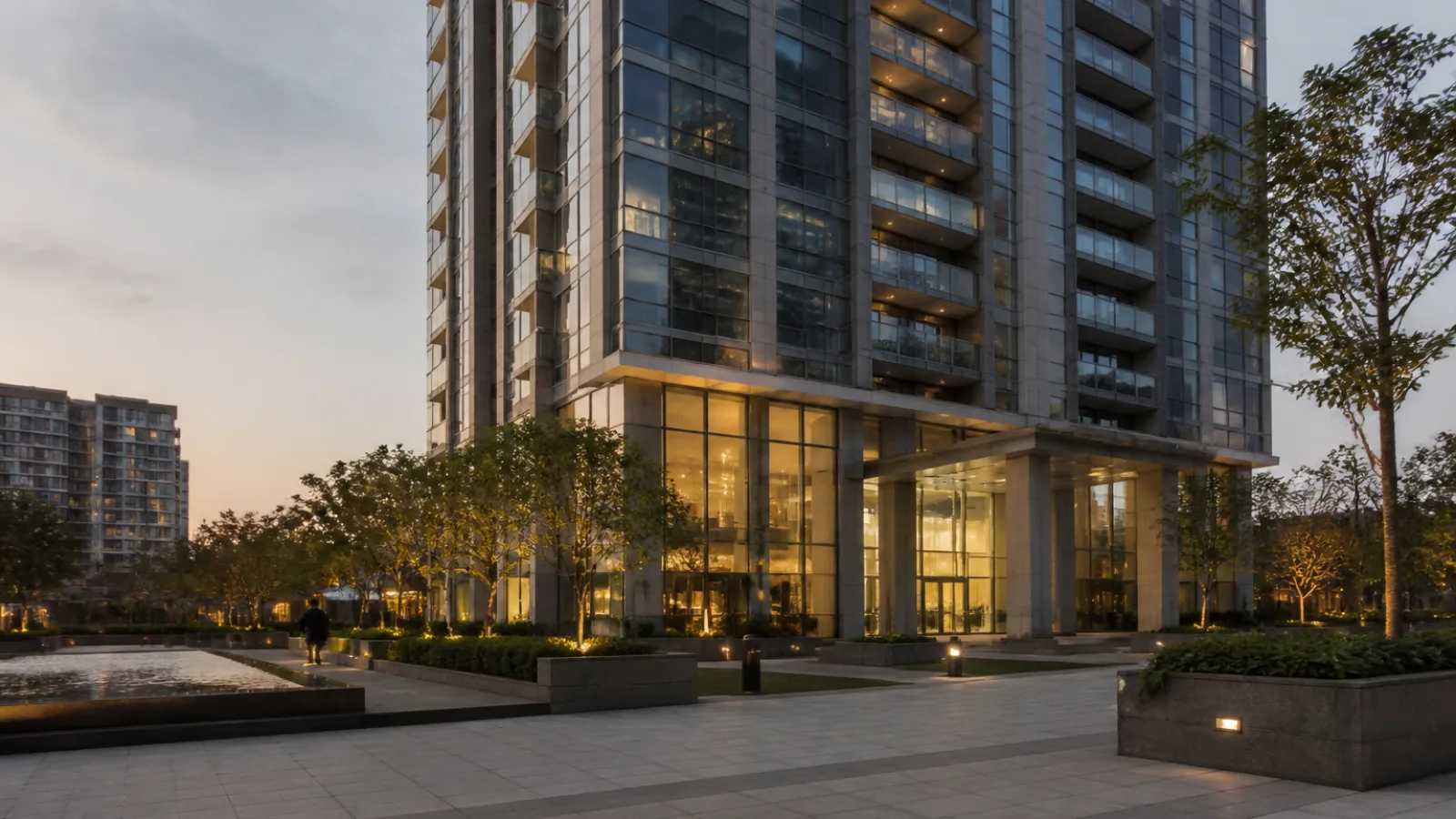
Branded residences are luxury homes developed in association with a recognized hospitality, fashion, jewelry, automotive, or lifestyle brand. Buyers may receive hotel-style services, design consistency, concierge access, and the reassurance of an established name. Examples include Four Seasons and Ritz-Carlton residences, as well as design-led projects associated with Armani, Bulgari, or Porsche Design Tower. For an overview of how one hospitality brand presents its residential offering, see Four Seasons private residences.
For investors, however, the central question is not simply whether a famous logo appears on the building. The more important issue is how the brand is licensed, how services are delivered, what the premium costs, and whether additional rental income or resale value can justify those costs. Branded property development is ultimately a business model that combines real estate, hospitality operations, marketing, and long-term asset management.
This article provides general educational information, not investment, tax, or legal advice. Deal terms, ownership rights, operating arrangements, fees, and regulations vary by project and jurisdiction.
What Are Branded Residences?
A branded residence is a privately owned home connected to a brand through a licensing, management, design, or operating agreement. Some projects are attached to a hotel, while others are standalone residential buildings managed under a hospitality or lifestyle name. Ownership may be freehold, leasehold, condominium-based, or structured under local property law.
The distinction matters because not every branded project offers the same service package. A hotel-connected residence may provide room service, housekeeping, valet parking, restaurants, and shared amenities. A standalone designer residence may focus more heavily on architecture, interiors, privacy, and curated services. The brand relationship can also change over time, so buyers should review the actual contracts rather than rely on marketing language.
The difference between hotel branded homes, designer residences, and ordinary luxury apartments
Hotel branded homes are usually the most hospitality-oriented option. They may benefit from an established operator, reservation systems, trained staff, and access to hotel amenities. Owners often pay for this infrastructure through service charges or rental-program deductions.
Designer residences are shaped by a fashion, jewelry, automotive, or architecture brand. Armani and Bulgari, for example, can influence interiors, materials, furnishings, and the project’s market positioning. Porsche Design Tower represents an automotive-inspired approach in which technology, privacy, engineering, and vehicle-related amenities help define the product. The brand may not be responsible for day-to-day hospitality operations.
Independent luxury apartments can offer comparable construction quality, location, views, and amenities without a formal brand relationship. They may provide greater flexibility and lower operating costs, although service quality, marketing reach, and management consistency depend on the developer or homeowners association.
The parties involved
- Developer: Acquires land, finances construction, coordinates delivery, and sells the homes.
- Brand owner: Licenses its name, design language, customer experience, and standards.
- Operator: Manages hospitality services, amenities, staff, and sometimes the rental program.
- Homeowners association: Collects assessments and administers shared building obligations.
- Individual owner: Uses, leases, sells, or places the residence into an approved rental program.
These roles can overlap. A brand may both license its name and manage the property, or it may license the brand while a separate operator delivers services. That distinction affects costs, accountability, and what happens if the relationship ends.
How the Licensing Model Works
What the developer receives from the brand
The developer generally pays for access to the brand’s reputation, systems, design expertise, customer network, and operating knowledge. The agreement may include an upfront development or technical-services fee, recurring royalties, management fees, marketing contributions, or a combination of these. Exact structures are private and vary by market, product, and negotiating power.
In return, the developer may receive site evaluation, concept development, design review, sales support, staff training, launch marketing, and use of brand standards. A hospitality brand can also provide reservation technology, procurement systems, operational procedures, and customer-service training. These elements can improve the project’s marketability, but they do not remove the developer’s construction, financing, or delivery obligations.
What the brand receives in return
The brand receives financial compensation and an opportunity to extend its customer relationship into real estate. It may earn licensing fees, management fees, marketing charges, or other contractual payments. A successful residence can also reinforce the brand’s position in a particular city or luxury market.
Brands usually protect themselves through approval rights and performance requirements. They may control how the name, logos, interiors, uniforms, guest experience, and promotional materials are used. They may also require the developer and operator to maintain specified quality levels throughout the agreement.
Brand standards, management agreements, and service obligations
Brand standards can support consistency, but they also add cost. Requirements may cover lobby finishes, kitchens, bathrooms, lighting, elevators, security, landscaping, furniture, staffing, maintenance schedules, and service response times. These specifications can make a project more attractive to buyers, but they may reduce the developer’s ability to substitute cheaper materials or simplify operations.
Management agreements determine who hires staff, controls budgets, sets service levels, manages vendors, and handles owner complaints. Buyers should identify whether the operator has authority over annual budgets and whether owners have any meaningful voting or approval rights.
It is also important to determine whether standards apply only at launch or throughout the building’s life. Buyers should ask who pays for periodic refurbishments, technology upgrades, staff training, and replacement of branded furniture or equipment. A project can remain recognizable while becoming financially burdensome if long-term replacement obligations are poorly understood.
How Major Brands Shape the Product
Four Seasons and Ritz-Carlton illustrate the hospitality-led model, where service delivery, staff training, reservations expertise, and hotel-style amenities can be central to the proposition. Their presence may appeal to buyers who prioritize consistency, concierge support, housekeeping, security, and professionally managed shared facilities.
Armani and Bulgari demonstrate how fashion and jewelry identities can influence interiors, finishes, furnishings, and buyer positioning. In these projects, the value proposition may be particularly connected to design language, exclusivity, craftsmanship, and association with a broader luxury ecosystem.
Porsche Design Tower represents an automotive-inspired approach in which engineering, privacy, technology, and vehicle-related amenities help define the residence. Such features may differentiate a project, but they can also create specialized maintenance and operating requirements.
These examples should not be treated as interchangeable investments. A project’s economics depend on the specific agreement, local market, ownership structure, operator, amenities, rental rules, and delivery record. A respected brand can attract attention, but it cannot eliminate construction defects, weak demand, poor management, or unfavorable local regulations. Ownership and operating arrangements also vary by project; a brand association does not necessarily mean that the brand owns the building or directly manages every service.
Why Branded Residences Command Premium Prices
Scarcity, trust, design, and service infrastructure
The premium attached to branded residences typically comes from a combination of tangible and intangible benefits. Buyers may be paying for a recognizable service standard, carefully controlled design, access to hospitality infrastructure, a trusted purchasing process, and the perceived scarcity of a limited number of units in a particular location.
Scarcity can be particularly important. A limited supply of residences connected to a globally recognized brand may create stronger emotional appeal than a larger supply of conventional luxury apartments. However, scarcity supports value only when the location, quality, and buyer demand remain durable. A brand premium can compress if competing branded projects enter the market or if buyers begin to view the service package as excessive relative to the price.
Marketing reach and buyer confidence
Luxury brands can reduce uncertainty for internationally mobile buyers who may not know the local developer. Their customer databases, sales channels, public relations resources, and loyalty ecosystems can also lower the friction involved in reaching affluent purchasers. This marketing advantage may help a developer sell earlier, support pricing, and attract buyers who value a familiar experience.
Branded versus independent luxury residences
| Factor | Branded residence | Independent luxury residence |
|---|---|---|
| Design | Usually governed by brand or operator standards | Set by the developer and design team |
| Services | May include hospitality-style staffing and amenities | Depends on the building’s own management plan |
| Pricing | May include a brand and service premium | More directly tied to location, quality, and comparable sales |
| Operating costs | Can be higher because of staffing and standards | May be lower, but service levels can vary |
| Resale appeal | May benefit from recognition, but depends on market demand | Depends more heavily on the building and local comparables |
The premium is justified only when buyers value the services and when the building maintains them effectively. A logo alone is not a substitute for sound construction, convenient location, efficient management, and durable demand.
The Cost Structure Behind the Investment
The purchase price is only one part of the financial calculation. A buyer may also face closing costs, transfer taxes, registration charges, furnishing or fit-out costs, reserve contributions, insurance, utilities, parking fees, property management charges, and recurring homeowners association assessments.
Service charges can be particularly important. A staffed lobby, concierge desk, valet operation, spa, restaurants, pools, security systems, and private elevators all require payroll, maintenance, utilities, replacement reserves, and administration. Even when an owner does not use every amenity, the owner may still share in its operating cost.
Some projects also include mandatory furnishing packages or brand-approved interior replacements. These costs can affect both the initial capital requirement and the long-term condition of the asset. Financing deserves separate attention because lenders may assess branded units according to local property rules, lease terms, service charges, and resale liquidity rather than the brand name alone.
Rental programs introduce another layer. The operator may deduct marketing, housekeeping, booking commissions, management fees, and taxes before distributing income. Some buildings limit the number of rental days, require use of an approved program, prohibit short-term rentals, or apply different rules to owner occupants and investment units.
How Investors Should Underwrite Returns
Rental income and occupancy assumptions
Investors should base an underwriting model on comparable properties, seasonal demand, local regulations, and the unit’s actual size, view, layout, and furnishing level. A branded address may support a stronger nightly or monthly rate, but it does not guarantee high occupancy. A premium purchase price can also reduce the yield even when gross revenue looks attractive.
Use multiple scenarios rather than one optimistic projection. A conservative case might assume lower occupancy, more owner-use periods, higher service charges, additional maintenance, and slower rent growth. The base case should be supported by evidence from comparable units, while the downside case should test whether the investment remains manageable during weak demand or an extended vacancy period.
Net operating income and cash-on-cash return
A useful framework is:
Net operating income = Gross rental income − vacancy allowance − management and booking costs − service charges − taxes − insurance − maintenance − utilities paid by the owner.
Investors can then compare the result with their total invested capital:
Cash-on-cash return = Annual cash flow after operating costs and debt service ÷ cash invested.
These formulas are analytical tools, not forecasts. The model should identify which expenses are fixed, which are usage-based, and which may increase through annual budgets or refurbishment cycles. It should also distinguish between income before debt service and the cash actually available to the owner after financing.
Appreciation and resale liquidity
Investors should separate operating yield from capital appreciation. A property can have attractive long-term appreciation but weak annual cash flow, or strong rental demand but limited resale liquidity. Appreciation assumptions should be tested against location fundamentals, supply, infrastructure, economic conditions, comparable transactions, and the project’s condition over time.
Resale value depends on more than the brand. Location, building condition, service charges, remaining management agreements, unit scarcity, financing availability, currency movements, and the reputation of the operator all matter. Buyers should review recent comparable transactions where available and ask how long similar units typically remain on the market.
Key Risks and Due-Diligence Questions
Branded residences carry many of the risks found in other luxury real estate investments, along with risks created by the brand relationship. The most common include:
- Premium compression: A high launch premium may narrow if competing projects arrive or buyer preferences change.
- High operating costs: Extensive staffing, amenities, maintenance standards, and refurbishment obligations can reduce net income.
- Rental restrictions: Minimum lease periods, owner-use limits, approved programs, and local licensing rules may constrain income.
- Operator performance: A strong brand cannot compensate for weak staffing, poor budgeting, service failures, or ineffective rental management.
- Brand or management changes: Termination, rebranding, ownership changes, or a new operator may affect value and service continuity.
- Local regulation: Tax rules, short-term rental laws, foreign-ownership restrictions, and licensing requirements can change the investment case.
- Currency and financing exposure: Exchange-rate movements, interest costs, and limited mortgage availability may affect returns.
- Resale risk: A narrow pool of luxury buyers can mean longer selling periods and greater sensitivity to market conditions.
Before committing capital, investors should ask:
- What legal entity owns the brand and what exactly does the agreement permit?
- Is the brand licensing its name, managing the property, or doing both?
- How long does the agreement last, and what happens if it is terminated?
- Who controls service charges and approves annual operating budgets?
- Are there mandatory furnishing, refurbishment, or replacement programs?
- Can owners rent independently, and are short-term rentals permitted?
- What deductions are made before rental income is distributed?
- Are projected occupancy and rental rates supported by local comparables?
- What warranties, reserve funds, and defect-remediation procedures are available?
- How could currency, tax, financing, or foreign-ownership rules affect the investment?
Investors should have local legal, tax, and financial professionals review the offering documents, management agreements, service-charge budgets, rental terms, title structure, and exit restrictions. These documents usually reveal more about the investment than the sales brochure.
Are Branded Residences a Good Luxury Investment?
Branded residences may suit buyers who value dependable service, privacy, convenience, and a professionally managed second home. They can also appeal to investors seeking access to a recognized luxury segment and a property that may be easier to explain to international buyers at resale.
They are less suitable for buyers who need the highest possible rental yield, want complete control over renovations and leasing, or are uncomfortable with recurring service expenses. The premium may be worthwhile for lifestyle and convenience even when the financial return is only average. Conversely, a project can be a poor investment if the brand premium is high but the location, operating plan, and resale market are weak.
The right comparison is not between a branded home and no investment at all. It is between the branded residence and realistic alternatives, including an independent luxury apartment, a professionally managed rental property, or another asset in the same market. The brand should earn its place in the portfolio through measurable demand, service quality, and defensible pricing.
Frequently Asked Questions
What makes a residence branded?
A residence is branded when a recognized company has a formal role in its identity, design, services, management, or marketing. The precise role should be confirmed in the project documents because branding arrangements differ.
Do branded residences always earn higher returns?
No. A brand may support pricing, demand, or occupancy, but the higher purchase price and operating costs can offset those benefits. Returns depend on the complete income and expense profile.
Are branded residences operated like hotels?
Some are closely integrated with hotels and provide extensive hospitality services. Others are standalone residences with a more limited service package. Buyers should review the operator’s responsibilities and the services included in the annual budget.
What fees should buyers expect?
Potential costs include purchase and closing costs, association assessments, management fees, rental commissions, taxes, insurance, utilities, maintenance, furnishings, reserves, and brand-related service expenses. The applicable charges vary by project and jurisdiction.
Can owners rent their units freely?
Not always. Minimum lease periods, approved rental programs, owner-use limits, local licensing requirements, and building rules may restrict rental activity. These rules should be confirmed before purchase.
Conclusion
The business of branded residences rests on a simple proposition: a trusted name and a well-managed service environment can help a developer sell luxury homes at a premium. For investors, that proposition must be tested against the entire operating model. Licensing terms, service charges, rental restrictions, realistic occupancy, financing costs, and resale evidence are as important as the brand itself.
The strongest analysis treats a branded residence as both a home and an operating business. If the location supports demand, the services are valuable, the costs are controlled, and the purchase premium is supported by comparable evidence, the model may be compelling. If not, a prestigious name can become an expensive feature rather than a reliable investment advantage. The brand is valuable only when the total operating model supports the premium.