Mortgage Loans Explained: A Guide to Interest Rates, Loan Terms, and Real Financing Costs
Signing a mortgage agreement is just the beginning of your financial journey. This guide explains mortgage calculation, interest rates, loan terms, and hidden costs to help you make an informed property financing decision.
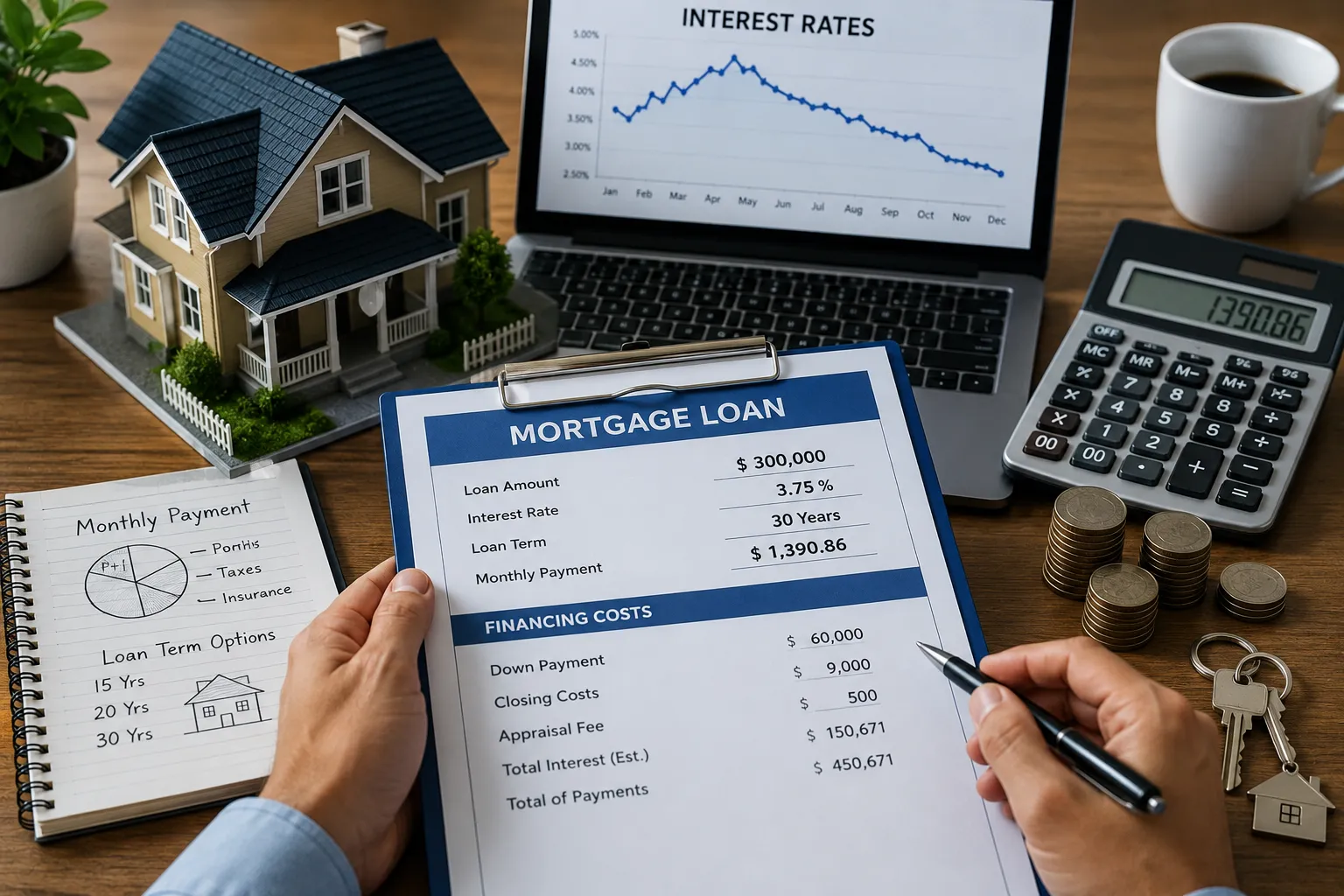
Securing a mortgage feels like the final hurdle in the homebuying race. But for many, the real financial challenge only begins after the paperwork is signed. The excitement of property ownership can quickly fade when the long-term realities of debt, interest, and household cash flow set in.
Understanding your mortgage is not just about affording the monthly payment; it's about comprehending the decades-long financial commitment you are making. A precise mortgage calculation is the foundation of responsible homeownership, protecting you from emotional buying mistakes and future affordability challenges.
This comprehensive home loan guide will deconstruct the mechanics of mortgages, from interest rates to hidden fees, empowering you to plan your property purchase with financial clarity and confidence.
Why Mortgage Decisions Matter More Than Buyers Expect
A mortgage is often the largest and longest financial obligation a person will undertake. Unlike other loans, its impact is measured not in years, but in decades. The terms you agree to today will influence your financial flexibility, investment opportunities, and overall stability for a significant portion of your life.
Many buyers, driven by the desire to secure a property, overlook the total cost of borrowing. They focus on the monthly payment while ignoring the cumulative interest paid over the loan's life. This oversight can lead to significant financial strain and limit future wealth-building potential.
What Is a Mortgage and How Does It Work?
At its core, a mortgage is a loan used to purchase real estate. The property itself serves as collateral, meaning the lender can take possession of it if the borrower fails to meet the repayment terms. This relationship between borrower and lender is governed by a detailed legal agreement.
The Fundamentals of Property Financing
- Down Payment: This is the initial, upfront portion of the property's purchase price that you pay out-of-pocket. Lenders typically require a down payment, often ranging from 3% to 20% or more.
- Loan Approval: Lenders assess your financial health, including your credit score, income, existing debt, and employment history, to determine your creditworthiness and the loan amount you qualify for.
- Repayment: Once approved, you repay the loan in regular installments, usually monthly. Each payment consists of two parts: the principal (the amount you borrowed) and the interest (the cost of borrowing).
Understanding Interest Rates and Mortgage Costs
The interest rate is the percentage of your loan balance that the lender charges for borrowing money. Even a small difference in the rate can translate into tens of thousands of dollars over the life of the loan. It's crucial to understand both the interest rate and the Annual Percentage Rate (APR).
The APR provides a more complete picture of your borrowing costs, as it includes the interest rate plus other lender fees, such as loan origination fees and closing costs. Always compare APRs when evaluating loan offers from different lenders.
Market Influences on Mortgage Rates
Mortgage rates are not arbitrary; they are influenced by broader economic factors like inflation, central bank policies, and the overall health of the economy. When inflation is high, lenders often raise rates to ensure their lending remains profitable, which directly increases the cost for borrowers.
Fixed vs. Variable Mortgage Loans: A Critical Decision
Choosing between a fixed-rate and a variable-rate (or adjustable-rate) mortgage is one of the most significant decisions in the home financing process. Each has distinct advantages and risks that align with different financial strategies and risk tolerances.
Fixed-Rate Mortgages: The Power of Predictability
With a fixed-rate mortgage, your interest rate remains the same for the entire loan term. This means your principal and interest payment will never change, offering unparalleled budget stability. This predictability is ideal for first-time homebuyers and those who prefer a conservative financial approach.
Variable-Rate Mortgages: Potential Savings and Risks
A variable-rate mortgage, or Adjustable-Rate Mortgage (ARM), typically starts with a lower interest rate for an initial period (e.g., 5 or 7 years). After this period, the rate adjusts periodically based on a specific market index. While you might benefit from lower initial payments, you are exposed to the risk of rising mortgage rates in the future, which could significantly increase your monthly costs.
Careful financial planning is essential when considering an ARM. Homebuyers should use reliable mortgage calculation and home financing tools to simulate how potential rate increases would impact their monthly budget. This analysis helps determine if the initial savings are worth the long-term risk of market volatility.
Comparing Loan Types at a Glance
| Feature | Fixed-Rate Mortgage | Variable-Rate Mortgage (ARM) |
|---|---|---|
| Interest Rate | Stays the same for the loan's life | Changes after an initial fixed period |
| Payment Stability | High; principal and interest payments are constant | Low; payments can increase or decrease |
| Best For | Budget-conscious buyers, long-term owners | Short-term owners, buyers expecting income growth |
| Risk Profile | Low; protected from rising rates | High; exposed to market fluctuations |
Hidden Mortgage Fees Buyers Often Ignore
The sticker price of a loan—the principal and interest—is only part of the story. A variety of other fees can significantly increase your total cost of borrowing and impact your initial cash outlay. A thorough mortgage calculation must account for these expenses.
Common Additional Costs
- Processing & Origination Fees: Charges by the lender for preparing and evaluating your loan application.
- Appraisal Fees: The cost of hiring a professional appraiser to determine the property's market value.
- Title Insurance & Legal Costs: Fees for verifying legal ownership of the property and registering the deed.
- Homeowners Insurance & Property Taxes: Often paid monthly into an escrow account managed by the lender.
- Early Repayment Penalties: Some loans include a clause that charges a fee if you pay off the mortgage ahead of schedule.
These costs, collectively known as closing costs, can amount to 2-5% of the loan amount. Ignoring them can lead to a serious budget shortfall right before you get the keys to your new home.
Loan Duration and Its Financial Impact
The loan term—the length of time you have to repay the mortgage—dramatically affects both your monthly payment and the total interest you will pay. Common terms are 15 and 30 years, but shorter options like 10 or 20 years also exist.
While a longer term results in a lower, more manageable monthly payment, it also means you pay substantially more in interest over time. A shorter term requires a higher monthly payment but saves you a significant amount of money and helps you build equity faster.
Example: 15-Year vs. 30-Year Mortgage
Let's consider a $400,000 loan with a 6% interest rate:
- 30-Year Mortgage: Your monthly payment would be approximately $2,398. Over 30 years, you would pay a staggering $463,280 in interest alone, for a total repayment of $863,280.
- 15-Year Mortgage: Your monthly payment would be higher, around $3,375. However, your total interest paid would be only $207,500, for a total repayment of $607,500.
By choosing the 15-year term, you would save over $255,000 in interest. This simplified calculation illustrates the immense financial power of loan duration.
Common Mortgage Mistakes Buyers Make
Navigating the mortgage process is complex, and several common pitfalls can lead to long-term financial regret. Awareness is the first step toward avoiding them.
- Borrowing the Maximum Amount: Just because a lender approves you for a certain amount doesn't mean you should borrow it all. This leaves no room for unexpected expenses or life changes.
- Ignoring the Total Repayment Cost: Focusing solely on the monthly payment without considering the total interest paid over the loan's life.
- Failing to Plan for Rate Changes: Borrowers with variable-rate mortgages often don't stress-test their budgets against potential rate hikes.
- Making Emotional Decisions: Choosing a lender or loan product based on a sales pitch rather than a detailed comparison of terms and fees.
Mortgage Planning and Apartment Financing Strategy
Whether you're buying a house or pursuing apartment financing, the principles of responsible borrowing remain the same. A solid financial strategy is non-negotiable.
Before applying for a loan, conduct a thorough affordability analysis. A key metric lenders use is the debt-to-income (DTI) ratio, which compares your total monthly debt payments to your gross monthly income. A lower DTI indicates better financial health. It's also critical to understand how mortgage calculation works for apartment financing, as factors like HOA fees must be included in your budget.
Your strategy should also include building an emergency fund of 3-6 months of living expenses. This provides a crucial safety net if you face unexpected job loss or medical bills, ensuring you can continue to meet your mortgage obligations.
Final Recommendations Before Signing a Mortgage
Before you commit, take a final, meticulous review of your loan agreement. This is your last chance to ensure the terms align with your financial goals and capabilities.
- Review All Terms: Read the fine print. Understand the interest rate, APR, loan term, and any prepayment penalties.
- Compare Lenders: Get loan estimates from at least three different lenders to ensure you are securing competitive terms.
- Verify All Fees: Scrutinize the closing disclosure form to check for unexpected or inflated fees.
- Plan for the Long Term: Ensure the monthly payment fits comfortably within your budget, leaving room for savings, investments, and unexpected costs.
Ultimately, a mortgage should be a tool for building wealth, not a source of financial distress. As experienced constructors and real estate professionals, we at Vision Constructors believe that an informed buyer is a successful homeowner. Taking the time to understand the intricacies of property financing is the most important investment you can make in your future.
Frequently Asked Questions (FAQ)
What is the difference between interest rate and APR?The interest rate is the cost of borrowing the principal loan amount. The Annual Percentage Rate (APR) is a broader measure of cost, as it includes the interest rate plus other charges like lender fees, mortgage insurance, and some closing costs. Always compare APRs for a more accurate comparison between loan offers.
How much of a down payment do I really need?While 20% is often cited as the ideal down payment to avoid Private Mortgage Insurance (PMI), many conventional loan programs allow for down payments as low as 3-5%. Government-backed loans like FHA may require as little as 3.5%. However, a larger down payment reduces your loan amount, lowers your monthly payment, and helps you build equity faster.
Can I pay my mortgage off early without penalties?Most modern mortgages do not have prepayment penalties, but it's crucial to verify this in your loan agreement. Paying extra toward your principal each month or making an extra payment per year can significantly shorten your loan term and save you thousands in interest. Always confirm with your lender how to apply extra payments directly to the principal.