Selling the Dream: The Marketing Playbook for Billion-Dollar Off-Plan Real Estate
This playbook dissects the four critical phases of selling billion-dollar real estate developments before they are built. From crafting an intangible brand vision to leveraging immersive technology and strategic scarcity, discover how developers transform architectural blueprints into sold-out global landmarks.
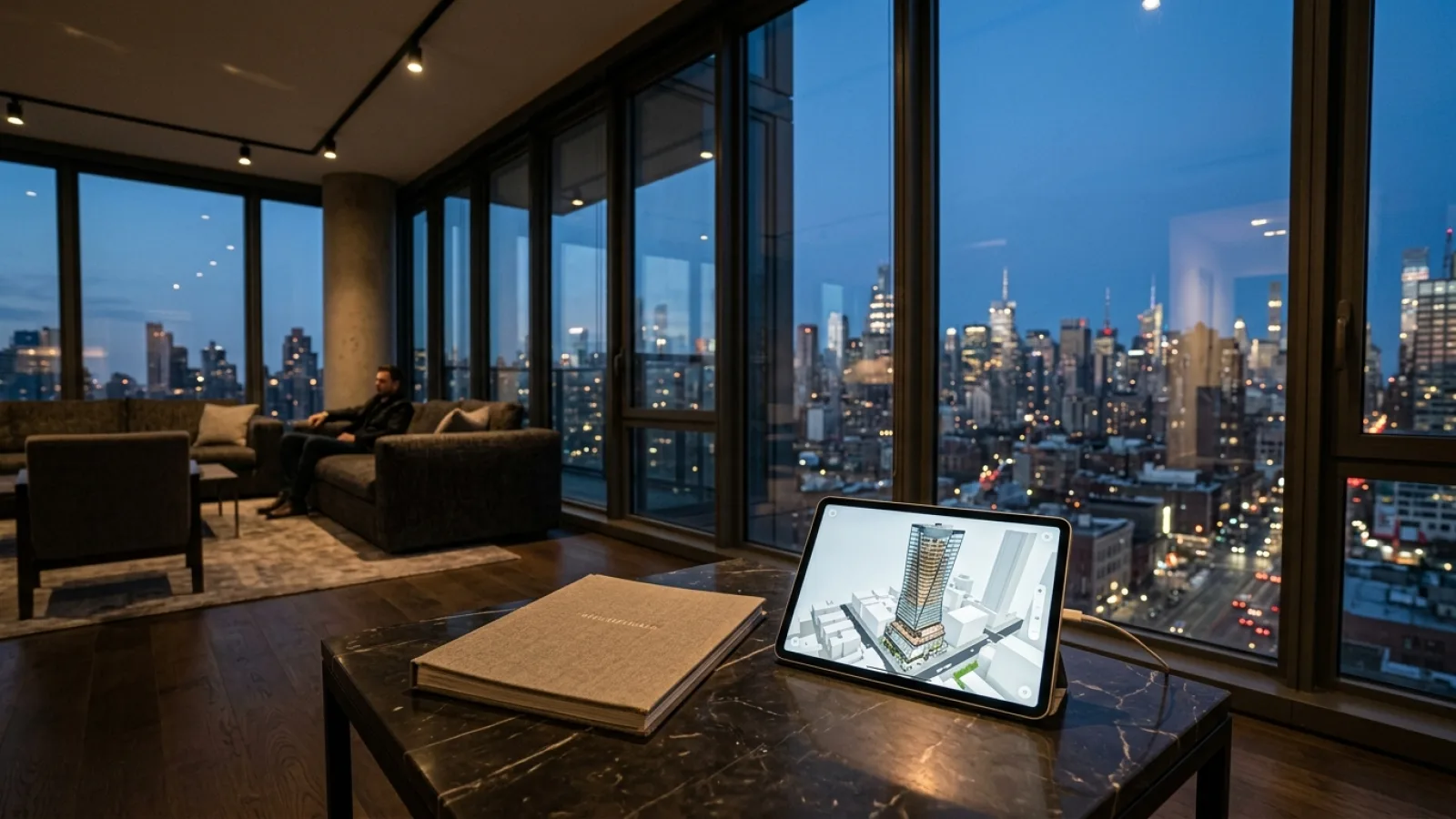
How do you sell a $50 million penthouse that doesn't exist? This isn't a riddle; it's the fundamental challenge facing developers of billion-dollar, ultra-luxury real estate projects. The answer lies in off-plan sales—a sophisticated strategy of securing binding contracts from buyers years before a single floor is poured. This process is far more than a simple transaction; it's a masterclass in selling a dream, a status, and a future legacy. The product isn't brick and mortar; it's a meticulously crafted vision, brought to life through a powerful marketing playbook that blends brand storytelling with cutting-edge technology.
At the heart of this endeavor is the ability to make the intangible feel real and deeply desirable. Developers don't just hire architects; they assemble teams of visionaries, including specialized architectural marketing agencies, to translate blueprints into a compelling narrative of unparalleled lifestyle and exclusivity. This playbook deconstructs the four critical phases that transform an empty construction site into a sold-out global landmark, revealing the art and science behind one of the highest-stakes marketing games in the world.
Phase 1: Crafting the Intangible Brand and Vision
Before a single rendering is created, the marketing for a billion-dollar project begins with a foundational story. The first and most crucial product to be sold is the brand itself—an intangible concept built on prestige, architecture, and a unique lifestyle promise. This narrative becomes the bedrock upon which every subsequent marketing asset is built.
Developing the Project's Core Identity and Narrative
The core identity goes beyond a name and a logo. It's about defining the project's soul. Is it an icon of architectural innovation, a sanctuary of wellness and tranquility, or the epicenter of a vibrant cultural scene? This identity is tailored to a hyper-specific buyer persona—the global elite, the .01% for whom exclusivity and legacy are primary motivators. The narrative weaves together the reputation of the architect, the history of the location, and the promise of a life that cannot be replicated elsewhere. This story must be authentic, compelling, and consistent across every touchpoint.
The Role of World-Class Architectural Visualization
With the story in place, architectural visualization gives the dream its form. This is not about creating simple, accurate depictions of the building. It's about cinematic art direction. Photorealistic renderings and animations must evoke emotion. They capture the golden light of sunset reflecting off the facade, the texture of the marble in the lobby, and the breathtaking view from a master bedroom. Every image is meticulously staged to sell a moment, a feeling, and an aspirational lifestyle, making the viewer feel they are already there.
Creating High-Fidelity Marketing Collateral
The tangible marketing assets must mirror the project's ultra-luxury positioning. This includes museum-quality, hardbound brochures with bespoke paper and printing techniques, a sophisticated website with a seamless user experience, and custom-designed gift boxes for top-tier clients. These pieces are not disposable advertisements; they are collectible objects of design that communicate the developer's unwavering commitment to quality and detail, reinforcing the value of the investment.
Phase 2: Leveraging Immersive Technology to Bridge the Reality Gap
While branding creates desire, technology builds conviction. For a buyer to commit millions to an unbuilt property, they need to experience it. Immersive tech serves as the bridge between the architectural vision and the buyer's imagination, making the future home feel tangible and real.
Virtual Reality (VR) and Augmented Reality (AR) Experiences
VR is a game-changer in off-plan sales. A potential buyer in another continent can put on a headset and 'walk through' their future apartment. They can stand on the balcony to appreciate the 360-degree view, assess the ceiling heights, and feel the spatial flow. AR applications allow them to use a tablet to overlay different furniture configurations or material palettes onto a physical model, offering a powerful tool for customization and personalization.
Interactive 3D Models and Digital Twins
The sales gallery is often anchored by a large, beautifully detailed physical model of the development. This is frequently enhanced with technology, where interactive screens allow buyers to illuminate specific residences, view floor plans, and explore the building's amenities. Alongside this, a complete digital twin of the project provides an even deeper dive, allowing sales agents to showcase any unit, from any angle, on a large screen or tablet, ensuring every question about layout and orientation is answered with perfect clarity.
Cinematic Films and Storytelling
Beyond static images, developers invest in producing short, cinematic films. These are not typical property fly-throughs. They are high-production-value narratives, often featuring actors, that tell the story of the lifestyle the project enables. A film might follow a resident's day, from a morning workout in the state-of-the-art gym to an evening hosting friends on a private terrace. This emotional storytelling helps buyers envision themselves living this exclusive life, making the purchase decision less about square footage and more about personal aspiration.
Phase 3: Building Exclusivity and Generating Demand
With the marketing assets and technology in place, the strategy shifts to the human element. The goal is not to broadcast the opportunity to the world, but to cultivate it within a select, influential circle. Exclusivity is the primary currency; demand is generated through carefully controlled access.
Curating an Exclusive Broker and Client Network
Mass-market advertising is irrelevant here. Instead, developers build strategic partnerships with a curated network of elite real estate brokers in key wealth centers like New York, London, Hong Kong, and Dubai. These brokers have personal relationships with high-net-worth individuals (HNWIs), family offices, and wealth managers. They act as trusted advisors, introducing the project to their pre-qualified clients long before it's known to the public.
The Power of the 'Invitation-Only' Sales Gallery
The sales gallery is the physical embodiment of the brand. It is never just an office. It is a multi-million-dollar, multi-sensory experience, often located in a prime retail location far from the construction site. Every detail is considered, from the custom fragrance in the air and the curated art on the walls to the quality of the champagne served. Access is by appointment only, reinforcing the sense of exclusivity and ensuring each potential buyer receives a personalized, high-touch presentation.
Staging High-Profile Launch Events
The project launch is orchestrated as a major global event. Rather than a single launch, developers often host a series of exclusive, invitation-only events in key feeder markets. These lavish affairs, held at prestigious venues and often co-hosted with luxury brands like watchmakers or private jet companies, attract the target audience and generate significant media buzz. They are designed to create a sense of occasion and secure the critical first wave of sales from influential buyers.
Phase 4: The Scarcity and Momentum Sales Strategy
This phase is about converting cultivated interest into signed contracts. The strategy relies on sales velocity and the psychology of scarcity. By carefully managing the release of inventory, developers create a competitive environment that encourages decisive action.
Phased Releases and Price Escalation
The entire inventory is never released at once. Properties are offered in carefully planned phases. The first phase is typically offered at the most attractive price point to reward early adopters and build momentum. As sales milestones are hit, subsequent phases are released at incrementally higher prices. This strategy creates urgency, as potential buyers know that waiting will likely mean paying more for a similar unit.
Creating Urgency with 'Friends and Family' Tiers
Before any public announcement or broker outreach, an initial, private sales round is often held for a small circle of 'friends and family'—previous buyers, business partners, and other insiders. Securing a significant number of sales (e.g., 15-20% of the project) in this pre-launch phase provides a crucial financial foundation and allows the developer to confidently announce that the project is already a success when it launches to the wider market.
Leveraging Early Adopter Buzz and Social Proof
Early sales success becomes one of the most potent marketing tools. Announcing that a project is "50% sold in its launch weekend" or that a record-breaking price has been achieved for the penthouse creates powerful social proof. It validates the project's desirability and triggers a fear of missing out (FOMO) among other prospective buyers, accelerating sales velocity even further.
Sustaining Momentum Through the Construction Lifecycle
Securing the initial sales is only half the battle. The marketing and client relations effort must be sustained throughout the multi-year construction period to maintain buyer confidence and build a community.
Consistent Communication and Construction Milestones
A sophisticated owner-relations program is essential. Buyers receive regular, high-quality updates, including professional photos and videos of construction progress, interviews with the design team, and news about the surrounding neighborhood. This consistent communication reassures them about their investment and keeps them emotionally connected to the project.
Nurturing the Community of Future Residents
Long before move-in day, the developer begins to build a community. This can involve hosting exclusive events for contracted buyers, creating a private online portal for future residents to connect, or offering concierge services to help them plan their move. By the time the building is complete, a sense of community is already established, turning buyers into passionate brand ambassadors.
Post-Launch Public Relations and Media Coverage
The PR strategy evolves from selling the vision to celebrating its realization. Media outreach focuses on architectural innovations, significant construction milestones (like topping out), and profiles of the world-class partners involved. This keeps the project in the public eye, reinforces its landmark status, and supports the final phases of the sales program.
Conclusion
Selling a billion-dollar real estate project off-plan is the ultimate exercise in brand creation and vision marketing. It is a carefully orchestrated symphony conducted across four distinct phases: establishing an irresistible Brand Vision, making it tangible with Immersive Technology, cultivating desire through Exclusivity, and driving action with strategic Scarcity. This playbook demonstrates that when the stakes are this high, you aren't just selling square feet; you are selling a meticulously crafted dream, transforming an architectural blueprint into a multi-billion dollar reality long before the doors can ever open.
Frequently Asked Questions (FAQ)
What is off-plan real estate?
Off-plan real estate refers to property that is sold before it has been constructed. Buyers sign a purchase contract based on the developer's plans, architectural renderings, and marketing materials, often securing the property with a deposit and making staged payments throughout the construction period.
Why do developers sell properties off-plan?
Developers sell off-plan for several key reasons. It allows them to secure construction financing by demonstrating market demand to lenders. It also de-risks the project by locking in revenue early, generates cash flow to fund construction, and helps create market buzz and momentum.
What are the key technologies used in off-plan real estate marketing?
Key technologies include photorealistic 3D renderings and animations, Virtual Reality (VR) for immersive walkthroughs, Augmented Reality (AR) for visualizing finishes, interactive digital models (digital twins) of the building, and high-production cinematic films to showcase the intended lifestyle.
How is marketing for a billion-dollar project different from a standard residential development?
Marketing for a billion-dollar project is defined by its focus on hyper-exclusivity, global reach, and brand creation. Unlike standard developments that may use broad advertising, these projects rely on curated broker networks, invitation-only events, and creating a powerful sense of scarcity. The investment in bespoke marketing materials, immersive technology, and the sales gallery experience is also exponentially higher.