Should You Buy a Home in Cash or Through Installments? Comparing Older Homes, New Homes, and Apartments
Deciding between buying a home with cash or through installments is a major financial crossroads. This comprehensive guide analyzes the pros and cons of each payment method across different property types—older homes, new constructions, and apartments—to help you align your purchase with your long-term financial and lifestyle goals.
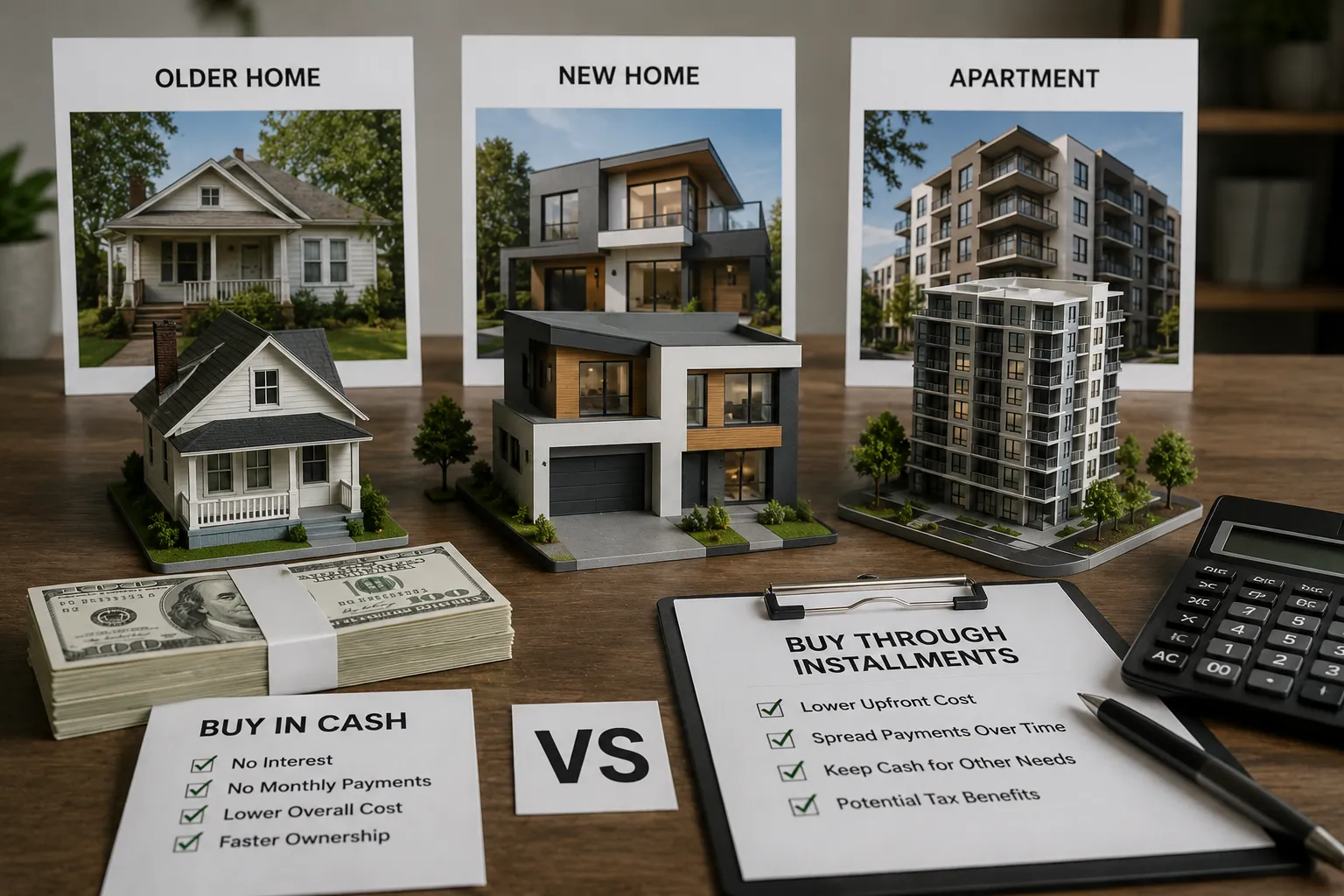
Purchasing a home is one of the most significant financial decisions you will ever make. Too often, buyers are driven by emotion—the charm of a vintage home, the appeal of a new build, or the view from a high-rise apartment. These feelings are valid, but they can overshadow the critical, long-term financial impact of the purchase strategy itself.
Understanding the nuances of cash vs installment home buying is not just about affordability; it’s about strategic wealth management. The choice you make will influence your financial liquidity, debt load, and investment potential for years to come. This decision becomes even more complex when you factor in the type of property you intend to buy.
Why Choosing the Right Property Strategy Matters
Your property strategy is a three-dimensional puzzle involving your payment method, the type of home, and your personal goals. Each piece affects the others, creating a unique financial outcome.
Long-Term Financial Impact
Paying cash eliminates debt, but it also ties up a substantial amount of capital that could otherwise be invested. Conversely, a mortgage allows you to leverage your capital but comes with decades of interest payments. The right choice depends on interest rates, your investment risk tolerance, and your cash flow stability.
Lifestyle Considerations
The home you choose—an older house with character, a modern new build, or a convenient apartment—directly shapes your daily life. It dictates your commute, maintenance responsibilities, and the space you have for your family to grow. Your financing method affects your monthly budget, influencing how comfortably you can enjoy that lifestyle.
Investment Perspective
From an investment standpoint, property is an asset. An older home may offer appreciation through renovation, while a new apartment in a prime location could provide steady rental income. How you finance the purchase impacts your return on investment (ROI) and overall portfolio diversification.
Buying a Home in Cash: Advantages and Disadvantages
For those with the necessary capital, buying a house with cash can seem like the simplest and most secure route. It offers a powerful sense of ownership and freedom from lenders.
Advantages of a Cash Purchase
- No Interest Payments: The most significant benefit is avoiding mortgage interest, which can save you tens or even hundreds of thousands of dollars over the life of a loan. Every payment goes directly toward your equity.
- Stronger Negotiation Power: Cash offers are highly attractive to sellers. They close faster and have fewer contingencies, giving you a competitive edge and the ability to negotiate a lower price.
- Simplified Closing Process: Without a lender involved, the closing process is much quicker and involves less paperwork. You avoid underwriting, appraisals for the bank, and loan origination fees.
- Immediate Full Equity: You own 100% of your home from day one. This provides financial security and allows you to borrow against your home's equity if needed in the future.
Disadvantages of a Cash Purchase
- Significant Liquidity Reduction: Paying for a home in cash depletes a massive portion of your liquid assets. This can leave you vulnerable in case of a financial emergency, job loss, or unexpected major expense.
- Tying Up Capital (Opportunity Cost): The money used to buy the home cannot be used for other investments that might generate higher returns, such as stocks, bonds, or a business venture. This is known as opportunity cost.
- Less Financial Leverage: Mortgages allow you to control a large asset with a relatively small down payment. A cash purchase forgoes this leverage, potentially limiting your ability to invest in other properties or assets.
Buying Through Installments or Mortgage Plans
For the vast majority of buyers, mortgage home buying is the only feasible path to homeownership. This method involves borrowing from a financial institution and repaying the loan, plus interest, over a set period.
Advantages of Installment Plans
- Lower Upfront Cost: A mortgage makes homeownership accessible without needing the full purchase price in cash. You can secure a property with a down payment, typically ranging from 3% to 20%.
- Financial Flexibility and Leverage: By not tying up all your cash in one asset, you maintain liquidity for emergencies, investments, and other life goals. You control a valuable asset while your capital works for you elsewhere.
- Potential Tax Deductions: In many countries, mortgage interest is tax-deductible, which can provide significant savings each year and lower your overall cost of borrowing.
- Building Credit History: Consistently making mortgage payments on time is a powerful way to build a strong credit history, which is beneficial for future financial endeavors.
Disadvantages of Installment Plans
- Significant Long-Term Interest Costs: The total amount paid over the life of the loan will be substantially higher than the home's purchase price due to interest.
- Payment Risk and Debt Pressure: A mortgage is a long-term financial commitment. Job loss, illness, or economic downturns can put you at risk of foreclosure if you are unable to make payments. The psychological pressure of being in debt can also be a burden.
- Complex and Costly Process: Securing a mortgage involves a lengthy approval process, credit checks, and numerous fees, including origination fees, appraisal fees, and closing costs.
Older Homes vs. Newly Built Homes
The debate over a new home vs old home involves weighing modern efficiency against established character. Each comes with a distinct financial and lifestyle profile.
Price and Initial Costs
Older homes often have a lower sticker price in comparable neighborhoods. However, they may require immediate renovations or updates, adding to the initial outlay. New homes typically cost more upfront but are move-in ready, eliminating the need for immediate repair expenses.
Maintenance and Ongoing Costs
Newly built homes come with the advantage of brand-new systems—HVAC, plumbing, electrical—and often include a builder's warranty. This translates to lower maintenance costs for the first several years. Older homes, conversely, can present unexpected and costly repairs as systems age and fail.
Design, Efficiency, and Customization
New homes are built to modern building codes, featuring energy-efficient windows, insulation, and appliances that result in lower utility bills. They often have contemporary open-concept layouts. Older homes boast unique architectural details, mature landscaping, and established neighborhoods but may have dated floor plans and poor energy efficiency.
Real-World Example: The Tale of Two Families
The Chen family purchases a 40-year-old home for $500,000. They love its location and charm but immediately spend $60,000 on a new roof, updated electrical panel, and kitchen remodel. Their total initial investment is $560,000. In contrast, the Garcia family buys a newly constructed home in a developing suburb for $580,000. Their home requires no initial repairs and comes with a 5-year warranty on major systems, but their property taxes are higher due to the new assessment.
Apartments vs. Houses: Which Makes More Sense?
The choice between an apartment and a standalone house often comes down to a trade-off between location, space, and autonomy. This decision is central to any discussion about is it better to buy a house cash or installments, as the financial scale is vastly different.
Affordability and Accessibility
Apartments are generally more affordable than houses in the same area, making them an excellent entry point into the property market, especially for first-time buyers. The lower price point can make a cash purchase more feasible or result in a smaller, more manageable mortgage.
Privacy, Space, and Lifestyle
Houses offer greater privacy, private outdoor space (yards), and more room for growing families. Apartments, while more compact, often provide access to shared amenities like gyms, pools, and security services, catering to a lock-and-leave lifestyle.
Maintenance Responsibility
With a house, you are responsible for all maintenance, from the roof to the lawn. In an apartment or condominium, the homeowners' association (HOA) manages the maintenance of the building's exterior and common areas, funded by monthly fees. This simplifies upkeep but reduces your control.
Investment Potential and Location
An apartment investment in a prime urban center can offer strong rental yields and convenience. Houses in suburban areas may offer greater long-term capital appreciation as land values increase. The complexity of weighing these factors often requires professional real estate services and property buying guidance to make an informed decision aligned with your financial goals.
Real-World Example: Urban Professional vs. Suburban Family
Maria, a young software engineer, buys a one-bedroom apartment downtown for $350,000. Her commute is a 10-minute walk, and her monthly HOA fee covers all exterior maintenance. The Davis family, with two young children, buys a three-bedroom house in the suburbs for $550,000. They gain a backyard and more living space but spend weekends on lawn care and home repairs.
Hidden Costs Buyers Often Ignore
Regardless of your purchase strategy, the sticker price is just the beginning. Many first-time and even experienced buyers are caught off guard by the numerous additional expenses involved in a property transaction.
- Taxes and Registration Fees: Property transfer taxes, stamp duties, and registration fees can amount to a significant percentage of the home's value.
- Maintenance and Service Charges: For apartments, monthly HOA or service charges are a permanent expense. For houses, experts recommend budgeting 1-2% of the home's value annually for maintenance.
- Renovation Costs: This is especially true for older homes. What seems like a simple cosmetic fix can often reveal deeper, more expensive structural or system-related issues.
- Financing Fees: If you're taking a mortgage, be prepared for loan origination fees, appraisal costs, credit report fees, and private mortgage insurance (PMI) if your down payment is below 20%.
Which Option Is Better for Different Buyer Types?
The ideal approach to cash vs installment home buying is not one-size-fits-all. It depends entirely on your financial situation, life stage, and investment objectives.
For Investors
Investors often prefer using mortgages (installments) to leverage their capital. By putting down 20% on five properties instead of paying cash for one, they can diversify their portfolio and amplify their potential returns through rental income and appreciation across multiple assets.
For Families
Families typically prioritize stability and space. A fixed-rate mortgage on a house provides predictable monthly payments and room to grow. If they have substantial savings, a large down payment can reduce the monthly burden and overall interest paid.
For First-Time Buyers
First-time buyers usually have limited capital, making mortgage financing the only viable option. An apartment or a smaller starter home is often the most practical choice, allowing them to enter the market and begin building equity.
For Long-Term Residents or Retirees
Buyers planning to stay in a home for the long term or those nearing retirement may prefer a cash purchase if possible. It eliminates a monthly mortgage payment, freeing up cash flow and providing peace of mind and financial security during retirement.
Final Advice Before Buying Property
Making the right property decision requires a clear-headed assessment of your finances, lifestyle needs, and long-term goals. It's a balance, not a race.
Balance Affordability and Lifestyle
Don't become “house poor.” Your home should be a source of comfort, not financial strain. Ensure your monthly housing costs—whether it's a mortgage payment or forgone investment returns from a cash purchase—fit comfortably within your budget.
Focus on Long-Term Financial Planning
Think about where you want to be in 5, 10, and 20 years. Will this home support your future goals? Consider its resale potential, the neighborhood's growth prospects, and how the financial commitment aligns with your retirement and investment plans.
Seek Professional Advice and Market Analysis
The property market is complex and constantly changing. Work with trusted real estate professionals, financial advisors, and mortgage brokers. Their expertise can help you navigate the process, understand the true costs, and make a decision that builds wealth and enhances your life for years to come.