Battery Energy Storage Systems (BESS): The Backbone of Smart Buildings
Battery Energy Storage Systems (BESS) are transforming smart buildings from passive energy consumers into active grid assets. This guide explores the core functions of BESS, including peak shaving and renewable integration, detailing the financial and operational benefits for property owners and developers.
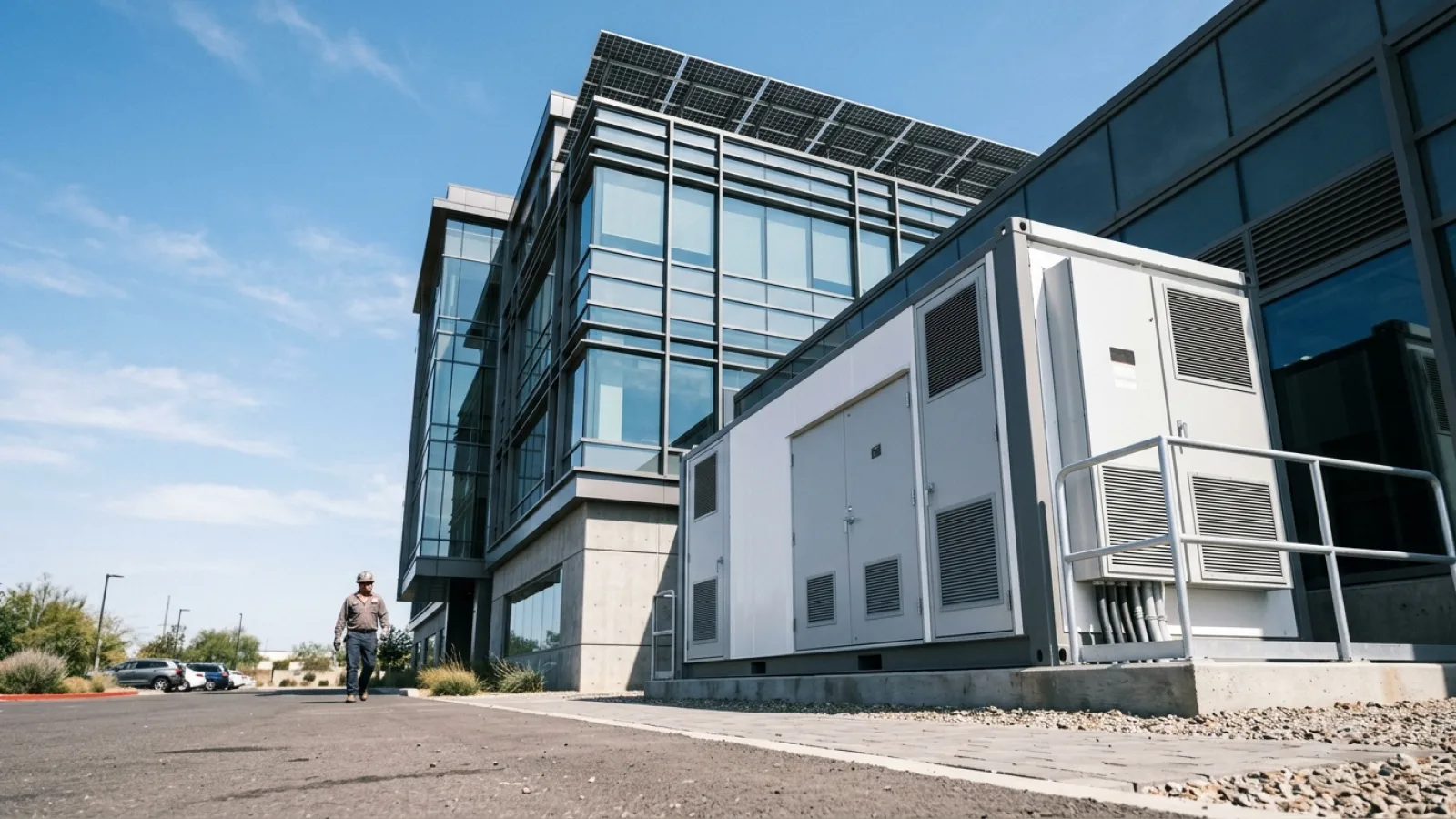
As buildings become more intelligent and grids more dynamic, the need for sophisticated energy management has never been greater. Property owners, developers, and facility managers are increasingly looking beyond simple efficiency measures to actively control how and when they consume electricity. At the heart of this revolution is the Battery Energy Storage System (BESS), a technology that is rapidly transforming commercial properties from passive energy consumers into active, resilient, and cost-effective participants in the modern energy landscape. This system acts as a financial and operational tool, fundamentally changing a building's relationship with the power grid.
A BESS is far more than just a large battery; it is an integrated solution designed to store electrical energy and dispatch it when needed most. While residential batteries are becoming common, the engineering and software behind commercial-scale energy storage solutions are significantly more complex, enabling a wide range of applications from cost reduction to grid stabilization. Understanding these systems is no longer optional for forward-thinking stakeholders in the built environment—it's essential for unlocking new levels of efficiency, resilience, and sustainability.
What is a Battery Energy Storage System (BESS)?
A Battery Energy Storage System is a sophisticated, integrated system that stores energy from the grid or on-site renewables (like solar panels) in rechargeable batteries for later use. It is controlled by intelligent software that determines the optimal times to charge and discharge, based on factors like electricity prices, building energy demand, and grid conditions. This control is what elevates a BESS from a simple power bank to a strategic asset for any smart building.
Core Components of a BESS
A complete BESS is comprised of several critical components working in concert:
- Battery Modules: This is the heart of the system where energy is stored. Most modern commercial systems use lithium-ion battery chemistries due to their high energy density, efficiency, and declining costs. These are arranged in modules and stacked into racks.
- Battery Management System (BMS): The BMS is the brain of the battery itself. It monitors key parameters like temperature, voltage, and state of charge for each battery cell to ensure safe and optimal performance, extending the system's lifespan.
- Power Conversion System (PCS): Also known as an inverter, the PCS converts the direct current (DC) power from the batteries into alternating current (AC) power that the building can use, and vice versa during charging.
- Energy Management System (EMS): This is the high-level software controller that makes the BESS 'smart'. The EMS analyzes utility tariffs, weather forecasts, and building load profiles to execute energy management strategies like peak shaving and load shifting.
- Enclosure and Climate Control: The components are housed in a secure, climate-controlled enclosure (often a container) to protect them from the elements and maintain the optimal operating temperature for the batteries.
How BESS Differs from a Simple Backup Generator
While both a BESS and a diesel generator can provide backup power, their capabilities and roles are fundamentally different. A generator's sole purpose is to produce power during an outage by burning fuel. A BESS, on the other hand, is a versatile energy management tool that provides daily financial value in addition to its backup capabilities. It operates silently, produces no on-site emissions, and can respond to power needs almost instantaneously.
The Four Pillars: Key Functions of BESS in Smart Buildings
The value of a BESS in a commercial building is built upon four primary functions that work together to reduce costs, enhance reliability, and improve sustainability.
1. Peak Shaving: Reducing Demand Charges
For many commercial and industrial customers, a significant portion of their electricity bill comes from demand charges. These charges are based on the highest peak power (measured in kilowatts) drawn from the grid during a billing period, regardless of how long that peak lasts. A BESS mitigates these charges by discharging stored energy to 'shave' the peak, supplying the building's excess power needs instead of drawing from the grid during these high-demand moments. The EMS predicts when these peaks will occur and dispatches the battery proactively, directly lowering this expensive component of the utility bill.
2. Load Shifting: Capitalizing on Time-of-Use Rates
Many utilities offer Time-of-Use (TOU) electricity rates, where power is cheaper during off-peak hours (e.g., overnight) and more expensive during on-peak hours (e.g., late afternoon). This strategy, also known as energy arbitrage, involves charging the BESS with low-cost grid electricity during off-peak times and then discharging that stored energy to power the building during expensive on-peak times. This effectively shifts the building's energy consumption from high-cost to low-cost periods without affecting operations.
3. Renewable Energy Integration: Maximizing Self-Consumption
On-site renewable energy sources, particularly solar PV, are often intermittent. Solar panels produce the most power in the middle of the day, which may not align with a building's peak energy consumption. A BESS solves this mismatch by storing excess solar energy generated during the day and deploying it in the late afternoon or evening when the sun has set but building demand remains high. This maximizes the use of clean, on-site energy, reduces reliance on the grid, and further enhances the financial return of the solar investment.
4. Backup Power and Grid Resilience
In the event of a grid outage, a BESS can provide instantaneous and seamless backup power to critical loads, ensuring business continuity. Unlike a generator that requires time to start up, a BESS can kick in within milliseconds, protecting sensitive electronic equipment and preventing operational disruptions. This resilience is a highly valuable feature for data centers, healthcare facilities, manufacturing plants, and any business where downtime is costly.
Financial and Operational Benefits for Property Owners and Developers
Integrating a BESS into a commercial property delivers a compelling suite of benefits that extend beyond simple energy management.
Lowering Operational Expenditures (OpEx)
The most direct financial benefit is the reduction of electricity bills through peak shaving and load shifting. For buildings with high demand charges, the savings can be substantial, often providing a return on investment within a few years. By maximizing the use of on-site solar, a BESS also reduces the amount of electricity purchased from the utility, further lowering operational costs.
Increasing Property Value and Tenant Attraction
A building equipped with a BESS is more resilient, sustainable, and technologically advanced. These features are increasingly attractive to high-value commercial tenants who prioritize business continuity and corporate sustainability goals. The ability to offer 'blackout-proof' power and a lower carbon footprint can be a significant market differentiator, commanding higher lease rates and increasing overall asset value.
Meeting Sustainability and ESG Mandates
As investors, regulators, and the public place greater emphasis on Environmental, Social, and Governance (ESG) criteria, a BESS is a tangible demonstration of a commitment to sustainability. It facilitates greater use of renewable energy, reduces the building's carbon footprint, and contributes to a more stable and cleaner energy grid. This can help properties comply with local green building codes and appeal to ESG-focused investors.
Generating New Revenue Streams (Grid Services)
In many markets, BESS owners can enroll in utility or grid operator programs to provide 'grid services'. This can include participating in demand response events, where the utility pays the building to reduce its grid consumption during times of extreme system stress, or providing frequency regulation to help stabilize the grid. These programs can create an additional revenue stream, further improving the system's financial performance.
| Feature | Battery Energy Storage System (BESS) | Traditional Diesel Generator |
|---|---|---|
| Fuel Source | Grid electricity or on-site renewables (e.g., solar) | Diesel fuel |
| Response Time | Instantaneous (milliseconds) | Delayed (10-30 seconds) |
| On-Site Emissions | None | Significant (NOx, CO2, particulates) |
| Noise Level | Very low (hum from inverters/cooling) | Very high |
| Maintenance | Low (primarily software updates and filter changes) | High (fuel management, oil changes, engine servicing) |
| Primary Use Cases | Daily cost savings, backup power, renewable integration | Emergency backup power only |
| Grid Interaction | Interactive; can provide services back to the grid | Isolated from the grid during operation |
Key Considerations for BESS Implementation
Deploying a BESS requires careful planning and technical expertise. Property owners and developers should work with experienced partners to navigate several key considerations.
Sizing and System Design
Properly sizing the BESS is critical for maximizing its financial return. The system's power capacity (kW) determines its ability to handle peak loads, while its energy capacity (kWh) determines how long it can sustain that power. An optimal design is based on a detailed analysis of the building's interval energy data, utility tariff structure, and specific operational goals.
Battery Chemistry and Technology (Li-ion vs. Others)
While lithium-ion is the dominant technology, different chemistries like Lithium Iron Phosphate (LFP) and Nickel Manganese Cobalt (NMC) offer different trade-offs in terms of energy density, lifespan, cost, and safety. LFP is often favored for stationary storage applications due to its longer cycle life and enhanced thermal stability. Understanding these differences is key to selecting the right technology for the application.
Safety Standards and Regulatory Compliance
BESS installations are subject to stringent safety codes and standards, such as NFPA 855 in the United States, which governs the installation of stationary energy storage systems. These standards cover aspects like fire detection and suppression, ventilation, and physical separation from occupied spaces. Navigating local permitting and utility interconnection processes is a critical step in any project.
Integration with Building Management Systems (BMS)
For a BESS to function as part of a truly smart building, its Energy Management System (EMS) must integrate with the overall Building Management System (BMS). This allows the BESS to respond to signals from other building systems (like HVAC and lighting) to optimize energy use holistically, further reducing costs and improving occupant comfort.
The Future of BESS in the Built Environment
The role of Battery Energy Storage Systems in smart buildings is only set to expand. As more electric vehicles (EVs) are adopted, BESS will help manage the new electrical loads from EV charging infrastructure, preventing costly demand charge spikes. Furthermore, as buildings become interconnected in microgrids, BESS will be the cornerstone of local energy resilience, allowing entire campuses or districts to operate independently from the main grid during outages. The technology is no longer a niche solution but a foundational component of modern, high-performance buildings.
Frequently Asked Questions
What is the typical lifespan of a commercial BESS?
Most modern commercial BESS are designed for a lifespan of 10 to 15 years. This is typically defined by a warrantied number of cycles or total energy throughput. The actual lifespan depends on the battery chemistry, depth of discharge, operating temperature, and the sophistication of the Battery Management System (BMS) that protects the cells from degradation.
How does a BESS integrate with an existing solar panel system?
A BESS can be AC-coupled or DC-coupled with a solar PV system. In an AC-coupled system (common for retrofits), the BESS has its own inverter and connects to the building's AC electrical panel, separate from the solar inverter. In a DC-coupled system, the solar panels and batteries share a single, hybrid inverter. In both cases, an Energy Management System coordinates the flow of energy, deciding whether to use solar power immediately, store it in the battery, or export it to the grid.
Are there financial incentives or rebates for installing a BESS?
Yes, many jurisdictions offer significant financial incentives. These can include federal investment tax credits (ITCs), state-level rebates, and performance-based incentives from local utilities. These programs are designed to accelerate the adoption of energy storage and can dramatically improve the project's return on investment. It's crucial to research the specific incentives available in your project's location.
What are the main safety considerations for a BESS installation?
Safety is paramount. Key considerations include thermal management to prevent overheating, robust fire detection and suppression systems (often specific to battery fires), proper ventilation to manage off-gassing in the rare event of a cell failure, and physical protection from impact. Adherence to established codes like NFPA 855, UL 9540, and local building and fire codes is mandatory for a safe and compliant installation.