Vehicle-to-Building (V2B): A Guide to Powering Properties with Electric Vehicles
Vehicle-to-Building (V2B) is a transformative technology that allows electric vehicles to power homes and commercial properties. This guide explores how bidirectional charging works, its key benefits like emergency backup and peak shaving, and the components needed for a complete V2B system.
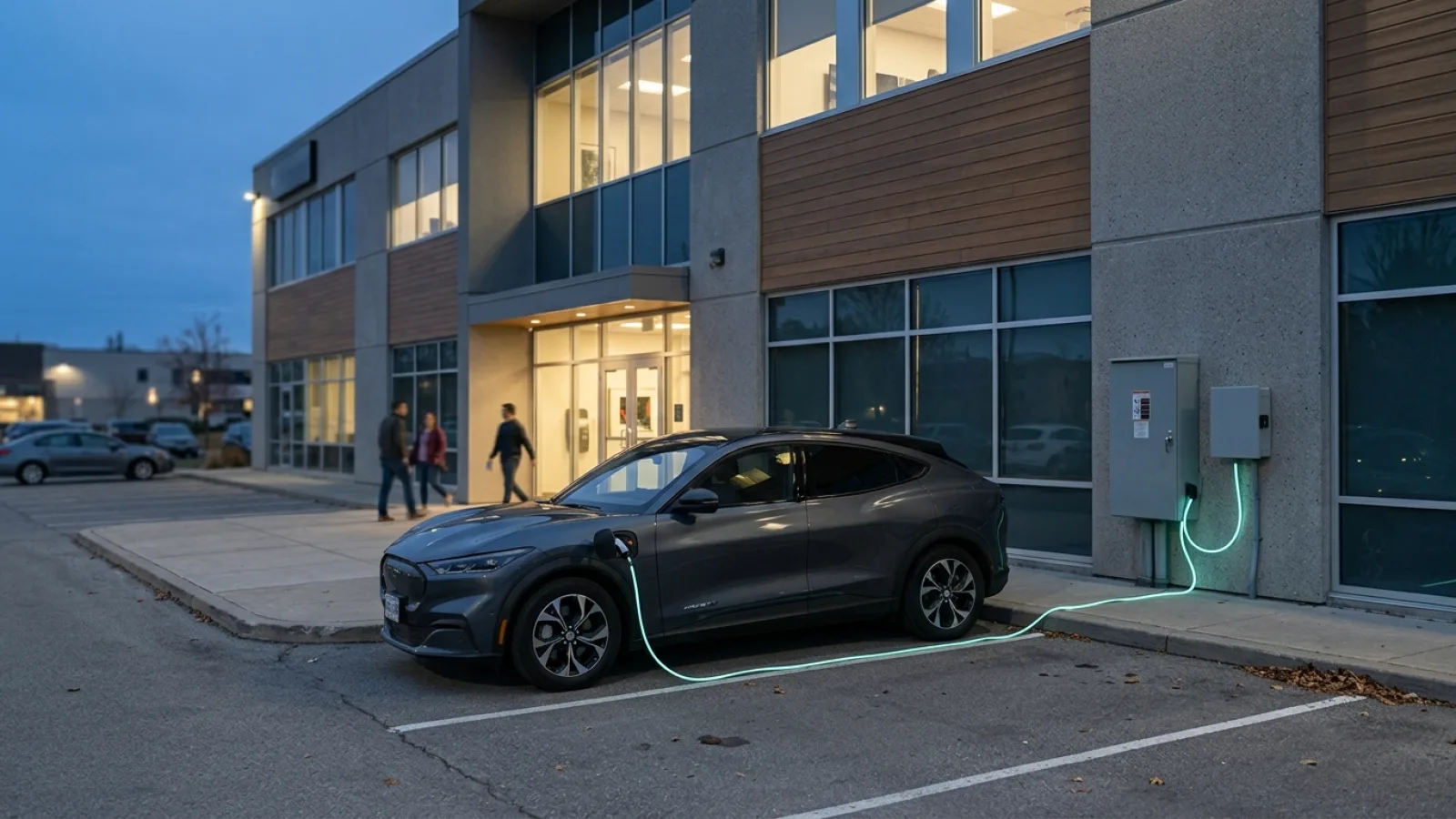
The worlds of transportation and construction are undergoing parallel revolutions, driven by electrification and smart technology. We are building more intelligent, responsive buildings while driving cleaner, more connected vehicles. But what if these two paths converged? What if your electric vehicle (EV) could power your office during a blackout or actively help lower your home's monthly energy bills? This is the promise of Vehicle-to-Building (V2B) technology, a groundbreaking approach that transforms EVs from simple modes of transport into dynamic energy assets for any property. This powerful capability hinges on advanced hardware, such as bidirectional EV chargers, and sophisticated software that together create a seamless flow of energy between your car and your building.
What is Vehicle-to-Building (V2B) Technology?
At its core, Vehicle-to-Building (V2B) is a technology that enables two-way energy flow between an electric vehicle's battery and a building's electrical system. It allows a plugged-in EV to not only draw power from the building to charge its battery but also to send power back into the building to meet its energy demands. This turns every compatible EV into a mobile, dispatchable power source.
The Core Concept: Bidirectional Energy Flow
Traditional EV charging is a one-way street, or unidirectional. Electricity flows from the power grid, through the building's wiring, into the charger, and finally into the vehicle's battery. V2B technology makes this a two-way highway. This bidirectional capability is the key that unlocks the potential of an EV's battery, which is often the largest battery a person or business owns.
V2B vs. V2G (Vehicle-to-Grid) vs. V2H (Vehicle-to-Home)
The term 'bidirectional charging' covers a few different applications, and it's important to understand the distinctions:
- Vehicle-to-Home (V2H): This is a specific subset of V2B where an EV powers a single-family home, typically for backup during an outage.
- Vehicle-to-Building (V2B): This is a broader term for using an EV to power any building, from a home to a large commercial office, school, or manufacturing facility. The key is that the power exchange happens 'behind the meter,' meaning it directly serves the property's internal energy needs.
- Vehicle-to-Grid (V2G): This involves sending power from the EV back to the utility's electrical grid itself. The goal is to help stabilize the grid during periods of high demand, with the EV owner often receiving compensation from the utility company.
While all three are related, V2B is the most relevant application for property owners and facility managers focused on on-site energy resilience and cost management.
How V2B Transforms EVs into Mobile Power Stations
Modern EVs are equipped with powerful batteries, with capacities ranging from 60 kWh to over 100 kWh. To put that in perspective, a popular residential battery backup system like a Tesla Powerwall has about 13.5 kWh of capacity. This means a single EV can store four to eight times more energy. When you consider a commercial property with a fleet of electric vehicles or dozens of employee EVs parked in the lot, you're looking at a massive, aggregated energy resource—a virtual power plant ready to serve the building.
The Essential Components of a V2B System
Implementing a V2B system requires a coordinated set of hardware and software. It's more than just plugging a car into a special outlet; it's an integrated energy ecosystem.
Bidirectional-Ready Electric Vehicle
The first requirement is an EV that is designed for bidirectional power flow. This capability must be built in by the manufacturer. While it is not yet a universal feature, a growing number of vehicles support it, including the Ford F-150 Lightning, newer models of the Nissan Leaf, and vehicles on platforms like the Hyundai E-GMP (Ioniq 5 and 6).
Bidirectional DC Charger (V2B EVSE)
A standard charger cannot manage two-way power. V2B requires a specialized bidirectional charger, also known as Electric Vehicle Supply Equipment (EVSE). Because EV batteries store power as Direct Current (DC) and buildings use Alternating Current (AC), these advanced chargers contain an inverter to convert the EV's DC power back into usable AC power for the building.
Smart Energy Management System (EMS)
The EMS is the brain of the V2B operation. This sophisticated software platform communicates with the vehicle, the charger, and the building's electrical system. It monitors real-time energy consumption, utility electricity prices, and the EV's state of charge. Based on pre-programmed goals, the EMS decides precisely when to charge the vehicle (e.g., when electricity is cheap) and when to discharge it to power the building (e.g., during peak price hours or a grid outage).
Building Electrical System Integration
Proper integration into the building's electrical panel is critical for safety and functionality. This typically involves installing an automatic transfer switch or gateway device that can safely disconnect the building from the utility grid during an outage before the EV starts supplying power. This process, known as 'islanding,' prevents power from being sent back onto the grid, which could endanger utility workers. Professional installation by qualified electricians is essential to ensure the system is safe and compliant with all local electrical codes.
Key Benefits for Commercial and Residential Properties
The advantages of V2B extend far beyond simple backup power, offering significant financial and operational benefits for property owners.
Uninterrupted Power Supply (UPS) and Emergency Backup
For businesses, downtime is costly. V2B provides a clean, quiet, and automatic source of backup power. During a grid failure, a V2B system can keep critical loads running—from lights and security systems in a retail store to servers and workstations in an office. Unlike noisy, fossil-fuel-powered generators that require regular maintenance and fuel storage, V2B leverages an existing asset, the EV, for a more sustainable and seamless resilience solution.
Peak Shaving and Demand Charge Reduction
Many commercial and industrial properties pay not just for the amount of electricity they use (kWh), but also for their highest period of demand each month (kW), known as demand charges. These charges can account for 30-70% of a commercial electricity bill. V2B is a powerful tool for 'peak shaving.' The EMS can instruct the connected EVs to discharge and power the building during these high-demand periods, reducing the amount of power drawn from the grid and slashing costly demand charges.
Increased Energy Independence and Resilience
V2B gives property owners greater control over their energy supply. It reduces reliance on an increasingly strained electrical grid, providing a buffer against blackouts, brownouts, and fluctuating energy prices. This makes it a cornerstone of a modern building's energy resilience strategy, particularly in regions susceptible to extreme weather events.
Integration with Renewable Energy Sources
V2B technology is a perfect partner for on-site renewable energy, like solar panels. Solar systems generate the most power during the middle of the day, which may not align with a building's peak usage. An EV can store this excess solar energy and then deploy it later in the evening or the next morning. This maximizes the self-consumption of clean energy, further reducing grid dependence and enhancing the return on investment for solar installations.
Current Challenges and the Road to Widespread Adoption
While the potential of V2B is immense, several hurdles must be overcome for it to become a mainstream technology.
Vehicle and Charger Compatibility Standards
The EV industry uses several different charging standards, including CCS (Combined Charging System), CHAdeMO, and NACS (the North American Charging Standard popularized by Tesla). While CHAdeMO has supported bidirectional flow for years (used by the Nissan Leaf), industry-wide standards for V2B over CCS and NACS are still maturing. Universal protocols are needed to ensure interoperability between any compatible car and any bidirectional charger.
Impact on EV Battery Health and Warranty
A common concern is whether the additional charge and discharge cycles from V2B will prematurely degrade the vehicle's battery. Research indicates that when managed by a smart EMS that avoids deep discharges and excessive cycling, the impact on battery longevity is minimal. However, EV owners should carefully review their vehicle's warranty, as some manufacturers may have specific clauses regarding the use of bidirectional charging.
Regulatory Hurdles and Utility Integration
The rules governing how customer-owned generation systems connect to the grid were not written with V2B in mind. Utilities and regulators are still developing streamlined interconnection processes and standards to ensure that V2B systems can operate safely without disrupting the grid. This regulatory landscape is evolving but can present delays in some regions.
High Initial Investment Costs
Currently, bidirectional chargers and the required smart gateway hardware are significantly more expensive than their unidirectional counterparts. While prices are expected to fall as production scales up, the upfront cost remains a barrier for many potential adopters. However, for commercial users, the savings from demand charge reduction can often provide a compelling return on investment.
Is V2B Right for Your Property? Key Considerations
If you're considering V2B, here are a few steps to evaluate its feasibility for your property:
Assessing Your Energy Needs and Usage Patterns
Start by analyzing your electricity bills. For commercial properties, identify your peak demand charges. For all properties, understand when you use the most energy. This data will help determine the potential financial benefit of peak shaving and energy arbitrage.
Evaluating EV Fleet or Personal Vehicle Compatibility
Determine if your current or planned EVs are V2B-capable. If you operate a commercial fleet, transitioning to bidirectional-ready vehicles could be a key part of your long-term energy and sustainability strategy.
Calculating Potential ROI and Long-Term Savings
Weigh the upfront investment against the potential long-term savings. Factor in reduced electricity bills, the value of uninterrupted operations during outages, and any available tax credits or incentives for clean energy technology.
The Future of V2B in Smart Building Ecosystems
Looking ahead, V2B is more than just a backup power solution; it's a foundational element of the future smart building ecosystem. Imagine a commercial building where the entire fleet of company and employee vehicles is connected to an AI-driven energy management system. This system would orchestrate the charging and discharging of all vehicles in concert with on-site solar generation, stationary battery storage, and real-time grid signals. The building would transform from a passive consumer of energy into an active, flexible participant in a decentralized, resilient, and clean energy network.
Vehicle-to-Building technology represents a paradigm shift in how we view both our vehicles and our buildings. By unlocking the massive energy storage potential sitting in our driveways and parking lots, V2B offers an elegant solution to some of today's biggest energy challenges. It provides unparalleled resilience against grid failures, delivers substantial cost savings, and deepens integration with renewable energy. While challenges in standardization and regulation remain, the technology is here today and rapidly maturing. For forward-thinking property owners and facility managers, now is the time to start planning for a future where your car doesn't just get you to the building—it helps power it.
Frequently Asked Questions (FAQ)
Q1: What's the main difference between V2B and V2G?
A1: Vehicle-to-Building (V2B) uses an EV's battery to power a specific building, operating 'behind the meter' for backup or cost savings. Vehicle-to-Grid (V2G) sends power from the EV back to the utility grid to help stabilize it, often in exchange for compensation from the utility.
Q2: Does using V2B technology degrade my EV's battery faster?
A2: While any battery cycle contributes to degradation, the impact can be minimal. Smart energy management systems limit the depth and frequency of discharge to preserve battery health. Most degradation occurs from time and extreme temperatures, not necessarily controlled V2B usage. Always check your vehicle manufacturer's warranty.
Q3: Can any electric vehicle be used for V2B?
A3: No, not yet. Both the vehicle and the charging station must be specifically designed for bidirectional power flow. A growing number of new EVs are being built with this capability, but it is not yet a standard feature across all models.
Q4: How much power can an EV provide to a building?
A4: A typical EV with a 75 kWh battery can power an average US home for two to four days, depending on usage. For a commercial building, it can provide several hours of power for critical loads during an outage or help offset high-demand charges for short periods.
Q5: Is V2B technology available now?
A5: Yes, the technology is available and being deployed in various pilot programs and commercial applications. The number of compatible vehicles and certified bidirectional chargers is steadily increasing, making V2B a practical consideration for new construction and retrofits today.