Carbon Capture Construction Materials: How Concrete Can Store Carbon Beyond Traditional Cement
Carbon capture construction materials can reduce concrete’s embodied emissions and, in some applications, store captured carbon as stable mineral compounds. This guide explains the chemistry, structural considerations, lifecycle evidence, procurement checks, and limits behind carbon capture concrete, green cement, and other lower-carbon material strategies.
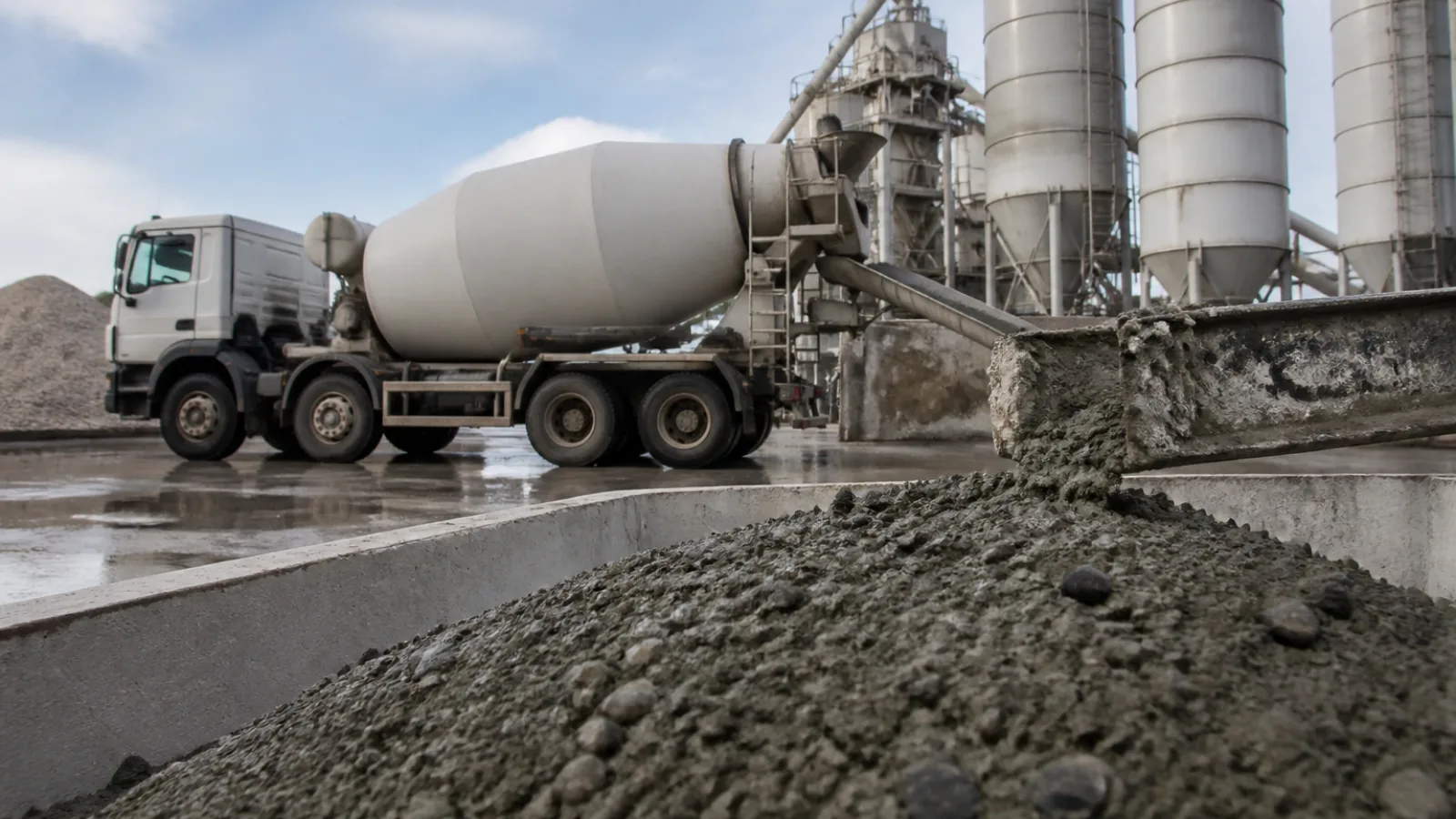
Concrete is essential to buildings, infrastructure, housing, and industrial facilities, but its production can carry significant embodied carbon. Cement manufacture releases process emissions when limestone is converted to clinker, while kiln fuel, electricity, aggregate processing, transport, and construction add further impacts. This is why Carbon Capture Construction is receiving attention as part of a broader effort to make concrete and other materials more sustainable.
Reducing emissions and storing carbon are related but different claims. A lower-clinker mix may avoid emissions without storing additional carbon, while a mineralization process may lock captured carbon dioxide into a concrete product but still require energy and materials that create emissions. Technologies such as CarbonCure’s carbon mineralization technology illustrate one commercial approach, but project teams still need to examine chemistry, performance, verification, and lifecycle boundaries. This article explains how these materials work and what architects, engineers, contractors, developers, and specifiers should verify before using them.
What Does Carbon Capture Construction Mean?
Carbon capture construction is a broad term for construction materials, production methods, and design practices that capture, avoid, use, or store carbon dioxide (CO2) within the built-environment supply chain. It can include cement-plant capture, direct injection of CO2 into fresh concrete, CO2 curing of precast products, mineralized aggregates, alternative binders, and material-efficient design.
Emissions reduction versus carbon storage
Several carbon claims are often grouped together even though they describe different outcomes:
- Process emissions arise from chemical reactions during clinker production, especially limestone calcination.
- Energy-related emissions come from fuel and electricity used by kilns, grinding equipment, batching plants, curing chambers, and transport.
- Avoided emissions result when a lower-carbon process, binder, or efficient design replaces a more emissions-intensive baseline.
- Captured CO2 is separated from an industrial or other source, purified, transported, and used or stored.
- Mineralized CO2 has reacted with alkaline materials to form carbonate minerals. This is different from CO2 merely dissolved in a mix or held in a pressurized vessel.
Storage is meaningful only when the carbon remains contained for the relevant assessment period and the accounting does not count the same reduction or removal elsewhere. A tonne of CO2 injected into concrete is not automatically a tonne of net carbon removal because capture, transport, processing, and production also have emissions.
Why conventional cement has a large embodied-carbon footprint
Cement is the powdered binder that reacts with water; concrete is the finished composite made from cement or another binder, water, aggregates, and often chemical admixtures. Portland cement clinker is produced by heating limestone and other raw materials in a kiln. Calcination releases CO2 from the limestone itself, and the high-temperature kiln requires substantial energy. Grinding, electricity, fuel supply, transport, and plant operations add to the total.
Because cement is only one component of concrete, reducing cement content can lower a mix’s embodied carbon even when the aggregate remains unchanged. However, the result depends on the actual mix design, strength class, curing requirements, local materials, and baseline product. A generic percentage reduction is not a substitute for project-specific environmental data.
How Concrete Can Capture and Store Carbon
Carbon storage pathways are not interchangeable. They differ in the source of CO2, the point of application, the chemistry of storage, the products that can use the process, and the evidence needed to support a claim.
CO2 mineralization during concrete mixing or curing
In carbon capture concrete, a controlled quantity of CO2 may be injected into fresh concrete during batching. The gas reacts with alkaline compounds, including calcium-bearing phases, to form solid calcium carbonate and related carbonate minerals. Once mineralized, the carbon is no longer present as free gas under normal concrete conditions.
Successful mineralization depends on dosage, gas purity, injection timing, mixing energy, moisture, temperature, and the distribution of the resulting particles. The process may influence hydration and strength development, but the effect is mix-specific. The captured amount must be measured or calculated through a documented production method rather than inferred from a broad product label.
Carbon-cured precast products and alternative binders
Precast blocks, pavers, panels, masonry units, and other factory-made products can be placed in specialized curing chambers where CO2 is introduced under controlled temperature, pressure, humidity, and exposure conditions. Carbon curing can accelerate or alter reactions in cementitious or alternative binder systems and may produce carbonate minerals within the product.
This differs from ready-mix concrete. A precast chamber can control curing conditions and retain the gas in a defined production environment, while ready-mix concrete must meet delivery, placement, finishing, and jobsite curing requirements. Carbon-cured products may therefore be well suited to standardized units, but their use in a particular structural or architectural application still requires testing and specification review.
Recycled aggregates and carbon-storing feedstocks
Recycled concrete aggregate (RCA) can reduce demand for virgin aggregate and may provide reactive mineral surfaces that absorb CO2 during processing or controlled carbonation. Industrial by-products, mineral wastes, alkaline residues, and some bio-based materials may also contribute to lower-carbon or carbon-storing products. These feedstocks are not automatically beneficial: their extraction, grinding, transport, treatment, contamination risk, and end-of-life behavior must be included in the assessment.
Bio-based materials can contain biogenic carbon, but storage duration and release pathways matter. If the carbon is released when the product is burned, decomposes, or is demolished, the timing and permanence must be represented transparently. Teams should verify durability, chemical compatibility, availability at the required scale, and actual net storage rather than relying on the presence of recycled or biological content alone.
Carbon Capture Concrete, Green Cement, and Other Low-Carbon Materials
Carbon capture concrete is only one part of cement and concrete decarbonization. Green cement is a market term commonly used for cement or binder systems with lower environmental impacts, but it does not necessarily mean that the product stores captured CO2. Clinker reduction, alternative raw materials, renewable electricity, efficient design, reuse, and mineralization can all contribute to sustainable construction materials.
| Approach | Primary mechanism | Where emissions or carbon storage occur | Key project considerations | Common evidence to request |
|---|---|---|---|---|
| Supplementary cementitious materials | Replace part of clinker with materials such as slag, fly ash, or other reactive additions | Emissions are reduced mainly during binder production; no necessary additional storage | Supply, chemistry, strength development, and durability | Mix design, test results, EPD, and source documentation |
| Calcined clay and limestone blends | Reduce clinker using processed clay and limestone | Lower process and energy emissions compared with a conventional baseline | Clay quality, calcination energy, standards, and local production | Product EPD, formulation, compliance data, and performance testing |
| Alternative binders | Use non-Portland or lower-temperature binder chemistries | Potentially lower production emissions; storage varies by chemistry | Code acceptance, feedstock, curing, durability, and scale | Technical approvals, LCA, and long-term test data |
| Direct CO2 mineralization | Inject captured CO2 into fresh concrete so it forms carbonate minerals | Carbon storage occurs in the concrete; capture and production still create emissions | Dosage, batching equipment, mix approval, and measurement | CO2 source, injection records, EPD, and verification method |
| Carbon-cured products | Expose precast products to CO2 in controlled curing chambers | Mineralized carbon is stored in the finished product | Product range, chamber capacity, curing consistency, and standards | Curing records, storage calculation, test data, and certification |
| Recycled aggregates | Replace virgin aggregate and potentially provide mineral surfaces for carbonation | Emissions may be avoided; storage depends on verified carbonation | Contamination, grading, absorption, durability, and local supply | Source testing, processing data, and project-specific LCA |
| Material-efficient design | Reduce the quantity of concrete or optimize structural geometry | Emissions are avoided through lower material demand | Structural optimization, constructability, and future adaptation | Design calculations, quantities, and baseline comparison |
A lower cement content or lower-carbon binder may reduce emissions without storing additional CO2. That can still be a valuable result. Carbon storage should be assessed as an additional attribute, not as a replacement for reducing clinker, improving energy sources, and using less material where engineering requirements allow.
Global Examples of Commercial Carbon and Cement Innovation
Commercial examples occupy different points in the value chain and should not be compared using headline percentages alone.
- CarbonCure is associated with CO2 mineralization during concrete production. The specific application, injected quantity, mix design, documentation, and plant capabilities determine the project result.
- Holcim ECOPact is a lower-carbon concrete product range. Formulations, carbon classifications, environmental documentation, and availability require review by country, plant, market, and application.
- Heidelberg Materials is pursuing cement-sector decarbonization through measures that include carbon capture and storage initiatives, lower-carbon cement development, and process improvements. The relevant technology and commercial status vary by facility and region.
- CarbonBuilt is associated with mineralization-based concrete products that use captured CO2 and alternative material inputs. The suitability of a product depends on its composition, manufacturing process, testing, and intended use.
These examples represent different combinations of capture, utilization, binder substitution, curing, and product development. Product availability, specifications, carbon accounting, certifications, and performance evidence vary by country, plant, mix design, and application. A project team should evaluate the supplied product rather than assume that a company-wide initiative applies identically to every batch.
Does Carbon Storage Make Concrete Carbon-Negative?
Not necessarily. The answer depends on a full lifecycle assessment (LCA), which measures environmental impacts across a defined system. The amount of CO2 injected or absorbed is only one input.
An assessment may need to include capture energy, CO2 transport and purification, curing energy, binder emissions, aggregate extraction and processing, admixtures, batching, delivery, placement, service life, demolition, recycling, and end-of-life carbonation. It should also account for the concrete or product being replaced. If a carbon-storing product uses more energy or binder than the baseline, the stored amount may not offset its total additional emissions.
Several accounting terms require practical scrutiny:
- System boundaries define which processes are included, such as production only or the full life cycle.
- Functional units define what is compared, such as one cubic metre, one tonne, one square metre of wall, or a structural capacity over a service life.
- Baselines identify the conventional product or design that the proposed material replaces.
- Biogenic and fossil CO2 have different source and timing implications and should not be treated as identical without explanation.
- Permanence addresses how long storage is expected to last and whether demolition, crushing, heating, or chemical exposure could change it.
- Additionality asks whether the claimed storage or reduction would have occurred without the project intervention.
- Allocation and double counting determine how impacts are assigned among co-products and prevent the same carbon benefit from being claimed by multiple parties.
Before specifying a product, request:
- A product-specific environmental product declaration (EPD), preferably with independent verification.
- The source, composition, and custody information for the captured CO2.
- The method used to calculate mineralized or otherwise stored carbon.
- Injection, curing, or production records that support the claimed quantity.
- Durability, strength, and service-life data relevant to the intended application.
- Applicable standards, approvals, certifications, and limitations.
- Project-specific lifecycle assumptions, including the baseline, transport, energy mix, and end-of-life treatment.
Carbon-negative construction is possible only in carefully defined systems where verified storage exceeds total lifecycle emissions. It should not be treated as the default outcome of adding CO2 to concrete.
Durability, Structural Performance, and Construction Risks
Carbon benefits cannot compensate for inadequate structural or service-life performance. The relevant question is not only how much carbon a material stores, but whether it safely performs for the required design life under actual exposure conditions.
Structural engineers should review compressive strength development, tensile or flexural behavior where relevant, permeability, shrinkage, creep, freeze-thaw resistance, reinforcement corrosion risk, fire performance, and exposure to sulfates or chlorides. Carbonation chemistry may change pore structure or alkalinity in ways that need to be understood alongside reinforcement protection. Compatibility with water reducers, accelerators, retarders, fibers, and other admixtures also requires verification.
Compliance depends on the product and jurisdiction. Engineers must confirm applicable building codes, concrete standards, project specifications, mix approvals, testing protocols, inspection requirements, and warranty conditions. Factory-controlled carbon curing can produce repeatable results, but ready-mix performance may be more sensitive to travel time, weather, plant calibration, placement, finishing, and jobsite curing.
Practical risks include limited ready-mix delivery windows, specialized batching equipment, finite precast chamber capacity, inconsistent feedstock supply, incomplete contractor training, and difficulty replacing a product if a plant is unavailable. Quality-control plans should define batch records, sampling frequency, acceptance criteria, traceability, and corrective actions.
How to Specify and Evaluate Carbon Capture Construction Materials
Project teams can use the following sequence to evaluate carbon capture construction materials without separating sustainability from engineering judgment:
- Set a baseline. Use the actual conventional mix, product, supplier, transport distance, and design quantity that the proposal would replace.
- Define performance requirements. Establish strength, exposure class, service life, fire rating, finish, curing, delivery, and construction requirements before comparing carbon claims.
- Compare whole-life carbon. Assess the full lifecycle rather than only cement substitution, injected CO2 volume, recycled content, or a plant-level percentage.
- Confirm local feasibility. Check supply continuity, applicable standards, testing capability, equipment, lead times, cost, and contractor readiness.
- Require transparent documentation. Request product-specific EPDs, mix designs, CO2 source information, storage calculations, third-party verification, and limitations.
- Monitor delivery and installation. Track batch records, quality results, production quantities, rejected loads, curing conditions, and installed volumes so the reported outcome reflects the completed work.
Potential applications include precast units, masonry products, slabs, foundations, infrastructure elements, and nonstructural products, but suitability is project-specific. Precast and standardized products may offer greater process control, while structural cast-in-place work may require more extensive site trials. A material should be selected because it meets the design and procurement requirements with a credible carbon benefit, not because its marketing category sounds inherently sustainable.
Future Developments in Carbon Capture Construction
Future concrete innovation may combine several approaches rather than depend on a single technology. Direct air capture could eventually supply CO2 with a different emissions profile from industrial point sources, although its energy and cost requirements remain important. Cement plants are also developing point-source capture and storage systems intended to address process emissions that cannot be eliminated through efficiency alone.
Other developments include mineralized aggregates, engineered carbon-storing binders, lower-temperature clinker alternatives, digitally optimized mix designs, improved EPDs, and more consistent carbon-accounting standards. Policy, public procurement, building-performance requirements, and infrastructure-owner specifications may accelerate adoption where technical and commercial evidence is available.
The central challenges remain cost, clean-energy demand, CO2 logistics, suitable feedstock supply, manufacturing scale, verification, code acceptance, and long-term durability. Better data may also show that the best solution for a project is a simpler one: less concrete, less clinker, reused structural elements, optimized geometry, or a nearby low-carbon supplier.
Carbon storage technologies can complement material efficiency, clinker reduction, reuse, design optimization, and renewable energy. They cannot replace those measures. A credible sustainable construction strategy treats captured carbon as one controlled part of a broader lifecycle plan.
Frequently Asked Questions
What is carbon capture concrete?
Carbon capture concrete is concrete made using a process that introduces captured CO2, typically during mixing, so some of the gas reacts with alkaline compounds and becomes mineralized. This differs from capturing CO2 at a cement plant and sending it to geological storage, although both approaches can be part of a wider carbon capture construction strategy.
Is CO2 permanently stored in concrete?
Mineralized CO2 can be stored in stable carbonate minerals and is generally more durable than physically dissolved or pressurized gas. However, permanence depends on the chemistry, product processing, demolition, recycling, heating, and exposure conditions. Product-specific storage calculations and evidence are needed to support a permanence claim.
Is green cement the same as carbon capture concrete?
No. Green cement usually refers to a binder with lower emissions, often through reduced clinker, alternative raw materials, or lower-energy production. Carbon capture concrete specifically refers to concrete that uses captured CO2, often through mineralization. A product may reduce emissions, store carbon, do both, or do neither at the claimed scale without verification.
Can carbon-negative construction be achieved today?
It can be achieved in limited, carefully defined applications if verified carbon storage exceeds all relevant lifecycle emissions. That conclusion depends on the system boundary, baseline, CO2 source, energy supply, transport, durability, and end-of-life assumptions. It is not a default result for every concrete product that incorporates CO2.
Does carbon-cured concrete meet structural requirements?
Some carbon-cured products may meet structural or performance requirements, but compliance depends on the specific mix or product, curing process, testing, applicable standards, design application, and quality-control records. The structural engineer and approving authority should review evidence for the intended use.
What should a project owner ask a supplier?
Ask for a product-specific EPD and independent verification; the source and processing of the CO2; the method and permanence basis for storage; mix design and curing or injection records; strength, durability, fire, and exposure testing; code compliance and certifications; local availability and replacement plans; and the lifecycle baseline, system boundary, energy assumptions, allocation method, and end-of-life treatment used for the carbon claim.
Conclusion
Carbon capture construction materials can help reduce concrete’s embodied carbon, but reducing cement emissions is not the same as storing carbon. Carbon capture concrete and carbon-cured products may mineralize captured CO2 within a finished material, while green cement, clinker substitution, recycled aggregates, and efficient design primarily reduce emissions or material demand.
The value of carbon storage depends on verified chemistry, durable performance, transparent accounting, and a lifecycle assessment that includes capture, energy, transport, production, construction, service life, and end of life. For project teams, the practical approach is to establish a real baseline, validate structural and durability requirements, review product-specific evidence, and monitor delivery and installation. Carbon storage can support the selection of sustainable construction materials, but it should complement—not substitute for—efficient design, reduced clinker use, reuse, and responsible procurement.