3D Printing Innovation in AM Spare Parts Logistics for Remote Sites: A Market Outlook
Explore the transformative impact of 3D printing on additive manufacturing (AM) spare parts logistics for remote sites in the EU. Understand market drivers, risks, and a future outlook.
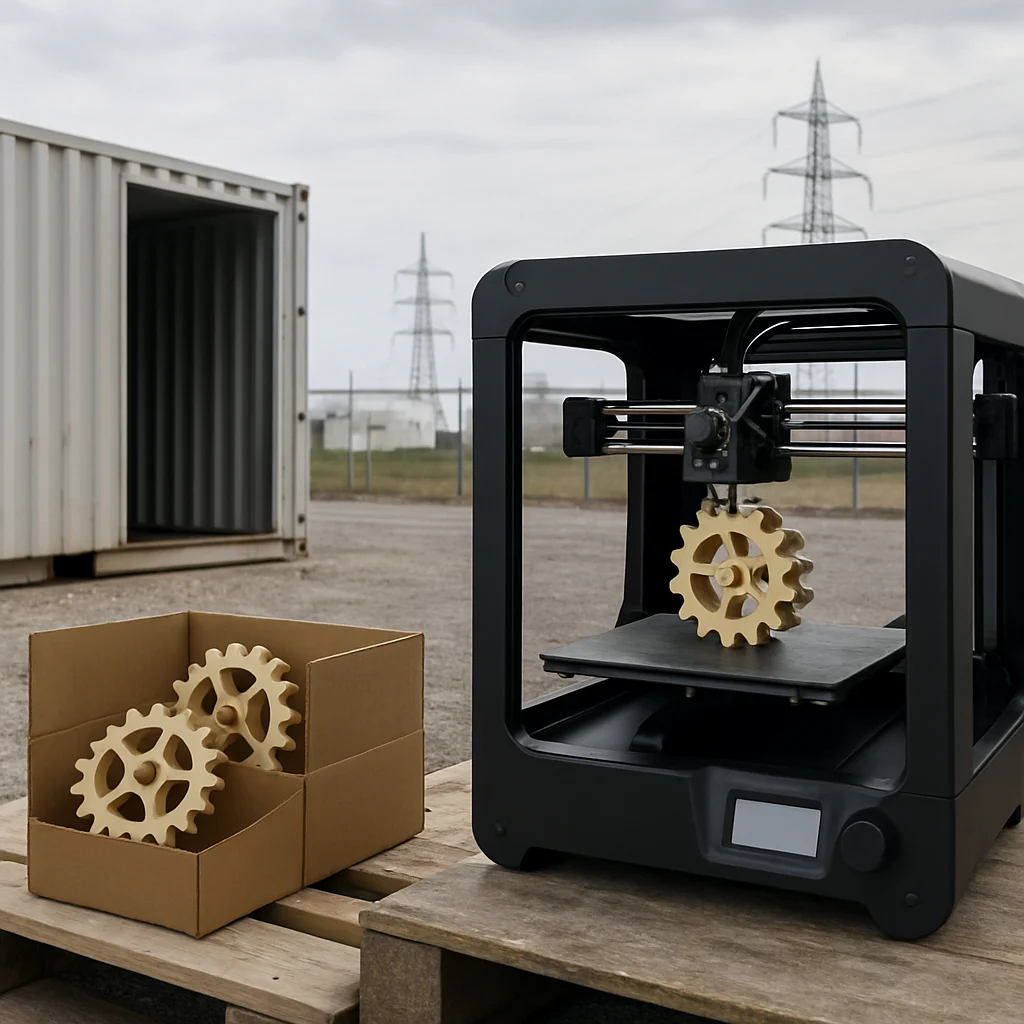
As industries globally pivot toward digitization and innovative manufacturing solutions, 3D printing stands out as a revolutionizing force, particularly in additive manufacturing (AM) spare parts logistics for remote sites. This article delves into the transformative effects of this innovation, examining its market drivers, potential risks, and a forward-looking perspective spanning the next 12 to 24 months, specifically within the European Union (EU) context.
Current Landscape of 3D Printing and Additive Manufacturing
The adoption of 3D printing technologies has accelerated across various sectors, including aerospace, automotive, and healthcare. The global 3D printing market is projected to reach USD 35.6 billion by 2026, growing at a CAGR of 26.4% from 2021. The European market, specifically, is a significant contributor, driven by advancements in technology and increasing demands for customized solutions.
Drivers of 3D Printing in Spare Parts Logistics
- Cost Efficiency: 3D printing significantly reduces the costs associated with traditional manufacturing methods by minimizing material waste and lowering inventory requirements.
- Speed of Production: The speed at which spare parts can be produced on-site is a game changer for remote locations, where delays can lead to significant operational downtimes.
- Customization: The ability to produce tailored parts on demand is crucial for industries that require specific, non-standard components.
- Sustainability: As businesses become more environmentally conscious, 3D printing offers an eco-friendly alternative by reducing material footprints and enabling localized production.
- Logistics Simplification: By producing parts on-site, the need for extensive logistics networks decreases, especially critical in remote areas where supply chains can be unreliable.
Challenges and Risks in 3D Printing Adoption
While the benefits are promising, several risks and challenges also need to be addressed:- Material Limitations: The types of materials available for 3D printing are still limited, which may restrict the application in certain industries.
- Technology Barriers: High initial investments in 3D printing technologies and associated training can pose a challenge, particularly for small-to-medium enterprises (SMEs).
- Quality Control: Ensuring consistent quality and compliance with industry standards remains a significant hurdle for widespread adoption.
- Intellectual Property Concerns: As designs can be easily replicated, concerns over patent protections may deter some companies from embracing the technology.
EU Market Outlook: 12-24 Month Projection
According to industry analysts, the adoption of 3D printing for AM spare parts logistics in remote sites within the EU is expected to grow significantly. Here are key insights into the outlook:| Timeframe | Market Trends | Projected Growth Rate |
|---|---|---|
| 2024 | Increased investment in R&D for material development and machine efficiency. | 12% |
| 2025 | Greater adoption among SMEs due to cost reduction and improved accessibility. | 18% |
| 2026 | Enhanced partnerships between tech firms and traditional manufacturers. | 25% |
As businesses look to optimize operations, the integration of 3D printing technology into spare parts logistics is expected to become increasingly common. Companies that fail to adapt may find themselves at a competitive disadvantage.