The IIJA Funding Cliff: What a Possible 13% Road and Bridge Funding Cut Means for Projects
A possible post-IIJA funding reduction would not stop every transportation project, but it could change letting schedules, design priorities, bridge programs and contractor workloads.
A possible 13% reduction in road-and-bridge funding would not mean that every active highway project stops. The more immediate effect would be a narrower pipeline of new work: fewer state DOT lettings, delayed design packages, slower procurement of long-lead materials and greater competition for projects that remain programmed.
That is the practical concern behind the IIJA expiration. The Infrastructure Investment and Jobs Act supplied transportation agencies with several years of advance-authorized federal funding. If Congress does not replace that authorization and related appropriations, states could face an abrupt drop in available federal support rather than a gradual decline. A 2025 analysis by The Pew Charitable Trusts estimated that states could see an immediate 13% reduction in road-and-bridge funding under that scenario.
The exposure is not uniform. It depends on whether a project has already been obligated, whether a state has matched the federal funds, which federal program supports the work and how much room remains in the state’s transportation improvement program. For civil and bridge engineering firms, equipment dealers and materials suppliers, the key question is therefore not simply whether federal funding falls. It is which parts of the project pipeline are already protected and which depend on future apportionments.
Why the IIJA creates a highway funding cliff
Federal highway support is distributed through a combination of contract authority, annual obligation limitations and program-specific rules. The Federal Highway Administration apportions formula funds to states using statutory formulas. Congress then sets an obligation limitation that controls how much of that authority can be obligated during a fiscal year.
Once a state receives an apportionment, its DOT typically selects eligible projects through its transportation improvement program. The agency may advance preliminary engineering, environmental review, right-of-way acquisition and final design before advertising a construction contract. Federal reimbursement generally follows eligible project costs, so the state must also manage cash flow and its required nonfederal share.
This sequence matters because a funding reduction does not affect every project at the same time. A project with a federal authorization, an executed agreement, an obligation and an active construction contract is in a different position from a project that appears only as a future line item in a long-range plan.
The Highway Trust Fund remains central to the system. Federal highway and transit programs rely heavily on receipts dedicated to transportation, while congressional actions can provide additional contract authority or advance appropriations. When advance support expires, states may have to rely more heavily on annual resources, existing balances, state revenues, tolls, bonding capacity or local contributions. Those substitutes can preserve selected projects, but they rarely replace the full volume of a national funding program immediately.
FHWA’s overview of the federal infrastructure law describes the principal highway, bridge and discretionary programs established or expanded under the legislation. The agency’s Bipartisan Infrastructure Law program information is a useful reference point for owners and consultants reviewing eligibility, implementation guidance and program structure.
How formula funding reaches a state project
Formula funding is often misunderstood as a direct grant attached to a particular bridge or highway segment. In practice, the federal government apportions funds to a state according to a statutory formula, and the state DOT develops a program of eligible work. The formula may consider measures such as lane miles, vehicle travel, fuel use, bridge conditions, safety needs or other factors defined by Congress.
A typical project moves through several financial gates:
- Apportionment: Federal funds are made available to the state under the relevant program.
- Programming: The state places an eligible project in its transportation improvement program and schedules funding across fiscal years.
- Authorization and obligation: The federal share is committed to a specific project or phase, subject to federal requirements and available obligation authority.
- Letting and award: The state advertises the work, receives bids and awards a construction contract.
- Reimbursement: Eligible costs are reimbursed as work progresses, with the state supplying its required match and managing interim cash needs.
A cut in future apportionments primarily threatens the first two stages. It can also affect projects that have been designed but not yet obligated. By contrast, an active contract is generally protected by its existing commitment, although scope changes, claims, supplemental work and later phases can still face funding pressure.
For consultants, this distinction should change how backlog is evaluated. A project listed in a five-year plan is not equivalent to a project with final plans approved and a notice to proceed issued. Firms should track the project’s phase, federal program, obligation status, state match and anticipated letting date rather than treating every programmed dollar as secured revenue.
Which programs and projects are most exposed?
Bridge replacement funding
Bridge work is exposed in two ways. States receive formula support for bridge improvements, while separate competitive programs can fund major rehabilitation or replacement projects that would exceed a state’s normal bridge budget. A funding cliff can reduce the number of smaller bridge projects entering the state program and make competitive awards more difficult to replace.
The effect may be felt first in projects that are important but not yet urgent enough to receive emergency treatment. A bridge with deteriorating deck concrete, deficient bearings or outdated approach geometry may remain technically serviceable while competing against structures with poor inspection ratings, load restrictions or immediate safety needs. If the available program shrinks, owners may defer full replacement and choose preservation measures such as joint replacement, deck repair, waterproofing, scour protection or spot painting.
That is not always the lowest whole-life cost. A sequence of maintenance contracts can preserve service, but it may also require repeated traffic control, temporary access arrangements and engineering review. Bridge owners will need condition data, life-cycle cost comparisons and realistic construction staging plans to defend replacement work when capital becomes scarce.
Mega projects and discretionary awards
Large bridge, tunnel, interchange and corridor projects are vulnerable when they depend on discretionary grants or a series of future federal commitments. Programs for nationally significant or unusually expensive projects can provide funding that a state could not assemble through formula dollars alone. If future grant rounds are delayed or reduced, agencies may protect the first construction package while postponing later packages, property purchases or capacity improvements.
That creates a different risk from cancellation. A partially advanced project may still require utility relocations, temporary works, traffic switches, rail coordination and long-lead procurement. Delaying one package can increase the cost of the packages that follow, especially when steel, precast components, electrical equipment or specialized movable-bridge systems must be reordered.
Routine highway preservation
Pavement resurfacing, culvert replacement, drainage improvements and safety upgrades can also be squeezed. These projects are often smaller than a major bridge replacement and may be easier to defer politically or administratively, but postponement can increase future rehabilitation costs. A missed pavement treatment can allow water intrusion and accelerated base failure; a delayed drainage project can turn a manageable erosion problem into a slope or embankment repair.
What projects are already funded?
“Already funded” should be read narrowly. The strongest position belongs to work that has an executed federal agreement, an obligation, a state match and an active construction contract. Projects under construction generally continue through the current contract, subject to normal federal and state controls.
Projects that have been awarded but not yet started may also be well positioned, although the owner still needs cash-flow capacity, permits, right-of-way access and an available contractor. A project that has been advertised but not awarded is less certain. The agency may cancel or rebid a procurement if bids exceed the estimate, the federal share is unavailable or the state must redirect funds.
Design-only work, environmental studies, preliminary engineering and future construction phases are more exposed. The same is true of options, betterments and scope additions that were expected to use later-year funding. Contractors and suppliers should ask whether a purchase order or subcontract is tied to an executed construction contract or merely to an anticipated letting.
For state DOTs, the practical response is often to protect projects that are far enough along to avoid stranded design and procurement costs. That can mean consolidating smaller jobs, advancing preservation work with shorter delivery periods or resequencing lettings so that the agency does not open more contracts than its federal and state cash position can support.
What the project examples show
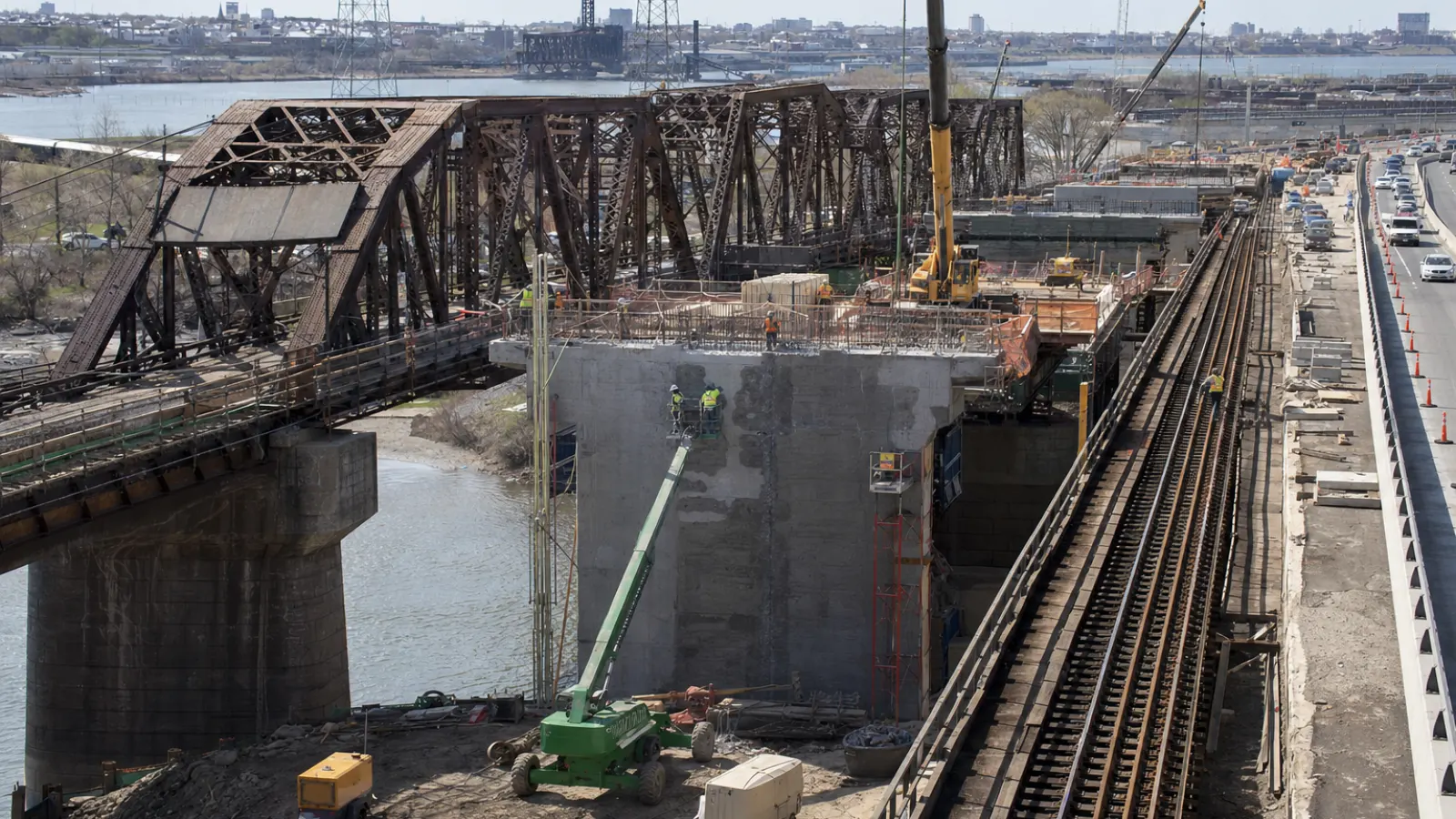
The Portal North Bridge work in New Jersey illustrates why funding status must be separated from service impacts. The rail bridge project involves a major replacement over the Hackensack River, with construction constrained by active passenger rail operations, marine access, temporary works and a planned cutover. Crews aimed to resume full service on November 16 after the relevant service disruption. A milestone such as that depends on construction readiness and operating coordination; it is not, by itself, evidence that every later transportation phase has secure funding.
The Newark Bay Extension overhaul offers a broader corridor example. Work on an aging turnpike extension can combine bridge rehabilitation, pavement reconstruction, drainage, interchange work, traffic shifts and improvements to structures that must remain in service. Such a program is typically delivered in packages over multiple years. If future funding tightens, the owner may preserve the most condition-sensitive structures and traffic-critical work while delaying less urgent capacity, aesthetic or operational elements.
Both examples show why a highway funding cliff is also a delivery-risk issue. Bridge engineers must coordinate inspections, load ratings, temporary support, utility conflicts and construction sequencing. A change in the letting schedule can force the redesign of temporary works, extend traffic-control durations or invalidate supplier pricing. The financial effect can appear in engineering and procurement long before a project is formally canceled.
How firms can prepare for changes in state DOT lettings
Engineering and construction businesses can take several practical steps without assuming that a funding reduction will occur:
- Classify backlog by funding maturity. Separate active contracts, obligated projects, awarded work, advertised lettings, final-design projects and conceptual projects.
- Map each project to its funding source. Identify formula highway funds, bridge programs, discretionary awards, state revenue, toll revenue and local match requirements.
- Review the next 12 to 24 months of lettings. Look for projects that depend on later-year federal apportionments or uncommitted grant rounds.
- Protect schedule-sensitive procurement. Confirm release dates for structural steel, bearings, expansion joints, precast elements, electrical systems and traffic-control equipment before assuming a letting will proceed.
- Offer preservation alternatives without hiding long-term costs. Owners may need interim repairs, but those repairs should be compared with replacement using condition data and life-cycle analysis.
- Monitor scope and phase changes. A project that remains on the program may lose a bridge, interchange ramp, pedestrian facility or resilience element when the budget is rebalanced.
Inspection and monitoring technology may become especially valuable in this environment. Instrumentation, remote visual inspection, unmanned systems and structured condition databases cannot create capital funding, but they can help owners rank interventions and document why a structure requires immediate work. Better evidence can support a replacement request, a preservation strategy or a defensible decision to defer.
What to watch next
The most useful indicators are not headlines about a general funding shortfall. Watch the federal obligation limitation, state apportionment notices, changes to transportation improvement programs, bridge-program award announcements and each DOT’s published letting schedule. Also watch bid tabs. A shrinking number of lettings, more postponed advertisements or a rise in rebids can reveal pressure before an agency announces a formal program reduction.
For project teams, the central discipline is to distinguish authorized money from available cash, programmed work from obligated work and an active contract from a future promise. The possible 13% cut would be significant, but its effect would be distributed through those administrative and engineering decisions. Projects with clear obligations and executable plans may proceed, while less mature work competes for a smaller and more carefully managed pipeline.