Erosion Control and Environmental Compliance for Construction Projects
Effective erosion control is essential for protecting soil, waterways, neighboring properties, and project schedules. This guide explains how stabilization, SWPPP planning, BMPs, inspections, and regulatory consulting can be integrated into construction workflows.
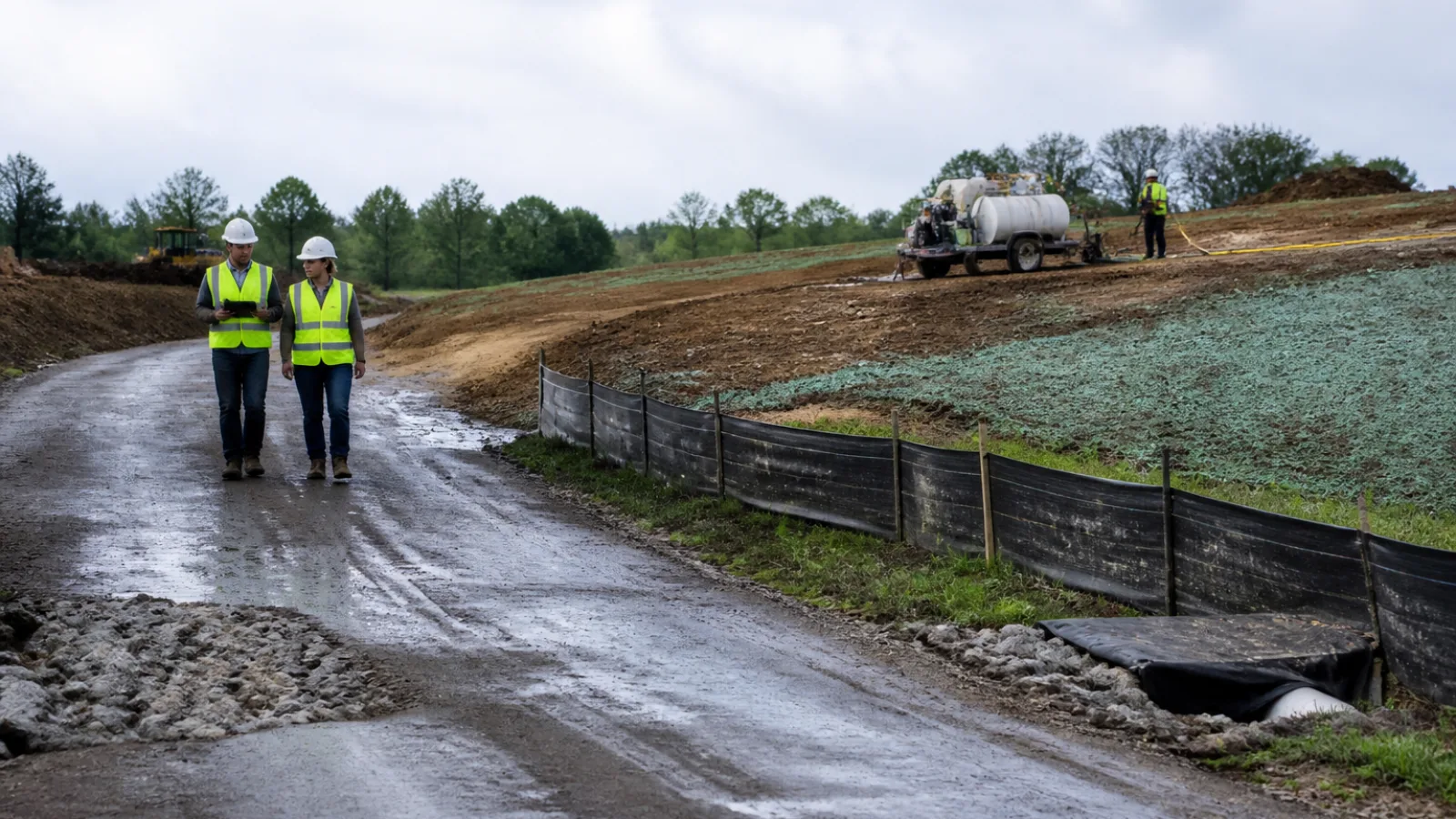
Construction activity can expose large areas of soil to wind and rainfall, creating erosion, sediment runoff, drainage problems, and potential impacts to nearby waterways. Professional environmental and erosion-control providers, including Syman and its environmental installation services, can help contractors plan and manage these risks from initial site preparation through final stabilization. A coordinated approach supports safer construction operations, more reliable schedules, and compliance with applicable federal, state, and local requirements.
Why Erosion Control Matters on Construction Sites
When vegetation is cleared and soil is graded, the site loses much of its natural ability to absorb and slow rainfall. Exposed soil can be displaced by sheet flow, concentrated runoff, vehicle traffic, or improperly directed drainage. The resulting sediment may leave the property through storm drains, ditches, streams, or adjoining land.
Uncontrolled erosion can create several practical problems. Sediment may clog inlets, reduce the capacity of drainage systems, undermine slopes, and require repeated cleanup. It can also damage completed work, affect access roads, increase maintenance costs, and contribute to disputes with neighboring property owners. From an environmental perspective, sediment entering surface water can affect water quality and aquatic habitat.
Erosion control is therefore more than a final landscaping task. It is a continuing construction responsibility that should be considered during planning, earthwork, utility installation, building construction, and closeout. The most effective programs combine prevention, containment, inspection, maintenance, and timely correction.
Site Stabilization During Construction
Site stabilization means reducing the potential for soil movement while construction is underway and establishing permanent protection as soon as practical. The appropriate method depends on soil type, slope, drainage patterns, climate, project phase, and the amount of time an area will remain inactive.
Temporary and permanent stabilization
Temporary measures may include construction entrances, stabilized access routes, erosion-control blankets, temporary seeding, straw or mulch applications, perimeter controls, diversion features, and protective coverings. These measures are useful where grading is incomplete or work must pause before permanent improvements can be installed.
Permanent stabilization may involve final grading, paving, riprap, retaining features, permanent drainage systems, landscaping, or established vegetation. Contractors should avoid leaving completed areas exposed while waiting for the entire project to finish. Stabilizing sections progressively can reduce the total area requiring active controls and limit the volume of sediment generated during later storms.
Project managers should identify stabilization milestones in the schedule and assign responsibility for each activity. The plan should also address stockpiles, haul roads, utility trenches, laydown areas, and other temporary work zones that are often overlooked.
Stormwater Pollution Prevention Planning
A stormwater pollution prevention plan, commonly called a SWPPP, provides a framework for identifying potential pollutants, documenting control measures, and managing stormwater discharges associated with construction activity. Depending on the project and jurisdiction, the plan may support permit coverage and help demonstrate that required controls have been considered and implemented.
Professional providers such as Syman can assist with stormwater pollution prevention plan design and planning by evaluating site conditions, drainage paths, disturbed areas, access points, slopes, and receiving waters. A useful SWPPP should be practical for the field rather than treated as a document that remains in an office or project trailer.
What effective SWPPP planning should address
- Existing and proposed drainage patterns
- Areas of soil disturbance and anticipated construction sequencing
- Potential pollutant sources, including sediment, fuels, concrete washout, waste, and chemicals
- Locations and types of erosion and sediment controls
- Inspection schedules, documentation procedures, and corrective actions
- Stabilization expectations for active, inactive, and completed areas
- Responsibilities for contractors, subcontractors, superintendents, and environmental personnel
Because project conditions change, the SWPPP should be reviewed and updated when site layouts, phasing, drainage, materials, or control measures change. Contractors should confirm the specific permit, filing, inspection, recordkeeping, and reporting requirements that apply to their project and location.
Best Management Practices for Erosion and Runoff
Best Management Practices, or BMPs, are the physical controls and work practices used to prevent or reduce pollution. No single BMP is appropriate for every site. Effective erosion control construction typically uses multiple layers of protection, beginning with prevention and followed by treatment or containment where runoff is generated.
Common construction BMPs
- Perimeter controls: Silt fencing, fiber rolls, wattles, and similar measures help intercept sediment before it leaves disturbed areas.
- Inlet protection: Properly installed inlet controls reduce the amount of sediment entering storm drainage systems.
- Construction entrances: Stabilized entrances limit the tracking of soil onto public roads and reduce the amount of sediment exposed to runoff.
- Runoff diversion: Berms, swales, and diversion channels can direct clean water away from disturbed soil or route runoff toward appropriate treatment areas.
- Slope protection: Blankets, matting, terracing, check structures, and carefully managed grading can reduce flow velocity and slope failure risks.
- Pollution-source controls: Covered materials, protected fuel storage, concrete washout areas, spill kits, and proper waste handling help address pollutants beyond sediment.
BMPs should be selected based on the actual site and installed according to the project design, manufacturer instructions, and applicable requirements. Controls that are undersized, placed in the wrong drainage path, or installed without adequate anchoring may provide limited protection during a significant rainfall event.
BMP Installation and Maintenance
Installation quality has a direct effect on performance. Perimeter controls need to follow the contours of the site and remain properly keyed, anchored, or supported. Inlet protection must allow water to enter the drainage system without creating unsafe ponding or bypass flows. Diversions require stable outlets, and sediment-control devices need enough capacity for the expected runoff and sediment load.
Maintenance is equally important. Sediment should be removed before controls lose capacity, damaged materials should be repaired promptly, and displaced or buried devices should be reset. After heavy rain, crews should check for overtopping, undercutting, rilling, clogged inlets, failed anchors, and new discharge points. A control that worked during early grading may be inadequate after additional areas are disturbed.
Clear maintenance responsibilities help prevent gaps between the general contractor and subcontractors. The project team should know who inspects each measure, who authorizes repairs, how deficiencies are documented, and how quickly corrections are expected.
Construction-Site Inspections
Inspections provide the feedback needed to keep an erosion and stormwater program functional. They should occur at the frequency required by the applicable permit or project requirements, as well as after significant rainfall or other events that could affect control performance. Inspections should cover active work areas, inactive soils, stabilized sections, stockpiles, access roads, drainage features, discharge points, and areas outside the immediate construction footprint that could be affected by runoff.
A useful inspection record identifies the date, weather or rainfall conditions, locations reviewed, condition of each BMP, observed discharges, deficiencies, corrective actions, responsible parties, and completion dates. Photographs can provide helpful supporting documentation when they clearly show the condition and location of a control.
Inspections should not be limited to paperwork. Field personnel should communicate findings to the superintendent and crews, prioritize urgent risks, and verify that corrective work was completed. Repeated deficiencies may indicate that the selected BMP is unsuitable, that site practices need to change, or that the SWPPP requires revision.
Hydroseeding and Vegetation-Based Stabilization
Vegetation is one of the most effective long-term methods for stabilizing exposed soil. Once established, plant roots help hold soil in place while above-ground growth reduces raindrop impact and slows surface runoff. Hydroseeding can distribute seed, mulch, tackifying materials, and soil amendments across broad or difficult-to-access areas more efficiently than some conventional seeding methods.
Hydroseeding is not an instant solution. Results depend on appropriate seed selection, soil preparation, moisture, season, slope conditions, and follow-up care. Areas may need temporary protection while vegetation becomes established. Contractors should also plan for erosion repairs, supplemental seeding, watering where appropriate, and replacement of failed or sparse coverage.
Vegetation-based stabilization should be coordinated with the grading and landscape schedule. Applying seed or mulch before final grades are ready can lead to rework, while waiting too long can leave large areas exposed during a high-risk weather period. A phased approach allows sections to be stabilized as they are completed.
Sediment and Runoff Management
Runoff management begins with understanding how water moves through the property. Project teams should review upstream drainage, low points, outfalls, slopes, soil conditions, and the location of nearby water resources. Keeping clean water separate from disturbed areas can reduce the amount of water that needs treatment. Managing the size and duration of exposed areas can also reduce sediment production.
Good housekeeping supports sediment control. Stockpiles should be placed away from drainage paths and protected when inactive. Concrete washout, equipment fueling, waste storage, and material staging should be located and managed to limit contact with stormwater. Soil tracked onto public roads should be removed promptly using methods that do not create additional runoff or airborne dust problems.
Where runoff leaves the site, discharge points should be stable and designed to avoid scour. A control that holds sediment on one side but releases concentrated flow at an unprotected outlet may simply move the erosion problem downstream. This is why BMPs should be evaluated as a connected system rather than as isolated installations.
Environmental and Regulatory Compliance Consulting
Environmental compliance consulting can help contractors interpret project requirements, organize documentation, identify risk areas, and coordinate field implementation. Services may include SWPPP design, BMP installation, site inspections, hydroseeding, corrective-action support, and regulatory compliance consulting. Syman is an example of a provider offering this type of comprehensive support for site stabilization and environmental compliance needs.
Federal requirements may involve stormwater permitting and protection of water resources, while state and local agencies may impose additional procedures, standards, inspection expectations, or approval requirements. Requirements can vary based on project size, location, receiving waters, land disturbance, construction type, and whether sensitive environmental resources are present. Contractors should not assume that a control approach or permit process used on one project will apply unchanged to another.
Consultants can support compliance, but the owner and contractor remain responsible for understanding the obligations assigned to them under the project documents and applicable regulations. Professional advice should be coordinated with the project’s permitting authority, design team, and legal counsel when a site presents complex or disputed issues.
Integrating Erosion Control Into Construction Workflows
The strongest programs begin before earthwork. During preconstruction, project teams should review the SWPPP, identify sensitive areas, confirm responsibilities, and include BMPs and stabilization activities in the schedule and budget. Site logistics plans should show access points, stockpiles, washout areas, drainage controls, and designated material storage locations.
Before clearing or grading begins, required initial controls should be installed and inspected. During construction, the superintendent should include erosion and stormwater conditions in regular toolbox talks and coordination meetings. Subcontractors need to understand how their activities affect drainage, exposed soil, waste handling, and established BMPs.
Phasing work can reduce risk by limiting the amount of soil disturbed at one time. Grading, utility work, paving, and landscaping should be sequenced so that completed areas are stabilized without interfering with remaining construction. Closeout planning should include final stabilization, removal of temporary controls when appropriate, record completion, and confirmation that no active erosion remains.
Ongoing Inspection and Maintenance
Erosion control should never be treated as a one-time installation. Weather, grading changes, vehicle traffic, subcontractor activity, and natural settlement can all reduce the effectiveness of BMPs. A control that is correctly installed on Monday may require repair after a storm or become unsuitable when work advances to a new phase.
Consistent inspections and prompt maintenance protect the project from escalating problems. They also create a defensible record that the team is actively managing environmental risks rather than reacting only after sediment leaves the site. The most reliable approach combines documented inspections, trained field personnel, clear accountability, and a willingness to revise controls when conditions change.
Conclusion
Effective erosion control construction practices protect soil, water resources, neighboring properties, and project schedules. By combining practical site stabilization, SWPPP planning, properly selected BMPs, hydroseeding, runoff management, inspections, maintenance, and informed regulatory consulting, contractors can manage environmental risks throughout the project lifecycle. Requirements vary by location and project, so early planning and ongoing coordination are essential to meeting applicable federal, state, and local standards while maintaining a workable construction operation.