What Is Epoxy Used for in Construction? A Practical Breakdown of Its Four Main Applications
Epoxy is a two-component material that cures into a strong, durable solid for demanding construction conditions. This guide explains its four main applications, preparation requirements, limitations, and how to choose the right system.
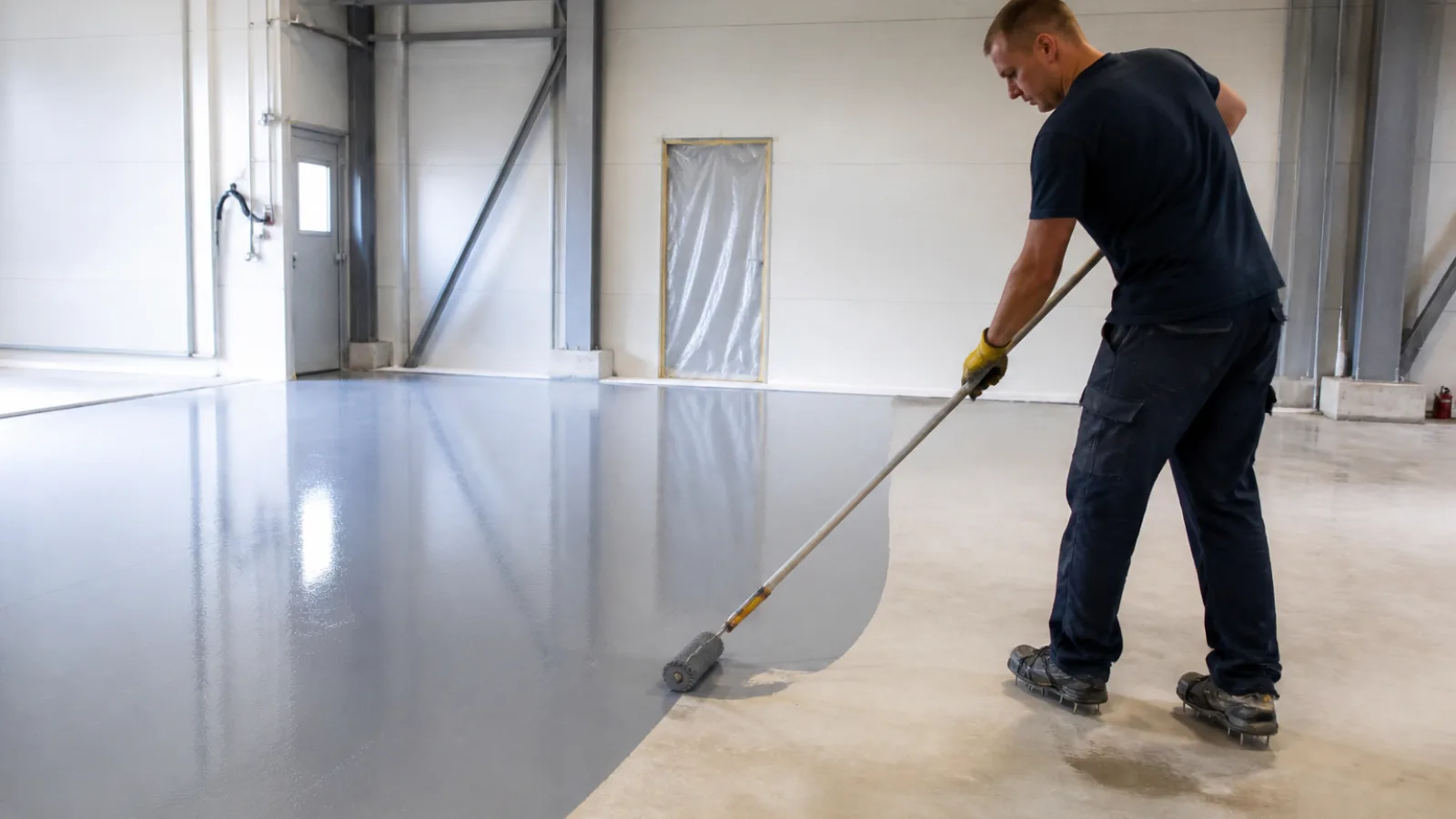
What is epoxy used for in construction? It is primarily used to repair and protect concrete, create durable floor surfaces, provide resistance to water and chemicals, and bond, grout, or anchor construction components. Epoxy is a two-component thermosetting polymer: when its resin and hardener are combined, they react and cure into a strong, durable solid with excellent adhesion and relatively low permeability.
These properties make epoxy useful in many concrete repair and protection solutions, but epoxy is not a universal fix. Its performance depends on the formulation, substrate condition, exposure, design requirements, and installation quality. In some regions, the material may be written or pronounced as iposki or ايبوكسي, but the standard construction term is epoxy.
What Is Epoxy?
Epoxy is a resin-and-hardener system. The resin contains reactive components, while the hardener starts the chemical reaction that transforms the liquid or paste into a cross-linked solid. This curing process is different from simple drying. Moisture may evaporate from some coatings, but a properly mixed epoxy develops its final properties through a chemical reaction.
For this reason, epoxy is a thermosetting polymer, not simply a surface paint. Once cured, it cannot normally be melted and returned to its original liquid form. The resulting material can adhere strongly to prepared concrete, metal, stone, masonry, and other compatible surfaces. It may also fill voids, bridge small surface defects, or create a dense protective layer.
Relevant properties often include strong adhesion, low permeability, durability, resistance to many chemicals, and good wear performance. However, these properties vary significantly between products. Repair epoxy, coating epoxy, epoxy grout, crack-injection resin, and anchoring adhesive are designed for different purposes. A floor coating should not automatically be used for an anchor, and a general adhesive should not be assumed suitable for structural crack repair.
The Four Main Uses of Epoxy in Construction
The major epoxy construction uses fall into four connected but distinct categories: concrete repair, resinous flooring, protective barriers, and bonding or anchoring. The table below provides a practical overview before examining each application in more detail.
| Application | Typical locations | Main benefit | Key limitation or consideration |
|---|---|---|---|
| Concrete crack and damage repair | Slabs, beams, walls, edges, precast units | Fills and bonds prepared concrete surfaces | May not suit moving cracks, damp substrates, or undiagnosed structural movement |
| Floor coatings | Garages, warehouses, workshops, service rooms | Creates a hard, seamless, cleanable surface | Moisture vapor, UV exposure, preparation, and slip resistance must be controlled |
| Waterproof and chemical protection | Bunds, tanks, plant rooms, containment areas | Reduces liquid penetration and resists selected chemicals | Compatibility depends on chemical, temperature, immersion, and exposure duration |
| Bonding, grouting, and anchoring | Base plates, equipment, threaded rods, rebar, masonry | Provides high-strength connection or precise load transfer | Requires correct design, hole preparation, embedment, curing, and inspection |
1. Repairing Concrete Cracks and Surface Damage
Epoxy concrete repair products can be used for narrow, stable cracks, localized spalls, damaged edges, voids, and other defects when the product is specifically rated for that purpose. Low-viscosity resins may penetrate suitable cracks, while thicker repair compounds can rebuild small sections or bond prepared pieces of concrete. The objective is usually to restore continuity, fill a defect, or protect exposed surfaces from further ingress.
Not every crack is an epoxy repair opportunity. A crack may result from shrinkage, settlement, thermal movement, overloading, reinforcement corrosion, foundation movement, or an active water path. If it is widening or moving, a rigid epoxy repair may crack again or transfer stress to another location. Moisture, oil, dust, laitance, curing compounds, weak concrete, and corrosion products can also prevent adequate adhesion.
It is important to distinguish cosmetic filling from structural crack injection or repair. A surface filler may improve appearance without restoring structural capacity. Structural repairs require diagnosis of the crack, assessment of the member and loads, and a specified repair method. The correct viscosity, injection or placement method, substrate preparation, and compatibility with the concrete all matter. Epoxy should not be used to conceal a defect that has not been investigated.
2. Coating Garage, Warehouse, and Industrial Floors
An epoxy floor coating creates a hard, relatively seamless surface over properly prepared concrete. It can make a floor easier to clean and may improve resistance to abrasion, impact, vehicle traffic, oils, and selected chemicals. Common settings include residential garages, workshops, warehouses, manufacturing areas, service rooms, plant rooms, and utility spaces.
Floor systems vary in build and performance. A thin decorative coating is a relatively light-duty system applied in one or more coats. A broadcast system incorporates colored flakes, aggregate, or other particles into resin to build texture and thickness. A heavier-duty resinous flooring system uses greater material build and may include a mortar or aggregate component for demanding traffic and industrial service. The appropriate choice depends on loading, impact, cleaning methods, chemical exposure, and expected maintenance.
Preparation is often more important than appearance. Concrete may need to be mechanically ground, shot-blasted, or otherwise profiled so the coating can bond. Weak concrete, laitance, oil, dust, curing compounds, and previous coatings must be removed or addressed. Moisture vapor rising through the slab can cause blistering or delamination, even when the visible surface appears dry.
Slip resistance must be selected for the actual environment, especially where water, oils, or cleaning fluids may be present. Temperature during application and service affects curing and performance. Standard epoxy can also discolor or chalk under prolonged direct sunlight, so exposed outdoor areas may need a UV-suitable formulation or a compatible topcoat.
3. Providing Waterproof and Chemically Resistant Protection
Epoxy barriers and linings can help reduce liquid penetration into concrete and protect selected surfaces from chemical attack. Potential applications include containment areas, plant rooms, wet-process areas, bunds, concrete tanks, utility spaces, and industrial surfaces exposed to specified liquids. A chemical-resistant epoxy coating may also help create a dense, cleanable finish where ordinary paint would quickly deteriorate.
However, no epoxy is universally waterproof or chemically proof. Product selection must account for the exact chemical, concentration, temperature, exposure duration, and whether the surface will experience intermittent contact or continuous immersion. The product data sheet should confirm suitability rather than relying on the general label “chemical resistant.”
Water pressure and moisture movement also affect the design. Hydrostatic pressure from behind a coating, rising moisture vapor, active leaks, joints, and substrate movement may cause failure. Epoxy can reduce surface penetration, but it may not be the right primary waterproofing system for a moving structure or a wall subject to ongoing water pressure. Exterior exposure requires attention to ultraviolet radiation and temperature cycling. A membrane, drainage measure, joint treatment, cementitious system, polyurethane, or combined waterproofing design may be more appropriate.
4. Bonding, Grouting, and Anchoring Construction Components
Epoxy adhesive construction products are used to bond concrete, stone, metal, and other compatible materials where the specified system permits. They can be used for repairs, bonding plates or components, fixing construction elements, and making rigid connections. Adhesive selection must reflect the materials, gap size, load, temperature, moisture, and required cure characteristics.
Epoxy grout is used to fill gaps beneath equipment or base plates and for precision applications that require high strength, dimensional stability, or resistance to particular chemicals. It can transfer loads between a supported item and its foundation when the base, gap, alignment, and grout installation are properly designed. It is not simply a substitute for ordinary cement grout in every situation.
Epoxy anchoring systems are also used for threaded rods, reinforcing bars, and other fixings in concrete or masonry. Chemical anchoring depends on the complete system: anchor type, adhesive, hole diameter, embedment depth, edge distance, spacing, concrete condition, temperature, and design load. Hole cleaning is critical because dust can prevent the adhesive from bonding to the substrate. Curing time must be respected before the anchor is loaded.
Anchoring decisions should follow engineering specifications and approved product data rather than guesswork. Installation may require inspection, proof testing, or documented quality control, particularly for structural, overhead, safety-critical, or heavily loaded connections.
Why Is Epoxy Valuable on a Construction Project?
Epoxy is valuable because it combines adhesion with a durable cured surface. It can bond to prepared substrates, reduce permeability, resist many chemicals, and provide a smooth, colored, textured, or aggregate-filled finish. These characteristics suit environments where ordinary paint wears quickly, bare concrete absorbs contaminants, or a rigid connection is needed.
Epoxy also offers formulation flexibility. Manufacturers can produce low-viscosity injection resins, paste-like repair compounds, high-build floor coatings, epoxy grout, and anchoring adhesives. This allows the system to be selected for a specific task rather than treating epoxy resin in building construction as one generic material.
Even so, epoxy is not automatically the strongest or best choice for every condition. A rigid material may be poorly suited to movement. A dense coating may fail over damp concrete. A chemically resistant product may not tolerate every chemical or temperature. Good results come from matching the system to the substrate and service environment, not from choosing epoxy by name alone.
When Should You Not Use Epoxy?
Epoxy may be unsuitable or incomplete as a solution in the following situations:
- Moving or actively widening cracks: A rigid repair may not accommodate ongoing movement. The cause should be assessed, and a flexible detail or structural repair may be needed.
- Damp concrete or uncontrolled moisture vapor: Moisture can interfere with adhesion and create blistering or delamination. Moisture testing and a suitable moisture-tolerant system may be necessary.
- Contaminated or weak surfaces: Oil, dust, laitance, curing compounds, loose concrete, and previous coatings can prevent bonding unless removed or treated.
- Prolonged direct sunlight: Standard epoxy may discolor or degrade outdoors unless it is UV-suitable or protected with a compatible topcoat.
- Significant thermal or structural movement: Flexible sealants, polyurethane, movement joints, or a different coating system may accommodate movement better.
- Unknown chemicals, high temperatures, or continuous immersion: Compatibility must be verified for the actual exposure, not inferred from a general product description.
- Undiagnosed structural defects: Epoxy should not replace engineering assessment where cracking, settlement, corrosion, overload, or loss of capacity may be involved.
Depending on the circumstances, polyurethane, cementitious repair products, flexible sealants, membranes, drainage improvements, or mechanical repairs may be more appropriate.
How Epoxy Is Applied Correctly
- Assess the substrate and service conditions. Identify the substrate type, defect, movement, moisture, traffic, chemicals, temperature, and expected loading.
- Select the correct formulation and system. Confirm that the product is intended for repair, coating, grouting, bonding, injection, or anchoring as required.
- Prepare the surface. Clean contaminants, remove weak areas, repair unsound concrete, and mechanically profile the surface where required by the product instructions.
- Measure and mix the components precisely. Follow the manufacturer’s stated ratio, mixing method, batch size, and safety requirements. Do not improvise component proportions.
- Apply within the working time and required thickness. Epoxy has a limited pot life, and excessive thickness or unsuitable application methods can affect heat generation, curing, and finish.
- Control site conditions. Observe requirements for temperature, humidity, moisture, ventilation, substrate temperature, and recoat intervals.
- Allow full cure before service. Do not expose the installation to traffic, loading, water, immersion, or chemicals until the specified cure has been reached.
Use appropriate personal protective equipment, provide adequate ventilation, and follow the product safety data sheet. Uncured resin and hardener can present health hazards even though the cured material is generally stable.
Epoxy vs. Other Common Construction Materials
| Material | Typical strengths | Flexibility | Moisture tolerance | Common uses |
|---|---|---|---|---|
| Epoxy | Adhesion, hardness, chemical resistance, low permeability | Generally rigid | Varies; moisture-sensitive systems are common | Concrete repair, floors, grouting, bonding, anchoring |
| Polyurethane | Elasticity, weathering performance, movement accommodation | Generally more flexible | Varies by formulation; some tolerate damp conditions better | Joint sealants, flexible coatings, crack injection, exposed finishes |
| Cementitious repair materials | Compatibility with concrete, bulk filling, vapor permeability in some systems | Low to moderate, depending on formulation | Often more tolerant of damp mineral substrates, but product-specific | Concrete patching, overlays, leveling, structural repairs |
| Flexible sealants | Movement accommodation and joint sealing | High relative flexibility | Depends on product and joint conditions | Expansion joints, perimeter joints, gaps, weather seals |
These are broad categories, not guarantees of performance. Product specifications, installation details, and site conditions determine whether a material is suitable.
How to Choose the Right Epoxy System
Before choosing an epoxy, work through the following questions:
- What is the substrate: concrete, masonry, metal, stone, wood, or another material?
- Is the crack or joint stable, or is it moving and widening?
- What traffic, impact, abrasion, vibration, or loading will the system experience?
- Will it contact oils, solvents, acids, alkalis, cleaning chemicals, or another known substance?
- Will the surface be exposed to water, rising moisture, intermittent wetting, or continuous immersion?
- What temperatures will occur during installation and service?
- Will the system receive direct sunlight or other ultraviolet exposure?
- What thickness, build, finish, and slip resistance are required?
- How quickly must the area return to service, and what cure time is available?
- What appearance, cleaning method, inspection, and maintenance requirements apply?
Review the technical data sheet and safety data sheet for the specific product. For structural repairs, industrial chemical exposure, persistent moisture, heavy loading, or engineered anchoring, involve a qualified contractor, engineer, or other competent specialist.
Frequently Asked Questions About Epoxy in Construction
Is epoxy the same as concrete sealer?
No. A concrete sealer may penetrate the surface or form a relatively thin protective film, while epoxy is a reactive resin system that cures into a bonded polymer layer or solid repair material. Some epoxy products function as sealers, but the terms are not interchangeable. The required thickness, adhesion, chemical resistance, and service conditions should guide selection.
Can epoxy repair every concrete crack?
No. Epoxy may suit narrow, stable cracks when the cause is understood and the product is rated for the repair. Moving cracks, water-bearing cracks, cracks caused by settlement or corrosion, and structural defects may require a different repair or an engineering assessment.
Is epoxy suitable for outdoor construction surfaces?
It can be, but suitability depends on ultraviolet exposure, temperature changes, moisture, movement, and the specific formulation. Standard epoxy may discolor or chalk in sunlight. An exterior-rated system, compatible topcoat, flexible material, or different waterproofing approach may be more suitable.
How long does construction epoxy take to cure?
Cure time depends on the product, temperature, substrate, layer thickness, humidity, and intended service. Some systems allow limited handling before they reach full cure, while others require longer before traffic, loading, water, or chemical exposure. Follow the manufacturer’s stated recoat, return-to-service, and full-cure requirements.
Can epoxy be used for structural anchoring?
Yes, specifically rated epoxy anchoring systems can be used for threaded rods, rebar, and fixings when designed and installed as a complete approved system. Capacity depends on embedment, hole cleaning, spacing, edge distance, concrete condition, temperature, curing, and applied loads. Structural anchoring should follow engineering specifications and manufacturer requirements.
Conclusion
What is epoxy used for in construction? Its four main applications are repairing suitable concrete cracks and damage, coating garage and industrial floors, protecting surfaces from selected water and chemical exposure, and bonding, grouting, or anchoring construction components. In each case, the formulation must match the substrate and service conditions.
Epoxy works best when surfaces are properly prepared, components are accurately mixed, site conditions are controlled, and the system is allowed to cure fully. For structural repairs, industrial exposure, persistent moisture, or engineered anchoring, obtain a site assessment before selecting or applying the material.