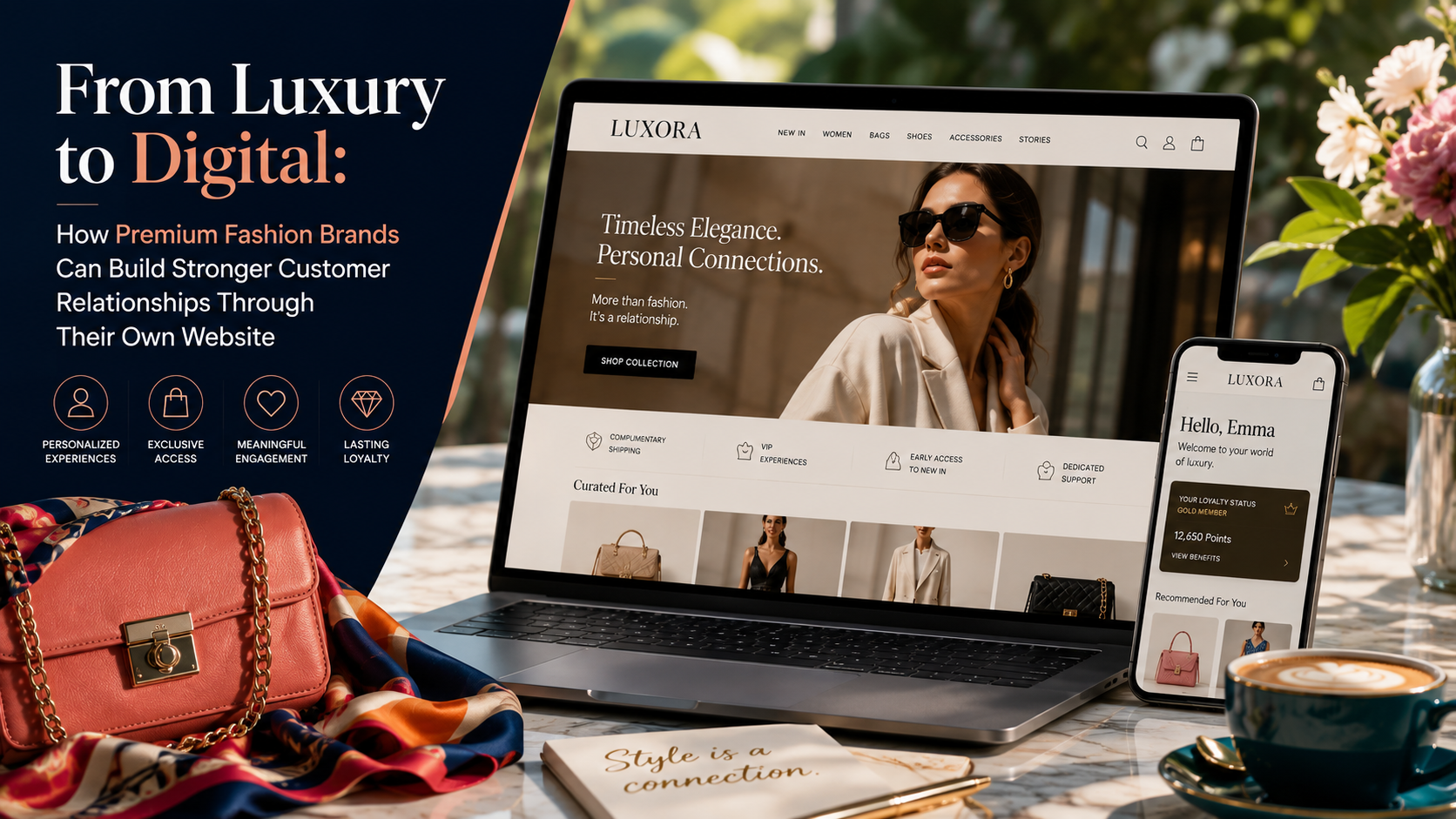
From Luxury to Digital: How Premium Fashion Brands Can Build Stronger Customer Relationships Through Their Own Website
According to a 2025 luxury study by Bain & Company, 90% of consumers feel the customer experience is similar across brands.
According to a 2025 luxury study by Bain & Company, 90% of consumers feel the customer experience is similar across brands. 70% of them are dissatisfied with the in-store experience they receive. This is a striking number for the luxury fashion industry built on exclusivity and personal attention. If customers fail to differentiate one premium brand's website from another, the brand has already lost one advantage that justified the price tag in the first place.
Today, luxury fashion websites do more than display products. They carry the brand experience, make shopping feel personal, and create a direct relationship with customers. So it is important to have a website that makes every visitor feel recognized. This blog will discuss why a luxury brand's own website is now its strongest tool for building customer relationships, and how brands can use it to stand out and earn loyalty.
Why Premium Fashion Brands Need Their Own Digital Experience
For many years, department stores and marketplaces had more control over the customer relationship than the brand itself. Products were displayed alongside competitors and the retailers decided how they were priced and presented. So, every sale strengthened the retailer's bond with the shopper rather than the brand's. But now a brand's own website changes that, and for good reason.
Tell the Brand Story
Every brand has its own unique story. With a luxury fashion website, a brand can tell its story and showcase products on its own terms. They don’t need to compete with other brands on the same page.
Understand Customer Needs
Owning a website means a brand has its customers' data that includes their purchase history, browsing behavior, and preferences. By having all these together, brands can provide a more personalized experience that will help customers feel recognized.
Build a Premium Image
High-end fashion websites help a premium fashion brand stand out from a regular one. Such websites have features that allow brands to control how their products look, how prices are shown, how collections are presented, etc. These ultimately create a more exclusive experience for the customers.
Adapt to Digital Shopping Trends
The fashion industry is moving towards brand-owned websites. Most customers are choosing to buy directly. As a result, multibrand platforms are fighting for relevance. Brands that adapt early stand to gain the most from this shift.
What Makes a Luxury Website Feel Like a Personal Shopping Experience
A trained flagship boutique associate already knows about customers’ size, their last purchase, and maybe their choices. A well-built luxury fashion website should carry that same instinct online, recognizing a visitor's preferences and history the moment they land on the site.
-
Smart recommendations: Suggest products based on browsing history and past purchases, not generic bestsellers. So, the site feels like it is dressing the customer, not just selling to them
-
Locally aware: Show the right language, currency, pricing, and local information based on where the customer is shopping. This makes the experience feel more thoughtful and convenient
-
Strong visual storytelling: Use high-quality images, videos, and details about materials and craftsmanship. This helps customers understand the quality and value behind a product
-
Fast and easy to use: Good ecommerce website development keeps the site fast and easy to use while supporting high-quality images, videos, and personalized features
This is what a real personalized shopping experience looks like, and it is exactly what keeps customers coming back.
How Can a Luxury Website Give Customers More Reasons to Come Back?
If a customer buys a product from a brand’s website, it is only half of the job. The more challenging and valuable task is to build fashion brand loyalty that brings customers back a second, third, or maybe tenth time. The website contributes to customer retention strategies in many ways and builds good customer relationships. Here is how it does so.
Offers Exclusive Loyalty Access
Points and discounts have no place in luxury brand shopping. Instead, brands can offer exclusive access to new collections, private previews, or limited-edition products. These kinds of access feel like rewards in themselves. So, customers come back to luxury fashion websites because they feel like a valued part of the brand.
Stays Present With Personal Follow-Ups
To build a long-lasting relationship, brands must connect with customers even after their first purchases. For example, they can share styling tips based on what a customer just bought or care instructions for the product. They can even recommend products that customers can add to their wishlist for the next purchase. This kind of follow-up turns a personalized shopping experience into an ongoing relationship. Over time, these small touches contribute to customer retention.
Builds Trust Through Easy Returns
A frictionless and structured return policy tells a customer that they are valued even when a purchase does not work out. This matters more in luxury than in almost any other category. High-end fashion websites offer prepaid return labels, responsive customer support, and quick resolutions. This builds more trust than the original purchase did. Because it shows the brand stands behind its products even after the sale is done. On the other hand, a poor return experience can ruin months of goodwill in a single interaction.
Deepens Engagement With Interactive Technology
Today’s websites use AI-powered styling assistants, virtual try-ons, and 3D product configurators. These let customers explore and customize items before they buy. Instead of aimlessly scrolling through products, a customer can see how a dress looks in different colors or get styling suggestions based on what they already own. Thus, luxury brand websites provide a personalized shopping experience in a more useful and engaging way. The interactive tools and technologies also give customers more reasons to return to the site even when they are not actively planning to buy.
Delivers Consistency Through a Strong Platform
A well-built website will be able to provide a better experience. Adding features like loyalty programs, personalized follow-ups, and interactive tools depends on reliable ecommerce website development. This keeps the site fast, smooth, and easy to use. No matter how good the products or loyalty programs are, a slow or glitchy website can ruin the customer experience.
Brands that treat every step after a purchase as a chance to build a relationship are the ones that turn one-time buyers into truly loyal customers.
Where Luxury Retail Is Headed From Here
The luxury industry is undergoing a genuine reset. Today, brands can’t just assume customer loyalty. They have to earn this. In this competitive market where a few customers are actively buying, brands are focusing on retaining the ones rather than chasing new ones. Marketplaces can not provide this kind of personal and seamless experience that retention requires.
Investing in genuine personalization, thoughtful storytelling, and strong post-purchase experiences, luxury fashion websites hold onto customers through this shift. The brands treating their website as a real flagship store will be the ones building relationships that last well beyond a single purchase.
References
https://www.bain.com/insights/finding-a-new-longevity-for-luxury/