Undersea Internet Cables Explained: How the Global Network Crosses Oceans and Supports the Economy
Undersea internet cables carry much of the world's international digital traffic across oceans, connecting continents through fiber-optic networks on the seabed. This guide explains how they are manufactured, installed, protected, repaired, and why damage can affect cloud services, finance, trade, and business operations.
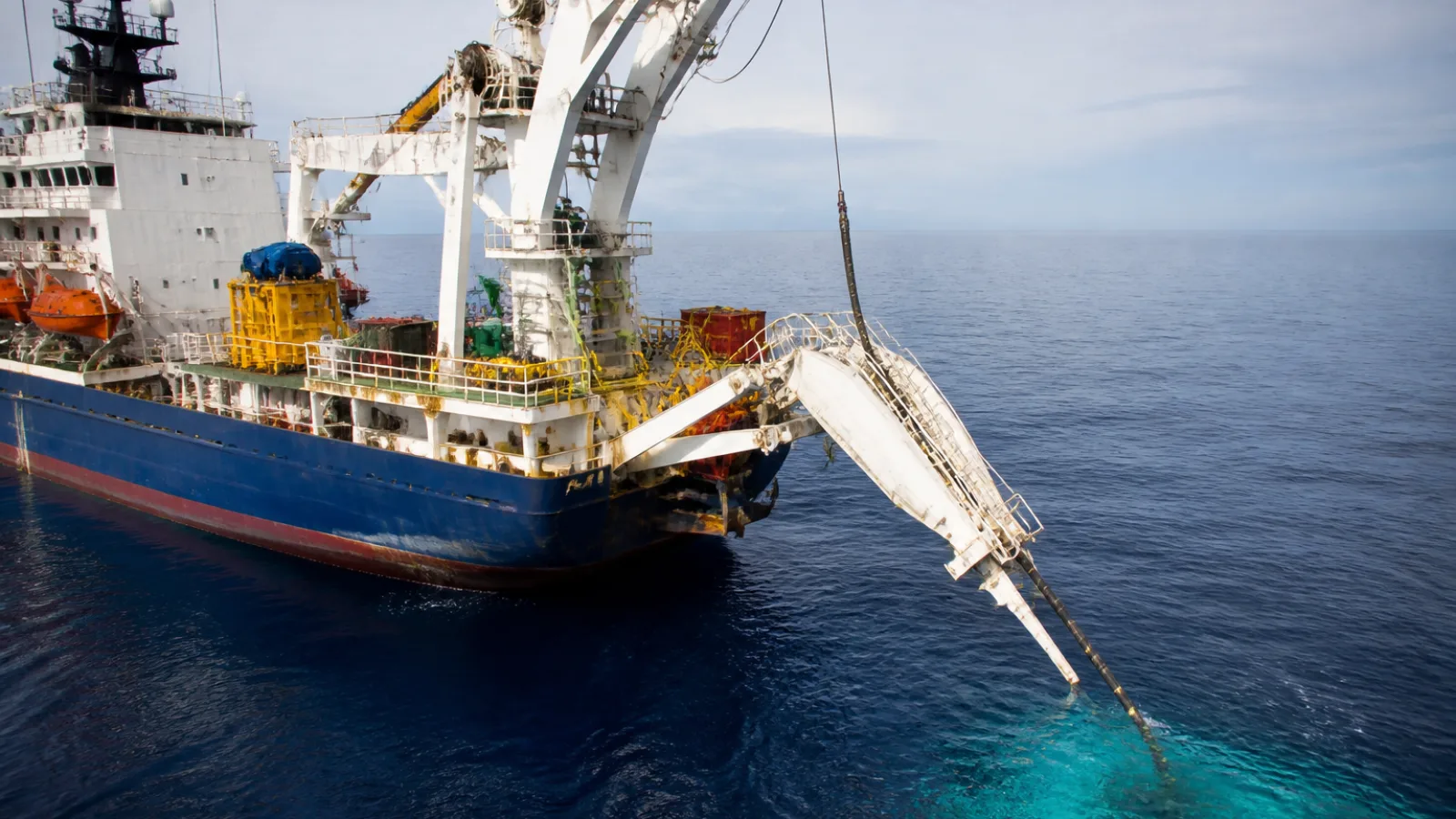
When people send a message across the world, join a video meeting, access a cloud application, or complete an international payment, the data often travels through an undersea internet cable. These cables form the physical backbone of global connectivity. Companies that design and install submarine cable systems help connect continents through fiber-optic infrastructure placed on or beneath the ocean floor.
That is why damage to an internet cable can be more serious than a local service interruption. A single break may reroute traffic, slow connections, interrupt communications, or reduce access to digital services in countries and regions that depend on a limited number of international routes. Understanding how these cables work explains both how the internet crosses oceans and why their protection matters to the global economy.
What Are Undersea Internet Cables?
Undersea internet cables are long communications cables that carry digital data between countries and continents. Most modern systems use fiber-optic strands rather than copper wire. Inside each glass fiber, information travels as pulses of light. A data stream is converted into light signals, sent through the fiber, and converted back into electronic information at its destination.
A cable contains more than the glass fibers themselves. Protective layers may include a central strength member, insulation, steel wires, copper components for powering equipment, and an outer polyethylene jacket. Repeaters, also called optical amplifiers, are installed at intervals along many long-distance systems to strengthen optical signals as they travel across the ocean.
The cable is not usually suspended in the water. In deep ocean areas, it generally rests on the seabed. Near shorelines, busy shipping areas, and fishing grounds, it may be buried beneath the seabed to reduce the risk of damage from anchors, trawling equipment, and other human activity.
How Do Internet Cables Cross the Ocean?
Manufacturing the fiber-optic core
The process begins with extremely fine glass fibers manufactured to transmit light with very low signal loss. Several fibers are grouped into a cable core and surrounded by protective materials. The final design depends on the route, water depth, seabed conditions, expected hazards, and the electrical requirements of the system.
Cables intended for shallow water often have stronger armoring because this is where human activity creates the greatest risk. Deep-sea cable sections can be thinner and lighter because they are placed away from most anchors and fishing gear. Both types must withstand handling during loading, deployment, and possible future repair.
Loading and laying cable from specialized ships
After manufacturing and testing, the cable is transported to a cable ship. Large cable tanks store the cable in carefully arranged coils. The crew must prevent sharp bends, tangles, and excessive tension because damage during loading could compromise the system before it reaches the water.
Before a cable is laid, engineers survey the proposed route. They study nautical charts, seabed contours, geological conditions, shipping lanes, fishing activity, protected areas, and existing infrastructure. Route planning is important because the shortest path is not always the safest or most practical path.
During installation, the ship moves slowly along the approved route while the cable passes through deployment equipment and descends to the seabed. The amount of cable released is controlled to match the depth and shape of the seafloor. Engineers allow enough slack for the cable to settle naturally without creating excessive tension, but not so much that unnecessary loops form.
In shallow areas, a remotely operated vehicle or seabed plough may bury the cable in a narrow trench. In deeper water, burial may not be necessary because there is less contact with anchors and fishing equipment. The cable is monitored throughout the operation to confirm its position and condition.
Connecting cables to landing stations
Each international cable terminates at a cable landing station on shore. This facility connects the subsea system to terrestrial fiber networks, data centers, internet exchange points, telecommunications networks, and cloud infrastructure.
Landing stations also contain power-feeding equipment, monitoring systems, switching hardware, and security controls. A cable therefore forms part of a larger network rather than operating as an isolated line between two beaches. Once data reaches a landing station, it can continue through national and regional networks to homes, offices, mobile networks, banks, and data centers.
How Are Subsea Cables Protected?
Protection starts with route selection. Engineers try to avoid areas with intense anchoring, commercial fishing, unstable slopes, active seabed movement, and other known hazards. They also coordinate with maritime authorities and other infrastructure owners where routes pass through congested waters.
Cable design provides another layer of protection. Armored sections are heavier and more resistant to crushing, abrasion, and pulling forces. Burial provides additional protection near shore, although it cannot eliminate every risk. Earthquakes, underwater landslides, storms, construction activity, and ship anchors can still damage a buried cable.
| Hazard | Possible effect | Typical protection or response |
|---|---|---|
| Ship anchors | Pulling, crushing, or snapping the cable | Route planning, warning zones, armoring, and burial |
| Fishing equipment | Dragging or lifting the cable | Burial in busy areas, route coordination, and monitoring |
| Earthquakes or landslides | Several cable segments may break together | Geological surveys, route diversity, and repair planning |
| Construction or dredging | Cutting or exposing the cable | Permits, accurate route records, and protective offsets |
| Equipment failure | Loss of signal or reduced capacity | Testing, monitoring, spare equipment, and maintenance |
What Happens When an Undersea Cable Is Cut?
A cable break interrupts the fiber paths that carry data. Network operators can often reroute traffic through other cables, but the result depends on how much spare capacity is available and how many alternative routes connect the affected locations.
If sufficient alternatives exist, most users may notice little or no disruption. Traffic may take a longer route, which can increase latency. Other users may experience slower speeds, congestion, failed connections, or temporary loss of access to particular services.
The impact can be greater when several cables are damaged in the same region or when a country has few international landing points. A cable failure does not necessarily switch off the entire internet. Instead, it reduces the available paths through which networks exchange data. The more concentrated the infrastructure, the more visible the consequences can be.
Why Can One Cable Failure Affect the Global Economy?
Modern economic activity depends on continuous international data exchange. Financial institutions use networks to process payments, transfer market information, communicate with branches, and connect to clearing systems. A damaged cable can increase delays or force traffic onto congested routes, creating operational challenges for banks and payment providers.
Cloud computing is also distributed across regions but still depends heavily on physical connectivity. Businesses may use software, storage, cybersecurity tools, customer databases, and collaboration platforms hosted in another country. If the route to a cloud region becomes unavailable or congested, employees may experience slow applications or temporary service interruptions.
International companies face similar risks. Customer support centers, logistics platforms, online marketplaces, manufacturing systems, and corporate communications often cross national borders. A connection problem can delay orders, disrupt coordination, make remote systems harder to access, and increase the cost of using backup routes.
Supply chains can also be affected indirectly. Shipping, customs, inventory, scheduling, and supplier coordination rely on digital systems. Even when physical goods continue moving, a communications disruption can slow the information needed to manage those goods.
The economic effect is therefore not limited to the cable owner. It can spread through organizations that depend on the affected route, especially when an outage lasts long enough to require manual workarounds or emergency network changes.
How Are Damaged Cables Repaired?
Network operators first identify the likely location of the fault using electrical tests, optical measurements, and data from network monitoring systems. The position may then be narrowed using route records, seabed maps, and information about recent maritime activity or geological events.
A repair ship is assigned based on location, equipment, weather, permits, and the type of cable involved. The ship travels to the repair area and uses specialized grapnels or remotely operated equipment to locate and recover the cable. In deep water, this can be a complex operation affected by currents, visibility, seabed terrain, and cable burial.
Once the damaged section is brought aboard, technicians remove the faulty portion and splice in a tested replacement. The repaired cable is then lowered back to the seabed. Near shore, it may be reburied to restore protection. The system is tested before traffic is returned to the repaired route.
Repair time varies. A straightforward break in accessible waters may be addressed more quickly than a fault in a remote, deep, or politically restricted area. Weather, ship availability, permitting, spare cable inventory, and the number of simultaneous faults can all affect the schedule.
Are Satellites an Alternative to Undersea Cables?
Satellites and undersea cables serve complementary roles. Satellites can reach remote locations without a physical cable route and can provide important backup connectivity during disasters or infrastructure failures. They are useful for aircraft, ships, emergency communications, and areas with limited terrestrial infrastructure.
For the largest volumes of intercontinental internet traffic, fiber-optic cables are generally preferred because they offer very high capacity and low latency. Satellites must send signals through space, which can introduce greater delay depending on the orbit and system design. Satellite capacity is valuable, but it does not simply replace the enormous data-carrying role of global submarine cable networks.
| Feature | Undersea fiber-optic cables | Satellites |
|---|---|---|
| Primary role | High-volume intercontinental data transport | Coverage, mobility, remote access, and backup |
| Capacity | Very high capacity across dedicated fiber pairs | Capacity depends on satellite and spectrum resources |
| Latency | Low for long-distance terrestrial and subsea routes | Varies by orbit and signal path |
| Main vulnerability | Physical damage along the route | Space, ground-station, spectrum, and weather-related constraints |
Frequently Asked Questions
Do undersea internet cables float in the ocean?
No. Most cables rest on the seabed, while selected sections are buried beneath it. Their design and installation account for water depth, seabed conditions, currents, and the need to avoid excessive tension.
How deep are undersea internet cables?
Depth varies according to the route. A cable may be buried in relatively shallow coastal waters and lie directly on the seabed in deep-ocean areas. There is no single depth that applies to every system.
Can a shark cut an internet cable?
Marine animals are not considered the main cause of modern cable failures. Human activity, particularly anchors and fishing equipment, is a more significant risk in many shallow-water areas. Cable construction and route planning reduce exposure to these hazards.
Does cutting one cable shut down the internet?
Usually not. The internet is made of interconnected networks, and operators can often reroute traffic. However, a break can cause congestion, slower service, or outages where there are few alternative routes. Multiple failures can create much more serious disruption.
Why are cable landing stations important?
Landing stations connect the international subsea cable to terrestrial networks, data centers, telecommunications providers, and business infrastructure. Without this connection point, the cable could not deliver international capacity to users on land.
Conclusion
Undersea internet cables are engineered communication routes that cross oceans on the seabed and connect national networks at coastal landing stations. Their fiber-optic cores carry the data used by communications providers, cloud platforms, financial institutions, logistics companies, governments, and everyday internet users.
A cable cut does not normally destroy the internet, but it can remove an important path from the global network. When alternative routes are limited, the resulting congestion and service interruptions can affect finance, cloud access, business communications, and international supply chains. Route diversity, cable protection, continuous monitoring, and specialized repair ships are therefore essential to keeping the digital economy connected.