How to Plan a Construction Site Open Day Without Compromising Safety or Productivity
A construction site open day can build trust and explain project progress, but only when public access is treated as a controlled site operation. This practical guide covers permissions, risk reviews, visitor routes, PPE, supervision, demonstrations, emergency planning and post-event improvements.
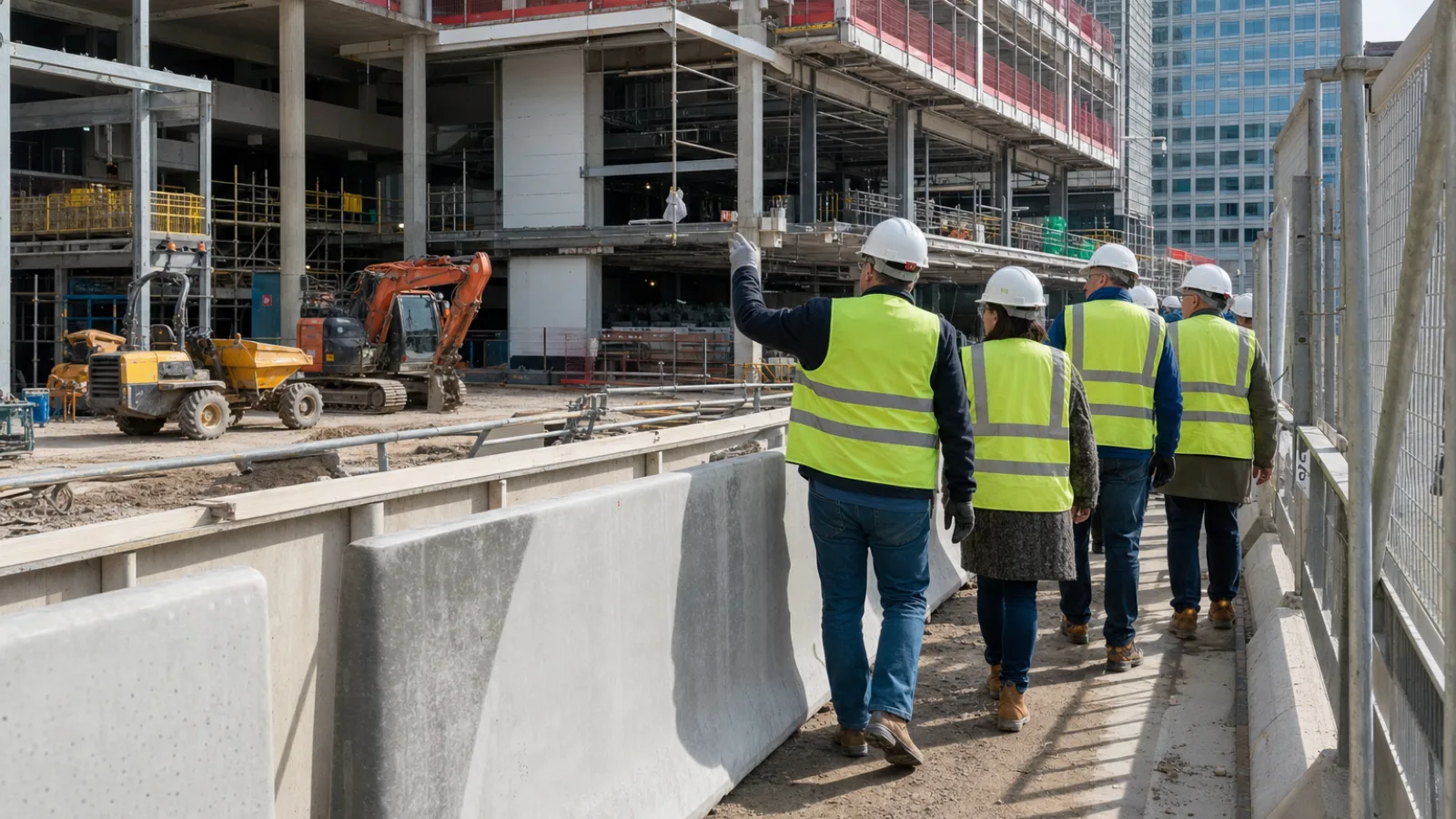
A construction site open day can show progress, strengthen relationships with neighbours and stakeholders, build confidence in a development and explain how complex work is delivered. It can also introduce unfamiliar people to vehicles, temporary works, excavations, moving equipment and changing site conditions.
An active site is not automatically suitable for public access. Safety, security and productivity must be designed into the event from the beginning. A documented process for inspections, inductions and visitor-safety checks can be supported by a digital safety checklist platform, provided it complements the project’s own procedures and competent safety advice. The process below helps construction managers, contractors, developers and communications teams decide whether an open day is appropriate, then plan it as a controlled site-access operation.
Key takeaways
- Define the audience and purpose before selecting a route or inviting visitors.
- Include the event in the project’s risk assessment, construction-phase planning and emergency arrangements.
- Use physical segregation, controlled access, induction and active supervision; do not rely only on signs or verbal instructions.
- Protect programme-critical work, confidential information and site security through timed visits, restricted areas and clear photography rules.
- Appoint one accountable event lead and make a documented go/no-go decision immediately before opening.
Define the Purpose, Audience, and Limits of the Open Day
The objective determines almost every operational decision. A community engagement event may need a short, highly controlled viewing route. A client or future-occupier visit may justify a more detailed explanation of construction sequencing. A student visit may focus on careers and skills rather than access to active work areas.
Identify the expected visitor groups, which may include neighbours, clients, students, local officials, future occupants, suppliers or accredited media. Consider their age, mobility, language, familiarity with construction hazards and likely questions. Attendance should be capped according to the route, supervision capacity, emergency arrangements and available space—not simply the number of people who register.
Set clear limits before invitations are issued. These may include registration requirements, age restrictions, accessibility arrangements, photography rules, prohibited items and whether visitors must remain with a guide. Children should not be admitted by default to an active work area. If they are included, the risk assessment should specifically address supervision, behaviour, route design and suitable alternative viewing arrangements.
Also decide which type of event is appropriate:
| Format | Safety complexity | Productivity impact | Best use |
|---|---|---|---|
| Guided live-site tour | High; requires segregation, induction and close supervision | Potentially significant if work continues | Showing construction methods and progress where conditions allow |
| Controlled viewing area | Moderate; visitors remain outside active work zones | Usually lower | Community updates, progress viewing and stakeholder engagement |
| Off-site or completed-project presentation | Lowest site-access complexity | Minimal | Explaining design, programme and benefits when the live site is unsuitable |
Secure Permissions and Complete a Site-Specific Risk Review
Obtain approval from the client, principal contractor, site manager, property owner and insurer as applicable. Local authorities or other regulators may also have requirements, particularly where the event affects public roads, traffic management, fire access, neighbouring properties or public rights of way. Legal and site requirements vary by location, so the project’s competent safety professionals should confirm the applicable obligations.
The open day should be incorporated into the project risk assessment and construction-phase planning. Treating it as a separate public-relations activity can leave gaps between the event team and those controlling daily construction work. The review should consider the actual conditions expected on the selected date, including:
- Vehicle and pedestrian movements, deliveries and traffic interfaces.
- Lifting operations, suspended loads and crane exclusion zones.
- Temporary works, scaffolding, edge protection and work at height.
- Excavations, floor openings, uneven ground and incomplete access routes.
- Hazardous substances, hot works, electrical installations, dust and noise.
- Fire arrangements, emergency access, evacuation routes and first-aid provision.
- Weather, lighting, drainage, wind exposure, heat, cold and visibility.
- Confidential information, unauthorised access and security-sensitive areas.
Decide whether normal work must stop, be relocated or be physically separated during visitor periods. A go/no-go review should take place immediately before opening, with authority to cancel or restrict the event if conditions differ from the plan.
Choose the Safest Date, Time, and Site Layout
Select a period with fewer deliveries, vehicle movements, lifting operations and subcontractor conflicts. The quietest time is not always the safest, however; poor lighting, reduced staffing or unfinished temporary works may create additional risks. The site manager should identify work fronts that can be paused or isolated without creating new hazards.
Build time into the programme for setup, cleaning, route inspection, staff briefings, visitor movement, breaks and shutdown. Do not schedule visitors into a narrow gap between critical activities. A weather contingency should identify the trigger for postponement, the person who makes the decision and how registered visitors will be notified.
A simple layout normally includes a welcome and registration point, induction zone, controlled visitor route, designated viewing points, rest area, toilets, first-aid arrangements, emergency exits and a clearly marked no-entry boundary. Keep the welcome area away from reversing vehicles and avoid placing queues across fire routes or worker access points.
Separate Visitors From Active Construction Work
Physical separation is the foundation of construction site visitor safety. Use suitable barriers, fencing, locked gates, edge protection, signs and controlled access points to prevent visitors from entering work zones. Where a route crosses a vehicle path, use a planned crossing with visibility, timing controls and a marshal; do not expect visitors to judge moving plant for themselves.
Inspect the route for overhead hazards, uneven surfaces, temporary lighting, noise, dust, standing water, loose materials, trailing cables and trip hazards. Visitors should not be asked to walk through an area that depends on constant verbal warnings. Signs and instructions support the control system, but they do not replace segregation, hazard removal or supervision.
Route-control checklist
- Confirm that the route is separated from vehicles, plant and lifting operations.
- Check barriers, gates, handrails, edge protection and floor coverings.
- Remove loose materials, waste, cables and avoidable trip hazards.
- Provide adequate lighting and a firm, accessible walking surface.
- Mark restricted areas clearly and lock or guard access points.
- Check noise, dust, fumes and weather exposure along the route.
- Keep emergency access, fire points and escape routes unobstructed.
Build a Visitor Registration, Induction, and Supervision System
Pre-registration helps the team plan capacity, accessibility and emergency information. Record names, arrival and departure times, emergency contacts where appropriate, consent requirements and relevant access needs. Protect personal information and limit access to those who need it for event management and safety.
A concise construction site induction should explain the site boundary, significant hazards, required PPE, alarms, emergency response, housekeeping, photography rules, prohibited behaviour and the instruction to stop and follow the guide. It should be understandable to the audience and delivered before visitors enter the controlled route.
Assign an event lead, site safety lead, competent guides, access controllers, marshals and first-aid contacts. The guide-to-visitor ratio should be set by the risk assessment, route complexity, group composition and communication needs. There is no universal ratio that is suitable for every site.
Use a reliable headcount system at registration, at key movement points and at departure. Groups should remain together, and guides should know how to stop the tour if someone becomes separated or enters a restricted area. A visitor badge, wristband or other visible identifier can help, but it is not a substitute for controlled access.
Provide Suitable PPE and Make It Easy to Use Correctly
The risk assessment should determine the minimum construction site PPE. Depending on the route, this may include hard hats, high-visibility clothing, safety footwear, eye protection, hearing protection or respiratory protection. Visitors should be told why each item is required and shown how to wear it correctly.
Provide a suitable range of sizes, inspect equipment before use, keep reusable items clean and store them safely. Plan for replacement items and for visitors who need prescription eyewear, different footwear or other accessibility adjustments. PPE must be compatible with the visitor’s clothing and any personal protective equipment they already use.
PPE is the final layer of protection. It does not compensate for poor route segregation, uncontrolled hazards or inadequate supervision. A visitor who cannot safely meet the PPE, footwear or mobility requirements may need an alternative viewing area, virtual presentation or off-site briefing rather than an exception to the controls.
Plan Demonstrations Without Creating New Hazards
Choose demonstrations that are controlled, relevant and separated from public movement. Each activity should have a pre-approved script, a defined exclusion zone, a competent operator, checked equipment, a stop signal and a clear explanation of what visitors must not touch.
Safer alternatives may include completed work samples, mock-ups, videos, BIM visualisations or demonstrations in a closed work area that has been prepared specifically for the event. These options can explain construction quality and sequencing without exposing visitors to unnecessary operational hazards.
Live machinery, lifting, hot works, electrical work, cutting and chemical demonstrations require especially strict controls and may be unsuitable. Never restart an activity simply to make the event more impressive. If a demonstration changes the normal risk profile, the event plan and risk assessment should be reviewed before it proceeds.
Protect Productivity, Confidential Information, and Site Security
Schedule tours around work fronts, deliveries, inspections and subcontractor access. Use timed slots, capped group sizes and one-way routes to prevent queues and congestion. Appoint a named decision-maker who can pause the event when work conditions change.
Review what visitors could see or photograph. Drawings, screens, access-control systems, badges, client information, personal data, commercial information and unfinished areas may need to be covered, removed or excluded from the route. Set photography, filming, drone, social-media and media-interview rules before registration. Explain whether permission is required and who can approve images.
Brief workers and subcontractors in advance. They should know the event times, visitor route, restricted areas, emergency arrangements and who has authority to stop or redirect the tour. Workers should not be expected to answer questions while operating plant or performing safety-critical tasks.
Prepare the Event Team and Emergency Arrangements
At minimum, identify an event lead, site safety lead, guides, access controller, first-aid contact, communications lead where relevant and evacuation coordinator. Give each person a defined responsibility and a reliable way to communicate. Radios or phones should be tested, and contact details should be available to the team.
Conduct a toolbox talk before visitors arrive. Cover lost-person procedures, medical response, fire, severe weather, unexpected work activity, evacuation or shelter arrangements and the authority to stop the event. The team should know where visitors will assemble and how headcounts will be reconciled.
Event-day readiness check
- Complete the final site inspection and record the go/no-go decision.
- Confirm that planned work, deliveries and lifting operations are paused or segregated.
- Check barriers, route surfaces, lighting, signs, toilets and first-aid arrangements.
- Brief guides, marshals, workers and subcontractors.
- Test communication equipment and confirm emergency contacts.
- Verify visitor lists, accessibility arrangements, PPE and headcount controls.
- Confirm the weather decision and cancellation communication process.
Measure the Open Day and Improve the Next One
Record attendance, registrations compared with arrivals, feedback, questions, accessibility issues, incidents, near misses, delays, route problems and staff observations. A successful event is not defined only by attendance. It should also meet its communication objective without weakening safety performance or disrupting critical work.
Hold a short debrief with site management, safety personnel, contractors and communications staff. Identify what worked, what caused confusion and whether any control depended too heavily on individual judgement. Record corrective actions, assign owners and update the open-day plan for future events.
Construction Site Open Day Planning Checklist
| Timing | Practical actions |
|---|---|
| Four or more weeks before | Define the purpose and audience; secure approvals; select the format; begin the risk review; set capacity, age and photography rules; identify a provisional date and cancellation process. |
| One to two weeks before | Confirm the route and work shutdowns; register visitors; arrange guides, marshals, first aid, toilets and PPE; issue joining instructions; brief contractors and review accessibility. |
| The day before | Inspect and clean the route; install barriers and signs; check emergency access, lighting and communications; confirm weather conditions; update the final attendance list. |
| Event day | Complete the go/no-go review; deliver the induction; control entry and headcounts; supervise movement; monitor changing conditions; pause or cancel if required. |
| After the event | Reconcile visitors; remove temporary arrangements safely; record incidents and feedback; hold a debrief; assign corrective actions and preserve relevant records. |
Frequently Asked Questions
Can the public enter an active construction site?
They may be able to enter a controlled area if the client, contractor, owner, insurer and relevant authorities permit it and the site-specific risk review demonstrates that suitable controls are in place. Public access is not appropriate when hazards cannot be isolated, explained or effectively supervised. An external viewing area or off-site presentation may be safer.
What PPE should visitors wear on a construction site open day?
The risk assessment determines the requirements. Common items include a hard hat, high-visibility clothing and safety footwear, with eye, hearing or respiratory protection where the route requires it. PPE should be correctly sized, inspected, hygienic and compatible with the visitor’s needs.
How can a construction site open day avoid disrupting work?
Use timed slots, capped groups, one-way routes and a viewing area away from programme-critical work. Schedule the event around deliveries, lifting and inspections, pause unsuitable activities and brief workers in advance. A named event lead should be able to stop the tour when it interferes with safe operations.
Should children be allowed on a construction site open day?
Not automatically. Children may have limited hazard awareness and may require closer supervision and different route controls. The risk assessment should address age limits, adult supervision, behaviour, PPE and emergency arrangements. A family-friendly viewing area away from active work may be a better option.
What should happen if weather or site conditions become unsafe?
Pause or cancel the event according to the agreed trigger points. Reinspect the route, confirm emergency access and reassess hazards such as wind, lightning, heat, ice, flooding, poor visibility or unstable surfaces. Notify registered visitors promptly and do not reopen until the site manager and safety lead approve the revised arrangements.
Conclusion
A successful construction site open day is a controlled site-access operation, not simply a public-relations event. Permission, a site-specific risk review, physical segregation, induction, supervision, suitable PPE, controlled demonstrations, confidentiality measures and productivity protection all need to work together.
Appoint one accountable event lead, coordinate closely with the site manager and competent safety professionals, and confirm the documented go/no-go decision before visitors arrive. If the active site cannot be made suitable, a controlled viewing area or off-site presentation can still deliver meaningful engagement without exposing people or the project to unnecessary risk.