How to Read a Commercial Property Title Report: Easements, Covenants and Development Limits
A commercial property title report can reveal ownership gaps, access rights, liens, easements and private restrictions that affect a proposed project. This practical guide explains how to read the report, connect it to surveys and site plans, and turn exceptions into clear transaction decisions.
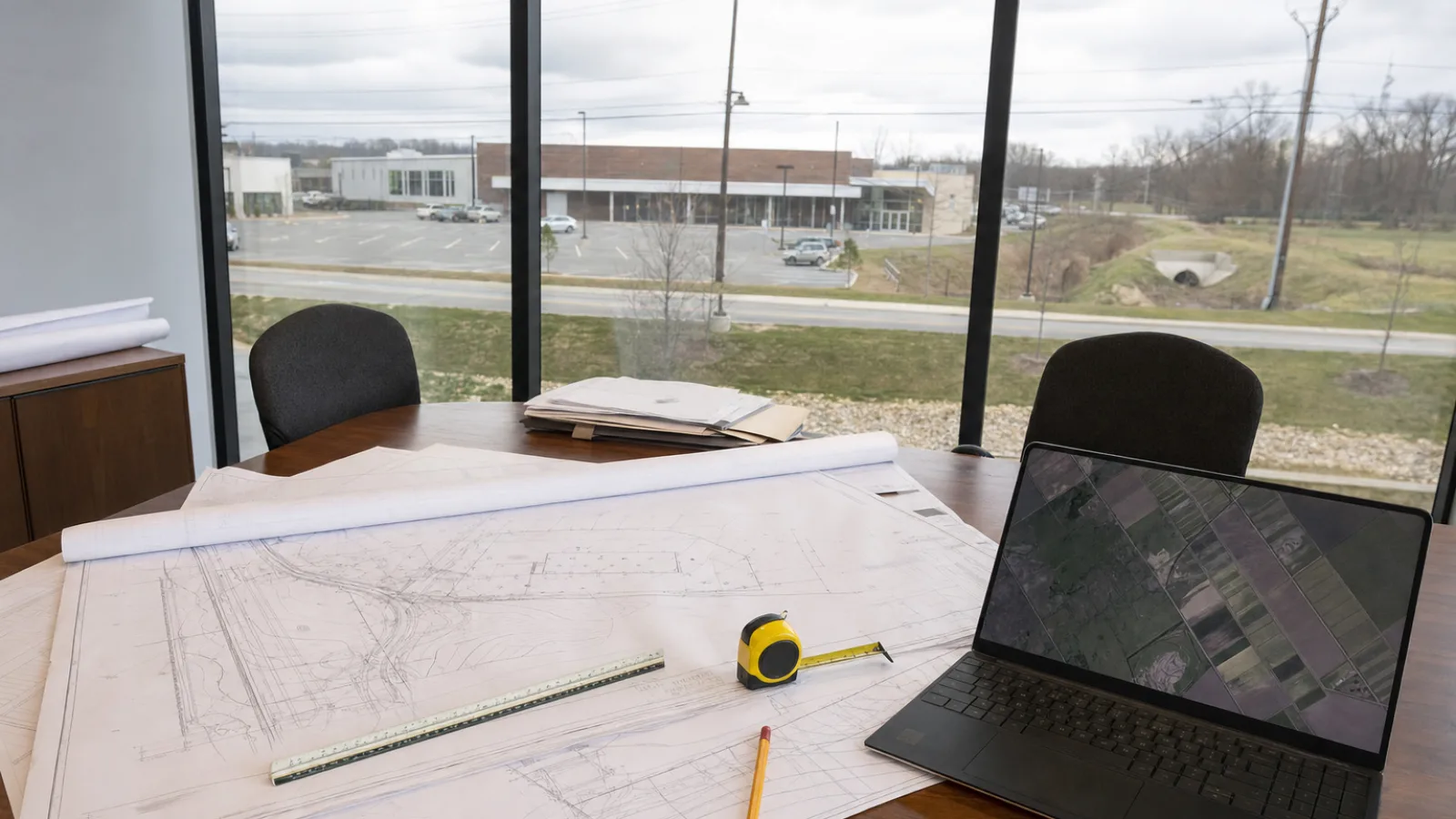
A commercial property title report can change the economics of a deal before a buyer commits to land, design fees, financing costs or construction. It may reveal that access depends on a recorded agreement, that a utility corridor crosses the best building area, or that a private covenant limits a use that zoning appears to permit.
In plain language, the report is a record-based summary of who owns the property and which recorded interests or exceptions may affect it. Services such as Stewart’s commercial title services can help organize this information, but the report is not a substitute for advice from a real estate attorney, title professional, surveyor, lender or local planning authority. It also does not answer every zoning, physical-condition, environmental or permitting question.
What Is a Commercial Property Title Report?
A title report summarizes the results of a commercial real estate title search. It commonly identifies the current owner, the legal description, recorded deeds and other instruments, liens, easements, covenants, leases and requirements that must be addressed before a title insurer will issue a policy. Terminology and recording practices vary by jurisdiction.
A title commitment is a preliminary undertaking by a title insurer to issue a policy subject to stated requirements and exceptions. A title report may be an informational report rather than an insurance commitment. A title policy is the final insurance contract, with coverage controlled by its terms, exclusions, endorsements and listed exceptions. The deed transfers an ownership interest; it does not, by itself, provide a complete history of all recorded rights affecting the land. A title search is the investigation of public records used to assemble this information.
The title company searches and reports recorded matters. The seller supplies ownership and transaction information, while the buyer and its attorney assess whether the exceptions fit the intended acquisition. The lender reviews title for collateral and priority requirements. A surveyor maps physical relationships, and local authorities address zoning, building codes, site-plan approval, subdivision, environmental and permitting issues.
Title and development approvals overlap but are not interchangeable. A title report may show a recorded access easement, while zoning may determine whether the proposed building, parking count or use is permitted. A project generally has to satisfy both private land rights and public regulation.
Read the Report in the Right Order
1. Confirm the property and legal description
Start with the owner of record, parcel or tax identification number, street address, legal description, stated acreage and vesting entity. The legal description controls the land being searched more reliably than a marketing address. A commercial offering may refer to a center by a common name while the transaction covers several parcels, an outlot, a shared drive or a separately owned access strip.
Look for mismatched parcel numbers, missing parcels, outdated entity names, unexplained changes in ownership and uncertainty about boundary calls. If the acquisition depends on assembling multiple lots, confirm that every parcel is included and that the proposed buyer can obtain title to each one.
2. Review the effective date and covered parties
Check the search or effective date, proposed insured, lender, policy type and transaction structure. A report prepared months earlier may not include a recent deed, mortgage, lease, judgment, lien, option or recorded amendment. A lender may also require specific endorsements or coverage that the buyer does not initially request.
3. Separate requirements from exceptions
Requirements are items that must usually be satisfied before closing or policy issuance, such as execution documents, releases, payoff evidence, authority documents or proof of taxes. Exceptions are matters the policy may exclude from coverage or matters that remain affecting the property, such as easements, covenants and recorded restrictions.
Create an issue log rather than relying on highlighted pages. Record the document number, affected area, business impact, responsible professional and required action. This turns a legal record into a project-management tool.
| Report Item | What It Tells You | Why It Matters to a Commercial Project |
|---|---|---|
| Ownership and vesting | Who holds title and in what legal capacity | Determines authority to sell, finance or grant rights |
| Requirements | Items needed before closing or policy issuance | Can affect schedule, closing conditions and transaction cost |
| Exceptions | Recorded matters outside or limiting coverage | May constrain use, financing or construction |
| Easements | Rights to use or cross part of the property | Can limit buildings, grading, utilities, parking or access changes |
| Liens | Claims securing debt, taxes or services | May require payoff, release, priority or legal review |
| Covenants | Private promises or restrictions on land use | May restrict tenants, design, signage, operating rules or expansion |
| Survey matters | Physical boundaries, encroachments and overlaps | Tests whether recorded rights fit the actual site and plans |
Key Items to Look for in a Commercial Property Title Report
Ownership, vesting and legal authority
Identify whether the owner is a corporation, LLC, partnership, trust, estate or group of individuals. Confirm that the vesting name matches the intended seller and that the person signing has authority under the entity’s governing documents or applicable law. Estates, trusts and multiple owners can require additional evidence or signatures.
Review the chain of title for gaps, inconsistent names, questionable legal descriptions or transfers that may not have been properly executed or recorded. These issues can delay closing and later complicate refinancing, a sale, a ground lease or the granting of a new easement.
Easements and rights-of-way
An easement gives a party a defined right to use land owned by someone else. Common commercial examples include access, ingress and egress, utilities, drainage, stormwater, parking, shared-use, conservation and reciprocal easements. A right-of-way is often an access right, although the precise meaning depends on the recorded instrument and governing law.
Do not judge an easement only by whether it crosses the existing building. Its language may limit building placement, excavation, grading, landscaping, signage, parking, utility relocation, fencing or security gates. Some agreements also assign maintenance, repair, cost-sharing or restoration duties. A utility easement that appears unused may still affect foundations or future expansion.
Obtain and read the referenced document, then compare its written limits with a current survey and proposed site plan. The survey should show the location where possible; the document explains what activities are permitted, prohibited or subject to consent.
Restrictive covenants and development controls
Covenants, conditions and restrictions are private obligations recorded against land. Commercial properties may also be subject to reciprocal operating agreements, architectural controls, use restrictions, signage rules, design standards, parking arrangements and operating obligations. These instruments can regulate building appearance, tenant categories, hours, loading, access, maintenance or future alterations.
Private restrictions are separate from public zoning. A property may be zoned for a proposed use while a covenant limits that use, requires a particular design or grants another owner approval rights. Conversely, satisfying a covenant does not establish compliance with zoning, building codes or environmental requirements. Counsel should assess duration, enforceability, amendment procedures, beneficiaries and remedies.
Encumbrances, liens and unresolved interests
Look for mortgages and deeds of trust, judgment liens, tax liens, mechanic’s liens, assessments, leases, options, rights of first refusal, mineral rights and other recorded interests. Existing leases may affect possession, redevelopment timing, signage, parking or tenant improvement work. Options and purchase rights may affect the buyer’s ability to sell or change the property.
Resolution may require a payoff, release, subordination, estoppel, assignment, consent or amendment. An unresolved lien can affect closing, financing and construction risk even if the seller disputes it. The title company and attorney should explain what evidence is required and whether the proposed policy will insure over, except or address the matter in another way.
Survey-related matters and boundary concerns
Read the title report alongside a current boundary survey or ALTA/NSPS survey where appropriate. A survey can reveal gaps, overlaps, encroachments, fence lines that do not follow boundaries, parking areas on another parcel, shared drives and improvements crossing easement or setback areas.
A title report alone does not establish every physical condition on the ground. Conversely, a survey does not replace the legal interpretation of an easement or covenant. The two documents answer different questions and should be coordinated with the conceptual site plan.
How Title Issues Can Limit Commercial Development
Title findings should be tested against the actual project, not filed away as closing paperwork. An access right may determine whether trucks can reach a loading dock. A drainage easement may conflict with a basement, retaining wall or stormwater facility. A reciprocal parking agreement may preserve spaces needed for code compliance but restrict reconfiguration. A covenant may affect tenant mix, building height, exterior materials or signs.
| Finding | Potential Project Effect | Recommended Next Step |
|---|---|---|
| Utility easement through the planned footprint | Restricts foundations, excavation or future building expansion | Map the easement, confirm permitted improvements and seek relocation or redesign advice |
| Reciprocal access easement | Controls driveways, gates, circulation, maintenance and delivery routes | Review operating duties and test vehicle movements against the site plan |
| Restrictive covenant | Limits use, tenants, signs, appearance or operating hours | Have counsel analyze the restriction and identify consent or amendment options |
| Unpaid lien | Delays closing or creates financing and construction exposure | Obtain payoff, release, bonding or other documented resolution |
| Boundary discrepancy | Creates uncertainty over parking, setbacks, access or improvements | Commission a survey review and resolve the legal description or boundary issue |
This review should occur before finalizing acquisition assumptions, due-diligence budgets, conceptual plans and construction schedules. A title exception that appears manageable may become expensive once it requires a smaller building footprint, a redesigned utility route, a new access agreement or a delayed permit.
A Practical Due-Diligence Workflow
Before making an offer or signing a contract
Request the latest title report or title commitment, all recorded exception documents, an existing survey, leases, site plans and seller disclosures where available. Make the contract subject to satisfactory title, survey, zoning, environmental and other due diligence. Set clear review periods and rights to terminate, extend or require seller cooperation when a material issue is discovered.
During the review period
Mark every exception on a title plan or digital site file. Have counsel review legal language, a surveyor verify location and the design team test the proposed project against affected areas. Confirm access, utilities, parking, signage, drainage and shared-maintenance responsibilities. Ask the lender whether a title matter affects required endorsements, priority or loan conditions.
Before closing or starting construction
Obtain releases, endorsements, affidavits, estoppels, subordinations or amendments where required. Confirm that title, survey, lender, insurance and permit assumptions align. Document unresolved risks, assign an owner for each mitigation task and decide whether the issue should be cured, priced into the transaction, covered by an acceptable endorsement or addressed through redesign.
Common Mistakes When Reviewing a Commercial Property Title Report
- Treating the report as a zoning, environmental or feasibility report.
- Reading only the summary page and ignoring referenced instruments.
- Assuming an easement is harmless because it does not cover the existing building.
- Overlooking private covenants, reciprocal agreements or shared-access obligations.
- Failing to compare the report with a current survey and conceptual site plan.
- Waiting until after closing to investigate title exceptions.
- Assuming a title insurance policy covers every development or financial risk.
Questions to Ask Before You Proceed
- Is the seller the correct legal owner and authorized to sell?
- Does the property have legally documented access from a public road?
- Are utilities, drainage, parking, loading and shared drives governed by easements or agreements?
- Does any covenant restrict the intended use, building design, signage, tenants or operating hours?
- Are there liens, leases, options or rights that must be released or subordinated?
- Do title exceptions conflict with the proposed site plan or financing requirements?
- Which issues need an attorney, surveyor, title professional, lender, architect or local authority?
FAQ: Commercial Property Title Reports
What is the purpose of a commercial property title report?
It identifies the recorded owner and recorded interests or exceptions that may affect ownership, financing, use or development. It helps the project team decide which matters require further investigation or resolution.
Is a title report the same as a title insurance policy?
No. A report or commitment provides preliminary information and states requirements and exceptions. The final policy is an insurance contract whose coverage depends on its terms, exclusions, endorsements and listed exceptions.
Can an easement prevent commercial development?
It can restrict building, excavation, access changes, utilities, parking or other work depending on its language, location and governing law. The document should be reviewed with the survey and proposed plans.
Do restrictive covenants override zoning?
Private restrictions and public zoning are separate systems. A project may need to comply with both, and the more restrictive rule may control the proposed use or design.
Should a buyer hire a lawyer to review the title report?
Professional review is advisable for material, unusual or unclear exceptions, especially when the transaction involves development, financing, multiple parcels, leases or significant capital. A surveyor, lender, title professional and planning authority may also need to review related questions.
What should a developer do after finding a title issue?
Identify the affected area, obtain the referenced document, map it against the survey and plans, assess the business impact and negotiate a release, amendment, endorsement, redesign or other remedy with qualified professionals.
Conclusion
A commercial property title report is a decision-making tool, not merely a closing document. It connects ownership records and private land rights with the practical questions of access, building placement, utilities, parking, financing and construction. Review the commercial property title report alongside the survey, zoning analysis, design concept and lender requirements before committing to a purchase or development strategy. Material risks should be resolved or clearly priced before closing.