Small Modular Reactors: US Permit Meets Ontario Cost Risk
A US construction permit advances X-energy’s industrial nuclear project, while Ontario’s Darlington SMR exposes the cost and schedule risks facing developers.
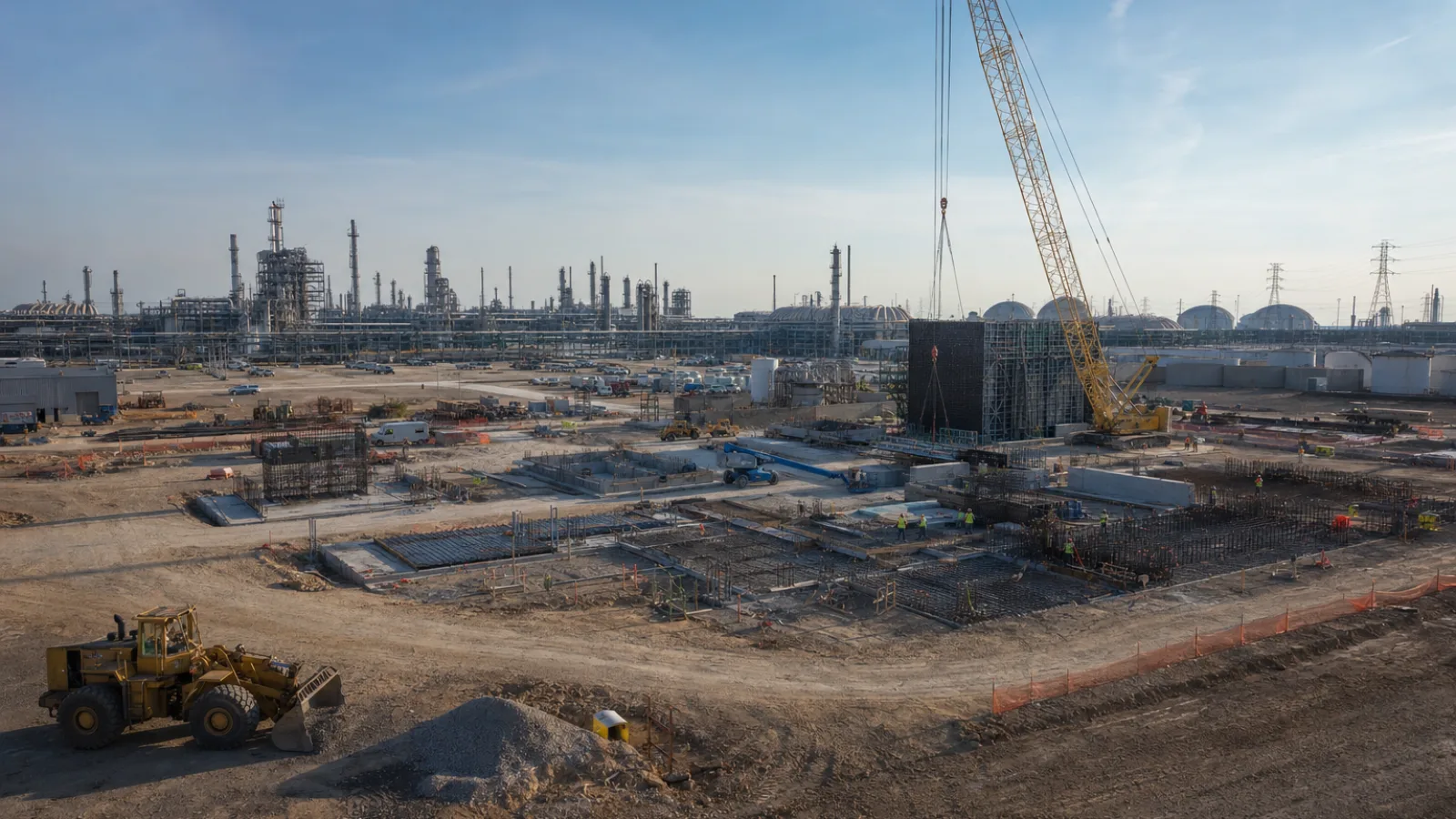
The commercial case for small modular reactors is entering a more consequential phase. In Texas, the US Nuclear Regulatory Commission has approved a construction permit for four X-energy Xe-100 reactors planned at Dow’s Seadrift industrial site. In Ontario, meanwhile, Ontario Power Generation has acknowledged that the first Darlington SMR will exceed its C$7.7 billion budget and miss its October 2030 target.
These developments are not contradictory. The Texas decision shows that an advanced reactor can move through a major US licensing gate for an industrial application. The Ontario update shows that regulatory approval is only one part of the delivery challenge. For owners, EPC contractors and investors, the central question is no longer simply whether an SMR can be licensed. It is whether the plant can be built repeatedly, on a predictable schedule and at a cost that customers can support.
What the NRC construction permit changes
The NRC construction permit is permission to construct a defined nuclear facility; it is not permission to operate it. Before electricity or process heat can be supplied, the project must complete construction, testing and additional regulatory steps, including an operating licence or the applicable combined licensing pathway.
The Texas project is significant because it is intended for an industrial site rather than a conventional utility-only nuclear station. Dow plans to use the power and steam from the facility at its Seadrift, Texas, manufacturing complex, while X-energy supplies the reactor technology. The NRC approval covers four Xe-100 units, giving the project a planned combined electrical output of approximately 320 megawatts if all four units are completed.
Each Xe-100 is generally described as an approximately 80-megawatt electric high-temperature gas reactor. It uses helium as a coolant and tri-structural isotropic, or TRISO, fuel. TRISO fuel particles contain ceramic-coated fuel kernels designed to retain fission products at high temperatures. That fuel form is central to the developers’ safety case, although fuel qualification, manufacturing capacity and licensing evidence remain important execution issues.
The permit also creates a more demanding test for project delivery. A four-unit site requires common infrastructure—security, cooling and support systems, electrical distribution, fuel handling, control facilities and emergency planning—to be integrated with an operating chemical plant. The interface between nuclear construction and an existing industrial facility can create advantages, such as an established workforce and grid connection, but it can also introduce outages, access restrictions and process-safety coordination requirements.
The NRC’s advanced reactor program provides the regulatory context for technologies such as the Xe-100. The permit should therefore be read as a meaningful licensing milestone, not as evidence that the commercial model has already been proven at scale.
How the Darlington SMR changes the commercial discussion
Ontario Power Generation’s Darlington project is based on the GE Hitachi BWRX-300, a small boiling-water reactor with a nominal output of about 300 megawatts electric. OPG has said that the first unit will exceed its C$7.7 billion budget and will not meet the October 2030 in-service target.
The cost figure is especially important because the project was positioned as a first-of-a-kind deployment that could establish a reference plant for later units. First-of-a-kind work commonly includes design completion, licensing, owner’s engineering, site preparation, supply-chain development and construction learning that will not all recur in the same form on later units. The problem for customers is that these costs arrive before the supposed benefits of repetition are available.
A higher forecast does not prove that the BWRX-300 design is uneconomic in every market. It does show that an early project can carry substantial development and execution risk. Ontario must manage nuclear-grade procurement, civil works, quality assurance, commissioning, grid requirements and regulatory oversight at the same time. Delays can also increase financing costs and push revenue further into the future.
For EPC and engineering firms, the practical lesson is that an SMR project cannot be estimated as a conventional modular building assembled from inexpensive factory products. Some components may be standardized, but the nuclear island, site works, licensing basis, security systems and owner interfaces remain project-specific. The balance between factory fabrication and site construction will determine how much schedule certainty modularity actually provides.
Small modular reactors compared: design, scale and delivery risk
| Project | Design and output | Published cost position | Schedule risk |
|---|---|---|---|
| X-energy and Dow, Seadrift, Texas | Four Xe-100 high-temperature gas reactors; approximately 80 MWe per unit, or about 320 MWe in total. | A final public construction cost for the four-unit deployment has not been established in the project information described here. | Licensing has advanced, but first-of-a-kind manufacturing, fuel supply, site integration and the remaining operating approvals remain material risks. |
| OPG, Darlington, Ontario | GE Hitachi BWRX-300 boiling-water reactor; approximately 300 MWe for the first unit. | OPG has said the first unit will exceed its C$7.7 billion budget. | The October 2030 target has been missed, with cost growth and first-unit execution risk now visible. |
The comparison should not be reduced to reactor size. The Xe-100 and BWRX-300 use different coolants, fuel systems, containment arrangements and operating concepts. They also face different industrial contexts. A high-temperature gas reactor may offer useful process heat characteristics for an industrial customer, while a water-cooled SMR may fit more naturally into an electricity-focused utility fleet and existing nuclear operating practices.
Nor does a smaller reactor automatically mean a smaller project. A reactor module can be compact while the total site includes substantial conventional power equipment, cooling systems, turbine buildings, waste systems, transmission upgrades, roads, security infrastructure and construction support. The owner’s required output, redundancy philosophy and connection to an industrial process can have as much influence on cost as the reactor vessel itself.
Developers’ safety claims versus UCS skepticism
Developers present advanced reactors as safer and more manageable than traditional large reactors. Their arguments generally focus on lower power per module, passive or inherent safety features, lower coolant pressure for some designs, robust fuel forms and systems intended to maintain safe conditions without immediate operator action or off-site power.
For the Xe-100, X-energy emphasizes TRISO fuel and the behavior of a helium-cooled, high-temperature reactor under accident conditions. The design’s safety case depends on the performance of the fuel, the reactor geometry, heat removal pathways and the evidence submitted to the regulator. A safety claim becomes commercially meaningful only when it is supported by testing, analysis, manufacturing controls and an approved licensing basis.
The Union of Concerned Scientists has taken a more skeptical position on advanced nuclear projects. Its concerns include the gap between claimed and demonstrated safety performance, the difficulty of qualifying new fuels and components, the possibility that smaller reactors may still create significant radioactive waste, and the risk that optimistic cost projections will be repeated before a commercial fleet exists.
That criticism should not be treated as a finding that the designs are unsafe. It is a challenge to the evidence and the business assumptions behind them. Likewise, an NRC permit is not a blanket endorsement of every developer claim. It means the regulator has reviewed the construction application against the applicable requirements and allowed the defined construction activity to proceed.
Both perspectives matter to project participants. Safety features can reduce certain accident risks and potentially simplify emergency planning, but they can also require new analytical methods, specialized components and additional qualification work. A design that is technically safer in one failure scenario may still face cost, fuel, waste, maintenance or licensing complications elsewhere in the project lifecycle.
Why nuclear power data centers are watching
Data centers are increasing interest in firm, low-carbon electricity, especially where grid connections are constrained or where operators need power around the clock. That has encouraged discussion of nuclear power data centers and other large industrial loads as potential SMR customers.
The Texas project is relevant because it links advanced nuclear generation with a major industrial customer rather than relying solely on merchant electricity sales. A customer with a stable, energy-intensive load may provide a clearer revenue structure than a project exposed entirely to wholesale power prices. Process heat or steam can also improve the utilization of a reactor designed for more than electricity production.
However, a data-center or manufacturing customer cannot absorb unlimited construction risk. The facility needs power by a contracted date, with defined reliability, voltage quality and backup arrangements. An SMR that arrives several years late may leave the customer paying for temporary generation, delayed production capacity or an unused site connection. Nuclear projects therefore compete not only with other generation technologies but also with grid expansion, gas-fired generation, renewable power paired with storage and efficiency measures.
For developers targeting large loads, the commercial contract needs to address escalation, delay damages, fuel availability, outage planning, decommissioning obligations and the allocation of licensing risk. It should also distinguish between a reactor’s nameplate capacity and the dependable power available to the customer after maintenance, refueling and balance-of-plant requirements.
What the two projects mean for the supply chain
The first US industrial-site permit is likely to increase interest in nuclear-grade manufacturing, engineering analysis, project controls and construction management. Yet the supply chain will need more than reactor vendors. It will require qualified forgings, pressure-boundary components, instrumentation and controls, specialty valves, fuel manufacturing, quality documentation, welding capacity and personnel familiar with nuclear codes and traceability.
Supply-chain companies should be cautious about treating an announced reactor pipeline as firm demand. Projects can change technology, defer financial close or reduce unit counts. The strongest opportunities are likely to be in capabilities that serve multiple designs: nuclear quality assurance, digital configuration management, site characterization, heavy civil construction, outage planning and specialist commissioning support.
Engineering firms also have a role in identifying design choices that are technically attractive but difficult to build. Early constructability reviews should examine lifting plans, module transport, temporary facilities, field welds, inspection access, replacement routes and the sequence for installing nuclear and non-nuclear systems. These details can determine whether modularity reduces site work or simply shifts complexity into factory interfaces and transportation logistics.
A permit is progress, not proof of a fleet
The Texas approval is an important step for advanced nuclear development in the United States. Ontario’s experience is an equally important warning that the first unit of a new reactor design can exceed both its budget and its original schedule. Together, the projects show why the next stage of the SMR market will be judged by delivery performance rather than licensing announcements alone.
No SMR is operating commercially in the United States yet. Until a project completes construction, receives permission to operate and demonstrates reliable performance at an acceptable cost, claims about repeatable deployment remain projections. The decisive evidence will come from completed plants: actual construction hours, factory yield, fuel performance, commissioning duration, operating availability and the cost of the second and subsequent units.
For owners and investors, the immediate task is to separate technology risk from project risk. A reactor may have a credible safety case and still face an immature supply chain, an incomplete cost estimate or an unrealistic construction sequence. The NRC permit advances the X-energy project through one of those barriers. Darlington’s cost and schedule problems show why the remaining barriers deserve equal attention.