From Condo Developer to Urban District Builder: Stephen Ross, Related Companies and the Hudson Yards Playbook
Stephen Ross’s career shows how residential development capabilities can evolve into a platform for financing, constructing, leasing, and operating entire urban districts. Hudson Yards illustrates the process.
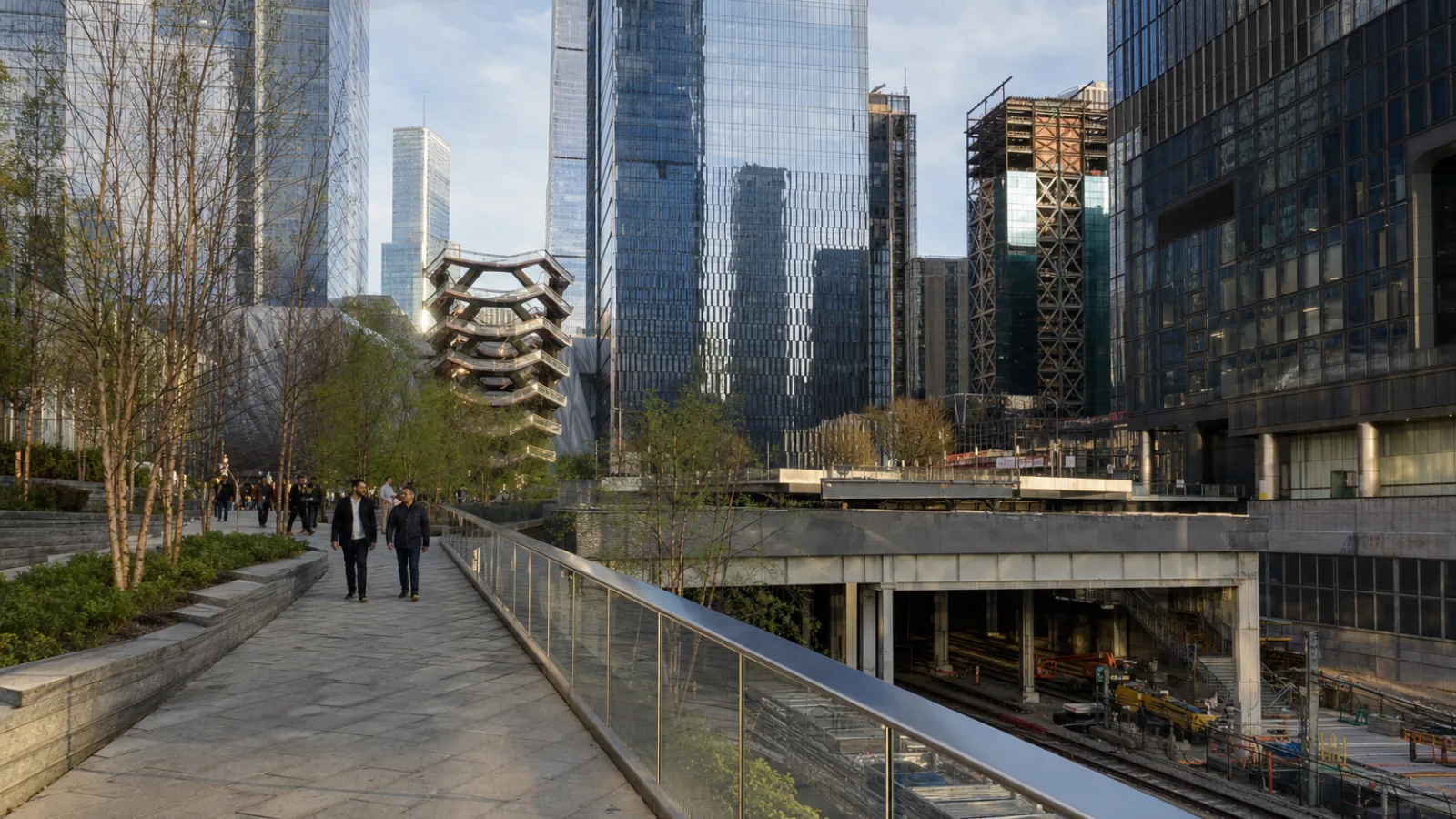
How Stephen Ross built Related Companies is a useful case study in the progression from individual real estate projects to district-scale development. Ross did not begin by building an entirely new neighborhood. He first developed expertise in tax law, housing finance, residential projects, capital formation, and partnerships. Over time, those capabilities combined into a platform able to coordinate land, infrastructure, architecture, construction, leasing, sales, and operations.
That progression is particularly visible at Hudson Yards, where a former rail yard became one of New York’s most complicated mixed-use development programs. The project also shows why large developments require more than an attractive master plan. They depend on public approvals, infrastructure sequencing, patient capital, anchor tenants, risk allocation, and a long-term strategy for monetizing several property types. Developers studying the project can compare its approach with mixed-use development expertise from Hines and other institutional platforms, while recognizing that Hudson Yards remains a distinctly New York example.
Key takeaways
- Ross built Related by accumulating capabilities in housing, finance, partnerships, development, and operations before pursuing district-scale projects.
- Hudson Yards depended on public planning and shared infrastructure as much as on individual towers.
- Phasing allowed the development team to match construction, leasing, financing, and market conditions over time.
- Mixed-use districts create multiple monetization options, including leases, sales, refinancing, asset sales, and retained operating income.
- The playbook is transferable in principle, but its scale, capital requirements, and public-policy tradeoffs limit direct replication.
How Stephen Ross built Related Companies
From tax law to residential development
Stephen Ross was trained as a lawyer and began his career in tax-related work. That background mattered because real estate development is partly a business of structuring transactions. Tax treatment, depreciation, debt, equity, ownership entities, and public incentives can change whether a project is feasible. Understanding those mechanics gave Ross a foundation for evaluating property opportunities and assembling capital.
In the 1970s, Ross moved into real estate finance and development. Related Companies was founded in 1979. Its early work focused heavily on residential development, including projects supported by housing programs and tax-advantaged financing. Housing was a practical entry point: it provided repeatable experience in site selection, entitlements, construction management, financing, leasing, and property operations.
The important lesson is that Related was not built around a single landmark. It developed a system. Each completed project could strengthen the company’s relationships with lenders, investors, public agencies, architects, contractors, brokers, and tenants. Those relationships reduced friction on later projects and made it possible to pursue larger and more complex opportunities.
The early Related model
Related expanded from residential development into a broader real estate platform. Its portfolio came to include rental housing, condominiums, affordable housing, offices, retail, hospitality, sports and entertainment assets, and property management. The company also became associated with operating capabilities, not only ground-up construction.
This distinction is important. A developer that sells every asset immediately needs a strong delivery and disposition process. A developer that retains assets also needs leasing, maintenance, tenant relations, marketing, energy management, and asset management. Related’s growth reflected a willingness to combine development profits with recurring income and long-term ownership value.
The capabilities that helped Related scale
Several capabilities allowed Related to move from individual buildings toward urban districts:
- Capital structuring: Projects could combine construction debt, institutional equity, public financing, tax incentives, presales, leases, and later refinancings.
- Public-private coordination: Large sites often require rezoning, transportation improvements, utility work, public-space commitments, and negotiations with multiple agencies.
- Mixed-use planning: Different uses can support one another. Offices create weekday activity, housing supports evening activity, retail benefits from foot traffic, and cultural uses add identity.
- Operating knowledge: Long-term ownership provides insight into what tenants and residents value after the ribbon-cutting ceremony.
- Phased execution: A district can be delivered in stages rather than requiring every building, amenity, and infrastructure element to be completed at once.
These capabilities are mutually reinforcing. A strong office tenant can improve financing confidence. Better financing can accelerate infrastructure. Infrastructure can make later parcels more valuable. Public spaces and amenities can improve leasing. The development becomes a portfolio of connected decisions rather than a collection of unrelated buildings.
Hudson Yards before construction
Hudson Yards was planned on Manhattan’s far West Side over active rail infrastructure associated with the Long Island Rail Road. The site was large and close to Midtown, but it was physically divided by rail operations and lacked the streets, utilities, zoning capacity, and public realm needed for a new district.
Site control and public planning
The development process required more than purchasing land. It involved assembling control of development rights, agreeing on a master plan, securing rezoning, coordinating with public agencies, and determining how to build above and around rail facilities. The city also pursued transportation and public-realm improvements to make the area function as an extension of Midtown rather than an isolated collection of towers.
Related and Oxford Properties Group became development partners for the first major phase. The partnership brought together development experience, institutional capital, and the ability to manage a project that would unfold over many years. The core planning decision was to treat Hudson Yards as a district with shared infrastructure and public spaces, not simply as a series of separate buildings.
The failed stadium proposal and the larger district opportunity
A proposed West Side stadium connected to New York’s 2012 Olympic bid was rejected in 2005. That setback changed the political and planning context for the area, but it did not eliminate the underlying opportunity. The site still had transportation access, proximity to Midtown, and substantial development potential.
The later strategy focused on a mixed-use neighborhood rather than a single mega-venue. That made the project more economically diversified, although it also increased coordination requirements. Offices, apartments, condominiums, retail, hotels, public spaces, cultural facilities, and infrastructure all had to work together.
How Hudson Yards was financed
Large mixed-use developments are usually financed in layers because no single source of capital is suited to every stage. Hudson Yards used a combination of private investment, construction loans, public support, and infrastructure financing. Public financing arrangements were connected to anticipated payments and revenues generated by development, while private capital funded buildings and commercial operations.
The sequence matters. Before a lender can underwrite a tower, the developer must establish site control, zoning, design parameters, construction feasibility, and a credible demand strategy. Before an office tenant signs a major lease, it may need confidence that transportation, streets, utilities, public spaces, and neighboring buildings will be delivered. Financing therefore depends on creating confidence across the entire district.
| Capital source | Primary purpose | Principal risk |
|---|---|---|
| Land or development rights | Control of the site and future building capacity | Entitlement delays and valuation uncertainty |
| Public infrastructure financing | Transit, platforms, streets, utilities, and public realm | Revenue projections and political approvals |
| Construction debt | Vertical construction and project costs | Cost overruns, schedule delays, and leasing risk |
| Institutional equity | Long-term ownership and development funding | Market cycles and exit value |
| Tenant commitments and presales | Demand validation and future income | Tenant credit, cancellation, and absorption risk |
The financing strategy also changes over time. Early capital absorbs planning and entitlement risk. Later capital may support construction after leases or sales provide evidence of demand. Completed buildings can be refinanced, sold, or retained for recurring income. This staged approach is one reason a district developer needs both transaction expertise and operating discipline.
How a mixed-use district is planned and built
Infrastructure first
Hudson Yards demonstrates that infrastructure is a development product. Foundations, rail-yard platforms, streets, utilities, public open space, elevators, loading systems, and connections to transit determine what can be built above them. In a conventional parcel, a building can often be designed around existing conditions. On a rail-yard site, the platform and structural grid become foundational decisions for the entire neighborhood.
Infrastructure planning must therefore precede or closely accompany vertical design. Engineers, architects, transportation agencies, utility providers, construction managers, and public officials need a shared set of assumptions. Changes made late in the process can affect foundations, fire protection, mechanical systems, logistics, and the schedule of multiple buildings.
Phasing and tenant mix
Phasing reduces exposure by matching construction to market demand. A developer may begin with buildings that have the strongest leasing prospects, the clearest financing path, or the greatest ability to establish a district identity. Later phases can respond to actual absorption, interest rates, construction costs, and tenant preferences.
Tenant mix is equally important. A district dominated by one use may struggle outside that use’s peak hours. Combining offices, homes, shops, restaurants, hotels, cultural attractions, and public spaces can create activity throughout the day. However, mixed use does not automatically produce a successful neighborhood. Each use must be correctly sized, connected, priced, and operated.
Construction coordination and risk management
District construction requires program-level controls in addition to building-level controls. The team must coordinate site logistics, material deliveries, tower cranes, temporary utilities, street access, public safety, interfaces between buildings, and commissioning. A delay in shared infrastructure can affect several vertical projects at once.
Useful controls include early design coordination, realistic cost plans, procurement packages for long-lead items, clear responsibility matrices, change-management procedures, independent schedule reviews, and contingency reserves. The objective is not to eliminate uncertainty. It is to identify which uncertainties can affect the whole district and manage them before they become expensive changes.
How Hudson Yards is monetized
A mixed-use district creates several revenue paths. Office buildings generate rent through leases. Residential buildings may generate rental income or condominium sales. Retail produces rent and, in some arrangements, sales-based participation. Hotels generate room, food, beverage, and event income. Parking, signage, sponsorships, amenities, and management services can provide additional revenue.
There is also indirect value. A successful public realm can increase rents and sales prices. A major tenant can improve the perceived quality of neighboring buildings. Cultural facilities and distinctive architecture can strengthen branding and foot traffic. Retained assets may be refinanced after stabilization, allowing the owner to recover capital while continuing to participate in future income and appreciation.
Monetization should not be confused with a single exit. District developers can sell selected assets, retain others, recapitalize the ownership structure, or use operating income to support future investment. The best strategy depends on the market, the project’s debt, tax considerations, partner agreements, and the owner’s risk tolerance.
Timeline of Ross, Related, and Hudson Yards
| Period | Development significance |
|---|---|
| 1970s | Ross moves from tax and finance work into real estate development. |
| 1979 | Related Companies is founded and begins building a platform around housing and development finance. |
| 1980s–1990s | Related expands its residential, affordable housing, commercial, and investment activities. |
| 2005 | The West Side stadium proposal fails, changing the path for the Hudson Yards site. |
| 2008–2009 | The financial crisis complicates development while planning and infrastructure decisions continue. |
| 2010s | Infrastructure work, financing, design, leasing, and construction move forward in coordinated phases. |
| 2016–2019 | Major first-phase buildings and public elements open, establishing Hudson Yards as a new mixed-use district. |
| After opening | Leasing, residential sales, retail operations, public-space management, and later-phase decisions shape long-term performance. |
Setbacks and limitations of the playbook
Hudson Yards was not a simple success story. The stadium failure showed how political and public-sector decisions can redirect a major development. The 2008 financial crisis challenged financing assumptions and delayed or reshaped plans. The project also faced the ordinary risks of high-cost construction, complex engineering, changing office demand, and the need to attract visitors to a previously underdeveloped area.
Its experience also shows that scale creates tradeoffs. Large projects can deliver infrastructure and public amenities that smaller developments cannot, but they require substantial capital and long holding periods. They may be criticized over affordability, accessibility, public subsidy, urban design, or the concentration of premium commercial space. A developer should evaluate not only financial feasibility but also public value, resilience, inclusion, transportation, and the district’s ability to function under changing market conditions.
Lessons for developers and construction professionals
- Build capabilities before pursuing maximum scale. Experience in housing, finance, and operations can become a platform for larger projects.
- Control the sequence, not only the site. Entitlements, infrastructure, financing, leases, construction, and operations must be arranged in a workable order.
- Use multiple uses to diversify demand. A balanced district can reduce dependence on one revenue stream, but only if the uses support one another.
- Treat public infrastructure as a core asset. Streets, transit connections, utilities, and public spaces directly affect private building value.
- Design financing around uncertainty. Use phased commitments, contingencies, partnership structures, and milestone-based decisions rather than assuming a fixed market.
- Plan for operations at the design stage. Loading, maintenance, security, energy, waste, wayfinding, and public-space management shape the user experience after construction.
- Measure success beyond opening day. Stabilized occupancy, tenant retention, operating costs, public use, and long-term asset value reveal whether the district actually works.
FAQ
Who is Stephen Ross?
Stephen Ross is an American real estate developer and the founder of Related Companies. He trained as a lawyer and worked in tax and finance before moving into real estate development.
When was Related Companies founded?
Related Companies was founded in 1979. Its early work centered significantly on residential development and housing finance before the company expanded into a diversified real estate platform.
What is Hudson Yards?
Hudson Yards is a large mixed-use district on Manhattan’s far West Side. It includes office, residential, retail, hospitality, cultural, public-space, transportation, and infrastructure components delivered through phased development.
How was Hudson Yards financed?
The project used a combination of private equity, construction debt, institutional partnerships, public infrastructure financing, tenant commitments, and revenue expectations associated with the completed district. The precise structure varied by asset and phase.
Can smaller developers apply the Hudson Yards model?
They can apply the principles without copying the scale. Smaller projects can still use phased delivery, coordinated infrastructure, complementary uses, realistic capital stacks, early operations planning, and multiple monetization options.
Conclusion
How Stephen Ross built Related Companies is ultimately a story about capability accumulation. Ross moved from tax and finance into residential development, then built an organization able to manage capital, public approvals, construction, leasing, operations, and long-term ownership. Hudson Yards extended that model from buildings to an entire urban district.
The central lesson for developers is sequencing. A compelling vision is only the beginning. Feasibility depends on controlling the site, aligning public and private interests, delivering infrastructure, matching financing to risk, phasing construction, attracting users, and operating the finished place. That is what turns a difficult parcel into a functioning real estate ecosystem.
Sources
- New York City Department of City Planning, Hudson Yards Rezoning and Related Actions environmental review and planning materials.
- New York City Economic Development Corporation, official Hudson Yards development and infrastructure materials.
- Metropolitan Transportation Authority, official materials on the 7 Subway Extension and related transportation improvements.
- Related Companies, official corporate history and Hudson Yards project materials.
- Oxford Properties Group, official Hudson Yards partnership and project materials.
How to verify these figures yourself
For the timeline, planning decisions, infrastructure commitments, and public financing structure, consult the cited planning documents and agency records directly. For current ownership, leasing, residential sales, and operating information, compare official company disclosures with filings and reporting from relevant public authorities.